 ultimate-guide
Benefits of Whole House Generator Installation
Table of Contents
- Why Whole House Generator Installation Pays Off for Homeowners
- Portable vs Whole House Generator: Which One Fits Your Home?
- Protection for Essential Systems, Medical Devices, and Home Safety
- How Long Do Whole House Generators Last?
- Automatic Standby Generator Maintenance: What Keeps Yours Running
- Permits, HOA Rules, and Insurance Implications for Generator Installation
- Smart Home Integration, Fuel Efficiency, and Resale Value
- Frequently Asked Questions
Last Updated: September 14, 2026
Why Whole House Generator Installation Pays Off for Homeowners
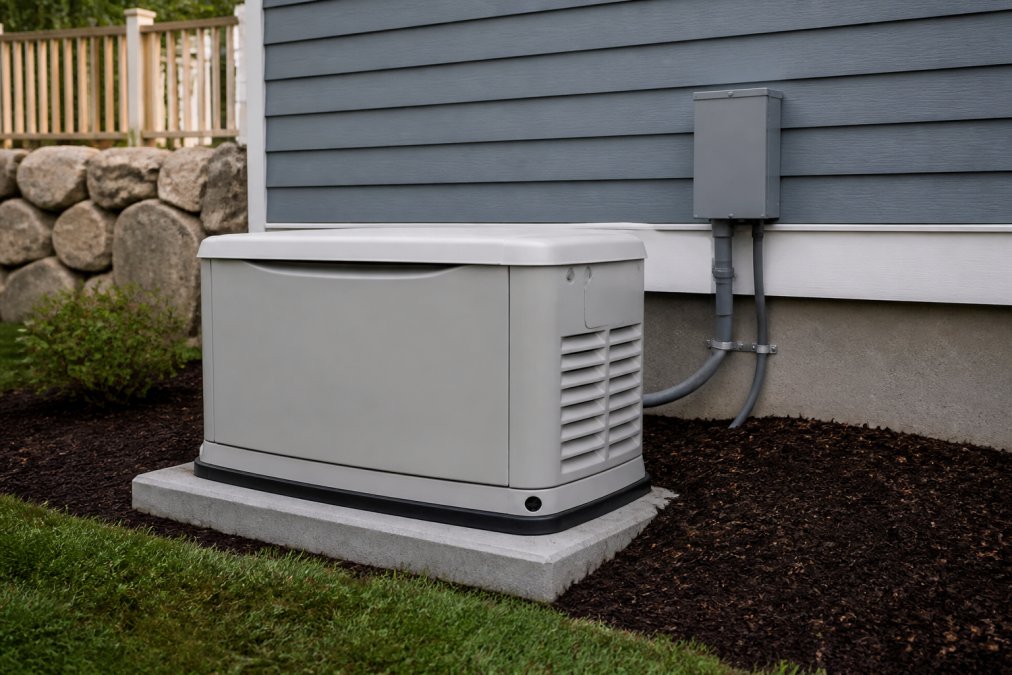
The benefits of whole house generator installation come down to one thing: your home keeps running when the grid doesn't. A whole house generator is a permanently installed standby power system that connects to your home's electrical panel through an automatic transfer switch, monitors utility power around the clock, and starts on its own within seconds of an outage. At BEARS Electric, we've installed these systems across Bristol, Southington, Plainville, and other Central Connecticut towns for over 12 years, and the pattern is always the same: homeowners stop thinking about the next storm once the system is in.
U.S. Department of Energy guidance on whole-house standby generators
What a Standby System Actually Does
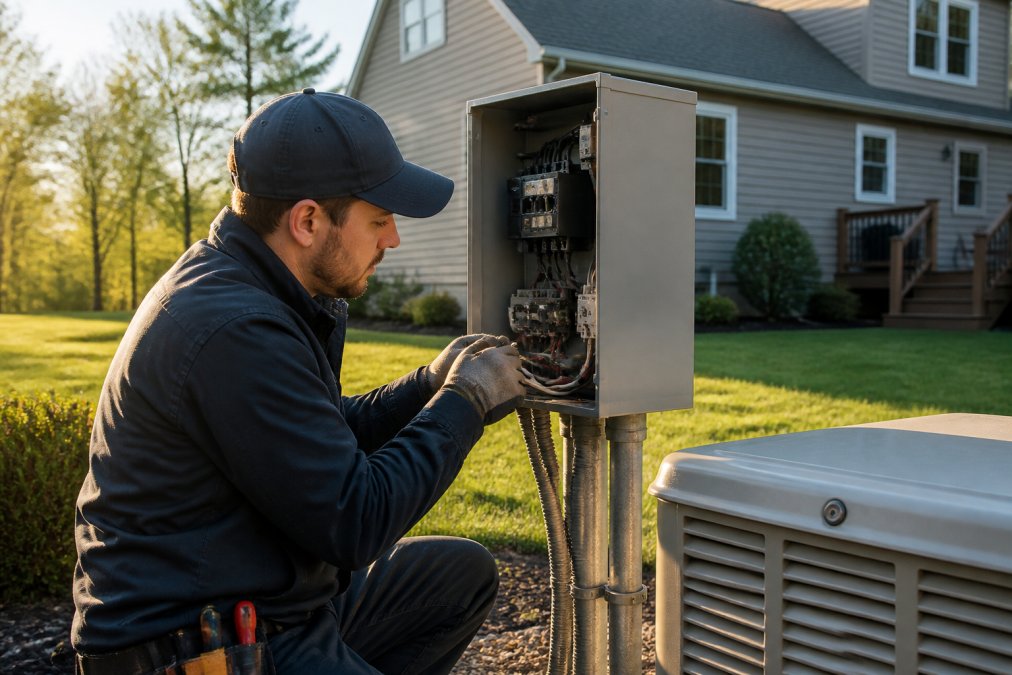
A standby generator sits outside on a concrete pad or composite base, wired to a fuel source and your electrical panel. When utility power drops, the automatic transfer switch disconnects your home from the grid and routes generator power to the circuits you've chosen to back up. When the grid returns, it switches back and shuts the generator down. No extension cords, no hauling fuel cans, no standing in the rain flipping breakers.
Portable vs Whole House Generator: Which One Fits Your Home?
A portable generator is the cheaper, temporary option; a whole house generator is the permanent one. Portables run on gasoline, require manual setup and refueling, and typically power a few appliances through extension cords. Standby units run on natural gas or liquid propane, activate automatically, and can carry anything from essential circuits to the entire home depending on kilowatt capacity.
Side-by-Side Comparison
| Feature | Portable Generator | Whole House Generator |
|---|---|---|
| Power source | Gasoline, some propane | Natural gas or liquid propane |
| Activation | Manual, you set it up | Automatic within seconds |
| Capacity | Limited, usually 2-8 kW | Sized to your home's load |
| Runtime | Until fuel runs out | Continuous while fuel flows |
| Installation | None required | Professional installation, permit needed |
| Best for | Tailgating, short outages | Whole-home protection, medical needs |
Protection for Essential Systems, Medical Devices, and Home Safety
Whole house generators protect the systems that matter most when the power fails. That includes HVAC equipment, refrigeration, well pumps, sump pumps, security systems, and medical devices such as oxygen concentrators or home dialysis machines. A properly sized system also protects against the secondary damage outages cause: frozen pipes in winter, flooded basements when a sump pump dies, and spoiled food after a multi-day interruption.
How Load Management Keeps Everything Running
Load management balances demand across your home's circuits so a smaller generator can still run large appliances. Instead of powering the air conditioner and the electric oven at the same instant, a load management module staggers them. The result: you get whole-house coverage with a generator sized smaller than a full-load calculation would demand, which keeps the equipment and installation more practical.
How Long Do Whole House Generators Last?
A well-maintained whole house generator typically lasts 15 to 20 years, with many air-cooled units running 10 to 15 years and larger liquid-cooled models reaching 20 or more. Lifespan depends on run hours, fuel quality, and how faithfully you follow the maintenance schedule. Units that sit idle for years and then run hard through a storm tend to fail earlier than units exercised regularly.
National Fire Protection Association information on standby power systems
Automatic Standby Generator Maintenance: What Keeps Yours Running
Automatic standby generator maintenance is what separates a system that starts in a storm from one that doesn't. Most manufacturers call for an annual service visit plus periodic no-load exercise runs, which the generator performs on its own schedule. A typical service includes an oil and filter change, spark plug inspection, battery check, air filter replacement, and a transfer switch test.
- Change engine oil and filter annually
- Inspect and gap or replace spark plugs
- Test the battery and charging system
- Replace the air filter
- Check fuel connections for leaks
- Exercise the transfer switch under load
- Clear debris from the enclosure and air intakes
Permits, HOA Rules, and Insurance Implications for Generator Installation
The paperwork side of a standby install trips up more homeowners than the wiring does. Here's how the process actually works, and where to check before you sign a contract.
Permits and Inspection: What the Town Will Ask For
A permanently installed standby generator is a structural, electrical, and often fuel-gas addition to your property, so it almost always requires a building permit plus separate electrical and (where applicable) plumbing/gas permits. Most building departments want to see:
- A site plan showing the generator pad location and distances to property lines, windows, doors, and combustible walls
- The manufacturer's installation manual and clearances
- Electrical one-line diagram showing the automatic transfer switch and panel tie-in
- Gas piping or propane tank sizing, if a new fuel line is being run
- A noise rating (dB(A) at a stated distance) from the spec sheet
After rough-in, expect at least one inspection before the utility approves the transfer switch and the system is energized. In many Central Connecticut towns, the sequence is typically: permit issued → pad and gas line set → electrical rough-in inspection → final inspection → utility sign-off. Skipping the permit doesn't just risk a stop-work order; it can void the manufacturer's warranty and create a disclosure problem at resale.
Zoning, Setbacks, and Noise Ordinances
Two local rules drive most placement decisions:
- Setbacks. Many zoning codes require the generator to sit a minimum distance from side and rear property lines, and a larger distance from any bedroom window or fresh-air intake. A unit that fits on paper may not fit once setbacks are applied, measure before you buy.
- Noise. Most residential standby units run in the low-to-mid 60s dB(A) at close range under normal load, which is roughly the level of a normal conversation. Some municipalities cap continuous noise at the property line, and a few have specific standby-generator provisions. If your lot is tight or you have close neighbors, ask the building department whether a noise variance or a sound-attenuated enclosure is required.
HOA and Architectural Review
If you live in a community with a homeowner association, assume you need written architectural approval before the pad is poured. HOAs commonly regulate:
- Visibility from the street and neighboring properties
- Enclosure color and screening (shrubs, fencing, or a matching cabinet)
- Setback from shared property lines
- Fuel type (some prohibit on-site propane tanks)
Get the approval in writing and keep it with your permit file. Retroactive approval after installation is far harder to obtain than pre-approval.
How Insurance Carriers Actually Treat Standby Power
Insurer treatment varies by carrier and by policy form, so the honest answer is: ask your agent, in writing, before you buy. In practice, three patterns show up:
- No change. Many carriers simply note the generator on the policy as an additional structure or scheduled item, with no premium adjustment.
- Premium credit. Some carriers offer a discount for homes with automatic backup power, on the theory that a generator reduces the risk of freeze damage, sump-pump failure, and food spoilage claims.
- Coverage clarification. The generator itself needs to be scheduled or added as other structures coverage; the fuel supply (a propane tank, for example) may need separate notation.
Ask three specific questions: (1) Is the generator covered as part of the dwelling or as a separate scheduled item? (2) Does automatic backup power qualify for any credit? (3) If a covered peril damages the generator, is replacement cost or actual cash value applied?
FEMA guidance on home standby power and emergency preparedness
Smart Home Integration, Fuel Efficiency, and Resale Value
These three topics are where a standby system stops being a storm-season purchase and starts being a long-term home asset. Each one deserves its own look.
Smart Home Integration and Remote Monitoring
Modern standby generators ship with a Wi-Fi or cellular module that pushes status to a phone app. What you can actually see and do:
- Live status, running, exercising, standby, or fault
- Run hours and last exercise date, useful for tracking maintenance intervals
- Fuel level, critical on propane, less so on natural gas
- Fault and warning codes, so you know whether to call for service or just reset
- Firmware updates, pushed over the air by the manufacturer
Integration with broader smart home platforms (Alexa, Google Home, Apple Home, or a hub like SmartThings) is uneven across brands. Some expose generator status as a device; others only offer their own app. If smart home control matters to you, confirm platform compatibility before you choose a model rather than after. A common pattern is to have the generator report into the same app ecosystem as your thermostat, security system, and sump-pump monitor, so a single dashboard shows the whole home's resilience state.
Fuel Source: Natural Gas vs. Liquid Propane
The fuel decision is the single biggest factor in how the system behaves during a long outage.
| Factor | Natural Gas | Liquid Propane |
|---|---|---|
| Supply | Utility line, effectively unlimited during most outages | On-site tank, finite; must be refilled |
| Cold-weather behavior | Consistent | Generally good; tank sizing matters in deep cold |
| Upfront work | Gas line and meter capacity check | Tank, pad, and delivery setup |
| Runtime during outage | Continuous while utility gas flows | Limited by tank size and delivery access |
| Best fit | Homes already on gas | Homes without a gas line, or rural lots |
Two practical points most guides skip. First, on natural gas, the utility may need to confirm your meter and service line can support the generator's demand in addition to your home's existing load, a step that can add time to the project. Second, on propane, size the tank for the longest outage you realistically expect, not the average one; a tank that runs dry on day three is no better than no generator at all.
On emissions, both fuels burn cleaner than gasoline or diesel, and natural gas generally produces lower carbon dioxide per unit of energy than propane. Neither is zero-emission, and neither is a substitute for efficiency upgrades, but a properly sized standby system running only during outages has a far smaller annual footprint than a portable gasoline unit run for the same hours.
Resale Value and Buyer Perception
A permanently installed standby system is a documented, permitted home improvement, which is what separates it from cosmetic upgrades at appraisal and at listing. In markets where outages are a recurring concern, buyers treat automatic backup power as a functional asset, the same category as a whole-house surge protector or a generator-ready panel. Two things make the value concrete at sale:
- Permits and inspection records. A permitted install with a clean inspection history is worth more to a buyer than an unpermitted one, and it removes a negotiation lever.
- Service history. A log of annual maintenance and exercise runs signals the system has been cared for, not just installed.
If you're already planning a panel upgrade or an EV charger install, bundling the generator work into the same project means one permit, one trench, one crew visit, and a panel that's already sized for the added load.
Frequently Asked Questions
Is it worth it to install a whole house generator?
For homeowners in areas with frequent outages, a whole house generator is usually worth it. It keeps your HVAC, refrigeration, medical devices, and internet running without you lifting a finger, thanks to automatic activation through the transfer switch. It also protects against frozen pipes and food spoilage. Pricing varies by kilowatt capacity, fuel source, and electrical panel setup, so get a free quote from BEARS Electric to see what fits your home.
What are the disadvantages of whole house generators?
The main drawbacks are upfront installation cost, the need for a maintenance schedule, and fuel requirements. Natural gas or liquid propane must be available, and you will need space for the unit, which can produce noticeable noise levels. Permitting and HOA approval can also add time. These trade-offs are manageable when you plan ahead and work with an experienced installer who handles sizing, load management, and the electrical panel connection.
How does a whole house generator differ from a portable unit?
A whole house generator is permanently installed and runs on natural gas or liquid propane, activating automatically within seconds of a power outage. A portable unit must be manually set up, fueled, and connected to specific appliances. For continuous power to essential systems like HVAC, refrigeration, and medical devices, a standby generator is the more convenient and reliable choice. A portable vs whole house generator decision usually comes down to budget and how much coverage you want.
Do whole house generators require professional maintenance?
Yes. Automatic standby generator maintenance includes annual oil and filter changes, spark plug inspection, battery checks, and testing the automatic transfer switch. Skipping service shortens how long do whole house generators last, which is typically 15 to 20 years with regular care. A professional technician can also spot fuel source issues or electrical panel problems early. BEARS Electric offers maintenance plans to keep your system ready for the next utility interruption.
When the next storm knocks out power across the area, the difference between a cold, dark house and one that never noticed the outage comes down to preparation. BEARS Electric handles generator installation, electrical panel upgrades, and the wiring that ties it all together, with transparent pricing, a satisfaction guarantee, and same-day service whenever possible. Get a free quote from BEARS Electric and keep your home powered through whatever the grid throws at it.