 blog
blog
Best EV Charger Installation Services in Bristol, CT
Table of Contents
- What to Look for in EV Charger Installation Services
- EV Charger Installation Cost CT: What Homeowners Should Expect
- Electrical Panel Upgrade for EV Charger: When It's Needed
- Level 2 Charger Requirements and Home Charging Benefits
- The Installation Process: From Site Survey to Final Inspection
- Smart Charging, Load Balancing, and Long-Term Reliability
- Why BEARS Electric Is a Trusted Choice in Central Connecticut
- Get a Free Quote for Your EV Charger Installation
- Frequently Asked Questions
Last Updated: September 16, 2026
What to Look for in EV Charger Installation Services
Choosing an EV charger installation service comes down to three things: licensing, permits, and safety standards. In Connecticut, electrical work must be performed or supervised by a licensed electrician, and most charger installs require a permit through your local building department before work begins. Skip that step and you risk failed inspections, insurance headaches, and a charger that has to be torn out and redone.
Licensing, Permits, and Safety Standards in Connecticut
Connecticut requires electrical work to be done by a licensed electrician, and a home charging point installation almost always needs a permit and a final inspection. The Connecticut Department of Consumer Protection licensing requirements spells out who can legally perform this work.
Ask three questions before you hire:
- Are you licensed and insured in Connecticut?
- Will you pull the permit, or is that on me?
- Who handles the final inspection sign-off?
EV Charger Installation Cost CT: What Homeowners Should Expect
The four cost buckets
- Equipment, the charging station itself. A basic 32-amp unit and a premium 48-amp unit with a cord holster, RFID, and Wi-Fi sit at very different price points. Ask whether the unit is sold at list, at a package rate, or supplied by you.
- Circuit and wiring, the breaker, conductor size, conduit, and labor to run it. This is where the biggest spread lives: a 15-foot run in an attached garage and a 90-foot run through a finished basement are not the same job.
- Permit and inspection, your town's building department sets this fee, and it varies by municipality. It is a pass-through cost, not installer profit, and should appear as its own line.
- Panel work, if needed, a load calculation, load-management device, subpanel, or full service upgrade. This bucket turns a routine install into a project, and it is the one most likely missing from a lowball quote.
What actually drives your number up or down
| Factor | Lower end of the range | Higher end of the range |
|---|---|---|
| Panel capacity | 200-amp service with open slots | 100-amp service needing an upgrade |
| Run distance | Charger mounted near the panel | Long run across a garage or to a detached structure |
| Mounting | Wall-mounted in an attached garage | Pedestal, detached garage, or exterior wall |
| Wiring path | Exposed run through an unfinished basement | Finished walls, trenching, or conduit work |
| Unit type | Basic hardwired 32-amp | 48-amp hardwired with smart features |
| Permit | Included as a line item | Omitted from the quote entirely |
Questions to ask before you sign
- Is the permit and inspection fee included, and is the permit pulled in my name?
- Does this price assume my existing panel has capacity, and what happens if it doesn't?
- Is the charger hardwired or on a plug, and does the price change between them?
- What is the warranty on labor, and is it separate from the manufacturer's warranty on the unit?
For a transparent figure, request a free quote and get the breakdown in writing before anyone touches a wire.
Electrical Panel Upgrade for EV Charger: When It's Needed
A Level 2 charger typically draws enough current that an older 100-amp panel may not have the spare capacity to support it safely. If your panel is near its limit, an electrical panel upgrade for EV charger installation is often the right call, not an upsell.
Signs you may need more capacity:
- A 100-amp service with electric range, dryer, and AC already running
- A full breaker panel with no open slots
- Flickering lights or warm breakers when large appliances cycle
Level 2 Charger Requirements and Home Charging Benefits
| Tethered | Untethered | |
|---|---|---|
| Cable | Permanently attached | You supply it |
| Best for | One EV, one parking spot | Multiple EVs or connector types |
| Speed | Rated to the unit's full output | Limited by the cable you buy |
| Storage | Holster on the wall | Cable coils separately |
| Wear point | One connector | Two connectors (box and cable) |
What the circuit actually has to deliver
Home charging benefits that actually hold up
- Wake up to a full battery every morning without planning around public stations
- Avoid DC fast charging stops for daily driving, which is where the time and cost savings compound
- Lower running costs than gasoline for most households, especially when you charge off-peak
- Pair with rooftop solar and a smart charger to shift charging into the hours your panels are producing
Charging speed depends on the unit's kilowatt output and your vehicle's onboard charger. A qualified electrician matches the circuit to the unit so you get the rated speed without overloading the system, and tells you honestly when a smaller circuit will do the same job for less.
The Installation Process: From Site Survey to Final Inspection
A professional install follows a clear sequence, and knowing it helps you spot a rushed job.
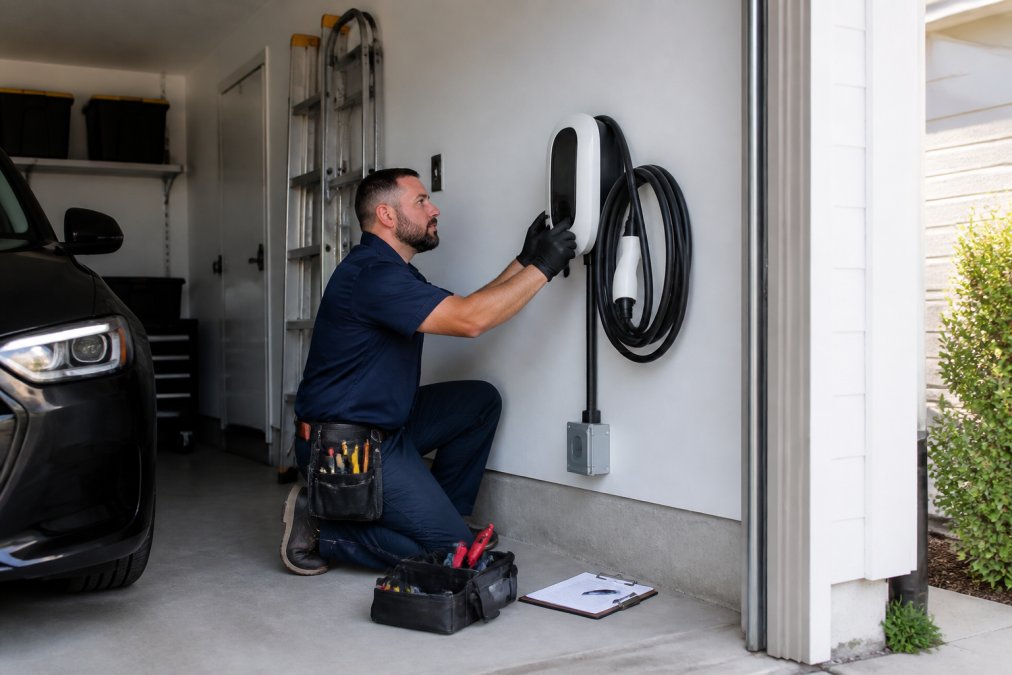
- Site survey: the electrician checks your panel, measures the run, and confirms mounting location.
- Load calculation: available capacity is verified against code.
- Quote and permit: you get an itemized quote, and the permit is pulled.
- Installation: the circuit, breaker, and charging station are installed to code.
- Testing and inspection: the unit is tested, then the final inspection is signed off.
Smart Charging, Load Balancing, and Long-Term Reliability
Smart charging separates a basic install from one that works with your home instead of against it. Many modern chargers connect to an app, letting you schedule off-peak charging, monitor energy use, and set current limits. Pairing this with energy tariff optimization can cut your charging costs without any hardware change.
Why BEARS Electric Is a Trusted Choice in Central Connecticut
BEARS Electric has served homeowners across Bristol, Terryville, Plainville, Unionville, Burlington, Southington, Wolcott, Plymouth, Farmington, Plantsville, Thomaston, Harwinton, New Britain, Marion, Milldale, Avon, Northfield, Oakville, Berlin, Waterbury, Watertown, Newington, West Hartford, New Hartford, Cheshire, Canton, Weatogue, East Berlin, Meriden, Collinsville, Prospect, Pine Meadow, West Simsbury, Morris, Wethersfield, Hartford, Middlebury, Rocky Hill, Bethlehem, Torrington, Naugatuck, North Canton, Simsbury, Lakeside, Cromwell, Litchfield, Bloomfield, Woodbury, Rockfall, Middlefield, Wallingford, Bantam, Barkhamsted, Middletown, East Hartford, Beacon Falls, Bethany, Tariffville, Washington, Winsted, West Granby, Windsor, Portland, Goshen, South Glastonbury, Washington Depot, Oxford, Durham, Granby, Hamden, Roxbury, New Preston Marble Dale, East Granby, Riverton, Glastonbury, Southbury, North Haven, Cobalt, South Windsor, Seymour, Northford, East Hartland, Manchester, Windsor Locks, Cornwall Bridge, Middle Haddam, Woodbridge, North Granby, West Hartland, Cornwall, Colebrook, East Windsor, Higganum, Norfolk, East Hampton, West Cornwall, Ansonia, Bridgewater, Sandy Hook, West Suffield, CT, and the surrounding Central Connecticut area since 2012.
Get a Free Quote for Your EV Charger Installation
The right charger installation starts with an honest assessment, not a phone estimate. Whether you're in Bristol, Southington, Cheshire, Wallingford, or anywhere within about a 24-mile radius of 06010, BEARS Electric can survey your home, run the load calculation, and give you a clear written quote.
Frequently Asked Questions
How much does it cost to install a Level 2 EV charger at home?
The total cost for EV charger installation depends on several factors, including the charger model, the distance from your electrical panel to the mounting location, and whether your panel needs an upgrade. Labor rates, permit fees, and any trenching or conduit work also affect the final price. BEARS Electric provides transparent, itemized quotes with no hidden fees, so you know exactly what to expect before work begins. Request a free quote for a price tailored to your home.
Do I need a permit for EV charger installation in Connecticut?
Yes, most Connecticut municipalities require an electrical permit for EV charger installation. The permit ensures the work meets local building codes and the National Electrical Code (NEC). A licensed electrician handles the permit application and schedules the required inspection. BEARS Electric manages this process for homeowners across Bristol, Terryville, Plainville, Unionville, Burlington, Southington, Wolcott, Plymouth, Farmington, Plantsville, Thomaston, Harwinton, New Britain, Marion, Milldale, Avon, Northfield, Oakville, Berlin, Waterbury, Watertown, Newington, West Hartford, New Hartford, Cheshire, Canton, Weatogue, East Berlin, Meriden, Collinsville, Prospect, Pine Meadow, West Simsbury, Morris, Wethersfield, Hartford, Middlebury, Rocky Hill, Bethlehem, Torrington, Naugatuck, North Canton, Simsbury, Lakeside, Cromwell, Litchfield, Bloomfield, Woodbury, Rockfall, Middlefield, Wallingford, Bantam, Barkhamsted, Middletown, East Hartford, Beacon Falls, Bethany, Tariffville, Washington, Winsted, West Granby, Windsor, Portland, Goshen, South Glastonbury, Washington Depot, Oxford, Durham, Granby, Hamden, Roxbury, New Preston Marble Dale, East Granby, Riverton, Glastonbury, Southbury, North Haven, Cobalt, South Windsor, Seymour, Northford, East Hartland, Manchester, Windsor Locks, Cornwall Bridge, Middle Haddam, Woodbridge, North Granby, West Hartland, Cornwall, Colebrook, East Windsor, Higganum, Norfolk, East Hampton, West Cornwall, Ansonia, Bridgewater, Sandy Hook, West Suffield, CT, and nearby towns, so you don't have to navigate the paperwork alone.
Can any licensed electrician install an EV charging station?
While many licensed electricians can technically install an EV charger, the work involves specific knowledge of high-voltage circuits, load calculations, and dedicated circuit requirements. An electrician experienced with EVSE (electric vehicle supply equipment) will properly assess your panel capacity, recommend the right amperage, and ensure the installation complies with current codes. BEARS Electric has completed EV charger installations since 2012 and stays current with Connecticut requirements.
How long does it take to install an EV charger?
A straightforward Level 2 charger installation typically takes two to four hours. If your electrical panel needs an upgrade or the cable run is unusually long, the project may take a full day or require a follow-up visit. BEARS Electric strives to offer same-day service and will give you a clear timeline during your free quote, so you can plan accordingly.