 how-to
Hiring a Licensed Electrician for Home Renovation
Table of Contents
- Why Hiring a Licensed Electrician Matters for Your Renovation
- How to Verify an Electrical Contractor License
- Questions to Ask an Electrician Before Hiring
- Electrical Permit Requirements for Home Renovation
- Understanding Electrical Load Calculations for Renovations
- Contractor vs. Handyman for Electrical Work
- Timeline for Electrical Rough-Ins in Your Remodel
- Frequently Asked Questions
Last Updated: September 15, 2026
Why Hiring a Licensed Electrician Matters for Your Renovation
Hiring a licensed electrician for home renovation work is the difference between a project that passes inspection and one that puts your household at risk. In Connecticut, electrical work must be performed by a licensed professional, and that requirement exists because bad wiring causes fires that start inside walls where nobody sees them until it's too late.
At BEARS Electric, we've walked into plenty of Bristol-area homes where a previous owner's "buddy who knows a guy" left junction boxes buried behind drywall. Those are the calls that keep us up at night.
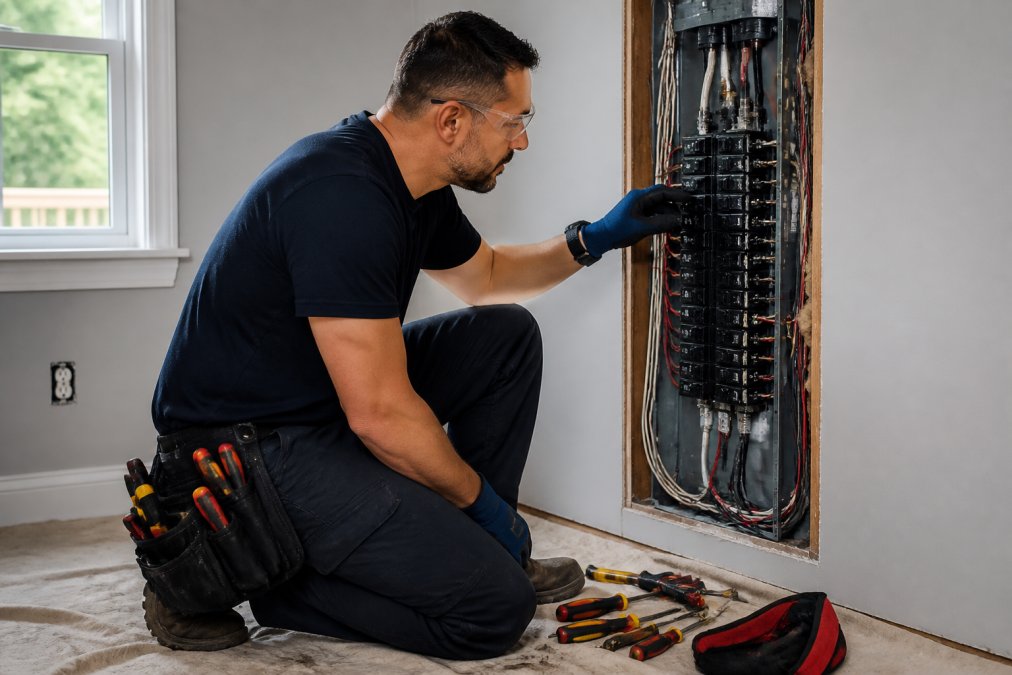
A licensed electrician is a professional who has completed state-required training, passed an examination, and holds a current credential to perform electrical work legally. That credential means the person pulling wire in your kitchen knows the National Electrical Code, carries insurance, and can be held accountable if something goes wrong.
The stakes aren't abstract. Electrical failures rank among the leading causes of residential structure fires nationwide, according to the U.S. Fire Administration residential fire reports. Unpermitted, unlicensed work also creates an insurance problem: if a fire traces back to illegal wiring, a claim can be denied.
How to Verify an Electrical Contractor License
Verifying an electrical contractor license takes about ten minutes and you can do it before anyone sets foot in your home. Every legitimate contractor expects the question.
In Connecticut, electrical contractors and journeypersons are licensed through the state, and the credential can be looked up through the Connecticut Department of Consumer Protection license lookup. Here's the process:
- Ask for the license number before the estimate, not after.
- Search that number in the state's online database.
- Confirm the name on the license matches the company quoting your job.
- Check the expiration date, an expired license is not a license.
- Ask for a certificate of insurance and verify it's current.
A journeyman electrician has completed an apprenticeship and can perform work independently. A master electrician has additional experience and can pull permits and supervise others. For a renovation, you want a licensed electrical contractor who holds the master or contractor-level credential.
What most homeowners skip: verifying insurance. A contractor with a lapsed policy is effectively uninsured, and if someone gets hurt in your home, that exposure lands on you.
Questions to Ask an Electrician Before Hiring
Asking the right questions before hiring an electrician filters out the pretenders fast. The answers matter less than whether the person answers them without flinching. But for a renovation, as opposed to a single repair, the questions need to go deeper than the standard license-and-insurance checklist every directory site publishes.
Start with the basics:
- Are you licensed, and what is your license number?
- Are you insured and bonded? Can I see the certificate?
- Will you pull the electrical permit, or is that on me?
- Who actually does the work, your employees or subcontractors?
- What is included in the written estimate, and what is not?
- How do you handle changes if the scope shifts mid-project?
- Can you provide references from similar renovation jobs?
- What is your timeline, and how do you communicate delays?
Then add the renovation-specific questions most homeowners never think to ask:
- Will you run a load calculation before we finalize the scope? This determines whether your existing service can handle the new appliances, EV charger, or heat pump, and whether a panel upgrade needs to be in the budget from day one.
- How do you coordinate rough-in with my general contractor? The electrician has to be on-site after framing and before insulation and drywall. If they cannot commit to that window, the whole schedule slips.
- How are change orders priced? Renovations almost always surface surprises once walls open. Ask whether changes are billed hourly, by the task, or at a flat rate, and get it in writing before work starts.
- Will you walk the job before quoting, or quote from photos? A renovation estimate built from a phone photo is a guess. A legitimate contractor walks the space, opens the panel, and checks the existing wiring.
- Do you handle the finish work too, or just rough-in? Some electricians only do rough-in and hand off device installation to someone else. You want one point of accountability from permit to final inspection.
- What is your plan if the rough-in inspection fails? The answer should be that they correct it and cover the re-inspection, not that you pay for their mistake.
Frank L., one of our customers, put it plainly after we traced a faulty wiring issue in his home: BEARS Electric "was quick to respond, identified the faulty wiring fast, and solved it efficiently." That is the standard to expect from anyone you hire, and it starts with the questions you ask before the first nail is pulled.
Electrical Permit Requirements for Home Renovation
Electrical permit requirements for home renovation exist to protect you, and skipping them is never worth the savings. Most jurisdictions require a permit for new circuits, panel changes, and any work beyond swapping a light fixture. The permit is not paperwork for its own sake, it is the mechanism that triggers an independent inspection before the walls close up.
Here is the part most guides skip: a renovation usually involves two separate electrical inspections, not one.
- Rough-in inspection, happens after framing and wiring are complete but before insulation and drywall. The inspector verifies box fill, cable stapling, grounding, circuit routing, and that the panel work matches the approved plan.
- Final inspection, happens after drywall, paint, and device installation. The inspector verifies outlets, switches, fixtures, GFCI/AFCI protection, and that everything terminates correctly.
If the rough-in fails, you cannot insulate or hang drywall until it is corrected and re-inspected. That is why the electrical schedule has to be coordinated with your general contractor, a failed rough-in can stall the entire renovation for days while the correction is scheduled.
Which jobs need a permit? Generally:
- Adding outlets, switches, or dedicated circuits
- Replacing or upgrading an electrical panel
- Running new wiring for a kitchen, bath, or addition
- Installing an EV charger or generator connection
- Any work inside walls that will be covered by drywall
- Converting a space (garage, basement, attic) into living area
Your contractor should pull the permit in their name. If a contractor suggests skipping it to save time or money, that is your signal to walk away. The National Fire Protection Association, which publishes the code most jurisdictions adopt, is clear that unpermitted work is where the dangerous shortcuts hide.
One more detail homeowners miss: the permit is tied to the scope on the application.
Understanding Electrical Load Calculations for Renovations
Contractor vs. Handyman for Electrical Work
Here's the practical breakdown:
| Task | Who Should Do It | Why |
|---|---|---|
| Swap a light bulb or cover plate | Homeowner | No wiring involved |
| Replace a light fixture | Licensed electrician | Requires correct connections and grounding |
| Add a new outlet or circuit | Licensed electrician | Permit and code compliance required |
| Panel upgrade or service change | Licensed electrical contractor | Permit, load calc, and inspection |
| EV charger installation | Licensed electrical contractor | High amperage, dedicated circuit |
Timeline for Electrical Rough-Ins in Your Remodel
A typical sequence looks like this:
Frequently Asked Questions
What should I look for when vetting an electrical contractor?
Look for a valid state license, liability insurance, and workers' compensation coverage. Ask for references from recent projects and check online reviews. Confirm they have experience with your type of renovation, such as panel upgrades or smart home wiring. A reputable contractor will provide a written estimate and explain the permit process. In Connecticut, you can verify credentials through the Department of Consumer Protection.
Do home renovation electrical projects require permits in Connecticut?
Yes, most electrical work during a renovation requires a permit in Connecticut. This includes new wiring, panel upgrades, and adding circuits. Permits ensure the work meets the National Electrical Code and local safety standards. Your licensed electrician should handle the application and schedule inspections. Skipping permits can lead to fines, insurance issues, and problems when selling your home.
How can I verify an electrician's license status?
In Connecticut, visit the Department of Consumer Protection website to search for licensed electricians. You can also call the agency directly. Ask the electrician for their license number and compare it to the online record. Ensure the license is current and in the correct category, such as journeyman or master electrician. This step protects you from hiring unqualified individuals.
Can a handyman do electrical work during a renovation?
In most cases, no. Electrical work requires a licensed electrician to ensure safety and code compliance. Handymen may handle minor tasks like replacing a light fixture, but complex work such as wiring new outlets or upgrading a panel must be done by a licensed professional. Hiring an unlicensed person can void your insurance and create serious hazards. Always confirm licensing before allowing any electrical work.