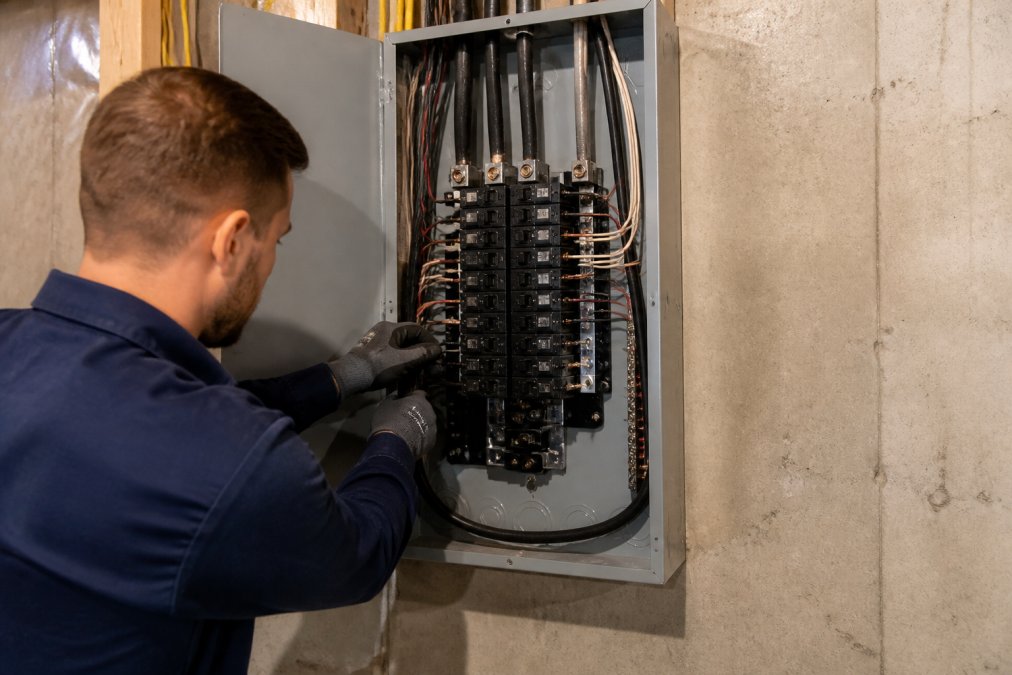
 ultimate-guide
Safety Standards for Electrical Panel Upgrades: 2026 Guide
Table of Contents
- Why Safety Standards for Electrical Panel Upgrades Matter
- Visual Guide: Signs Your Panel Doesn't Meet Modern Safety Standards
- Understanding NEC Electrical Panel Clearance Requirements
- AFCI and GFCI Breaker Requirements for Modern Homes
- The 80% Rule, Load Calculations, and Amperage Capacity
- The Professional Installation Process and Permit Requirements
- How Long Does an Electrical Panel Upgrade Take?
- Your Electrical Panel Inspection Checklist
- Frequently Asked Questions
Last Updated: September 6, 2026
Why Safety Standards for Electrical Panel Upgrades Matter
The National Electrical Code (NEC) exists because outdated electrical panels cause thousands of house fires every year. Safety standards for upgrades protect your home from overcurrent, arc faults, and ground faults older equipment cannot handle.
Modern homes demand far more electricity than the infrastructure was designed to deliver. Between EV chargers, electric ranges, HVAC systems, and home offices, your amperage capacity often needs to double. The standards set by the National Fire Protection Association's NEC guidelines are not suggestions; they are the baseline for safe, code-compliant electrical work.
Below, we'll walk through the visual signs your panel is outdated, the NEC requirements governing clearances and breakers, and the process a professional installation should follow.
Visual Guide: Signs Your Panel Doesn't Meet Modern Safety Standards
The fastest way to assess your panel is to open the metal door on your main service panel and check for these visual red flags.
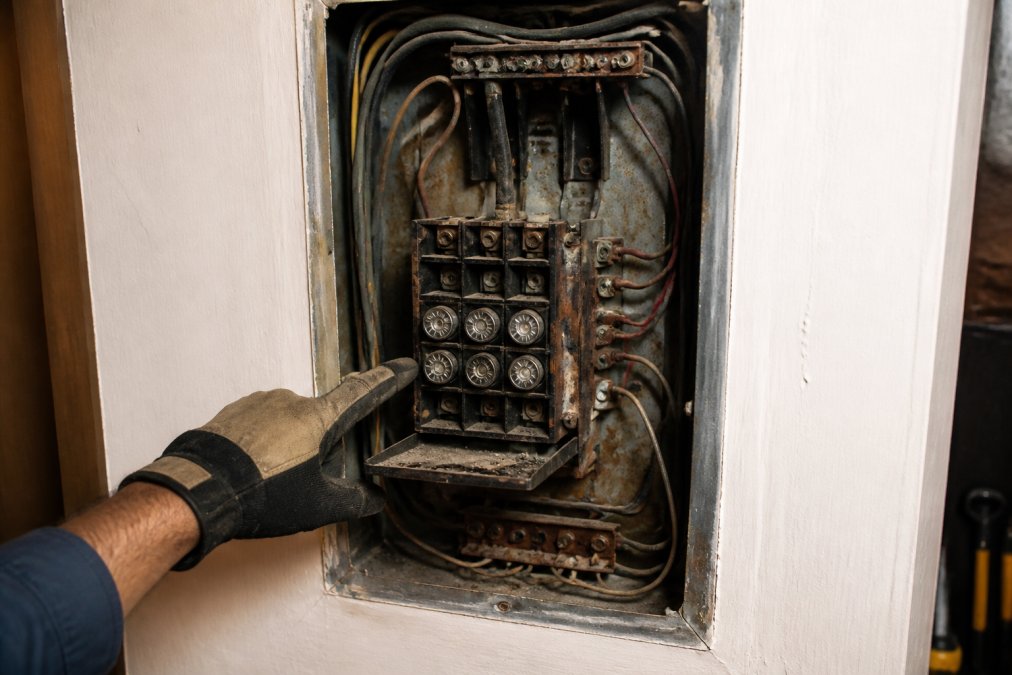
Fuse Boxes, 60-Amp Panels, and Other Red Flags
Round glass fuses that screw in mean you have a fuse box, not a circuit breaker panel. Fuse boxes cannot provide overcurrent protection for today's appliance loads or accommodate AFCI or GFCI breakers.
Other red flags include a 60-amp main disconnect, cloth-insulated wiring, or visible rust, burn marks, or a burning smell. Thermal damage is often invisible until a professional opens the panel. Any of these likely fails current code and needs immediate evaluation by a licensed electrician.
Understanding NEC Electrical Panel Clearance Requirements
NEC clearance requirements are non-negotiable. Working space in front of your panel must be at least 30 inches wide and 36 inches deep, with a clear height of 6 feet 6 inches. This ensures an electrician can work safely and provides a firefighting path in an emergency.
Storing boxes, decorations, or a freezer within that 36-inch space is a code violation. If your panel is in a closet, the door may need removal or modification. Local enforcement in many Connecticut towns, from Bristol to Southington and Farmington, adopts these standards with local amendments. Clear the area before work begins.
AFCI and GFCI Breaker Requirements for Modern Homes
Modern standards require two protections older panels lack: AFCI and GFCI breakers. An Arc-Fault Circuit Interrupter detects dangerous arcs, a leading cause of electrical fires. A Ground-Fault Circuit Interrupter shuts off power when current leaks to ground, preventing shock in wet areas.
The NEC requires AFCI protection on nearly all branch circuits feeding living spaces. GFCI protection is required in bathrooms, kitchens within 6 feet of the sink, laundry areas, and outdoor receptacles. Retrofitting a fuse box with these breakers is impossible, so full replacement is the only compliant path.
The 80% Rule, Load Calculations, and Amperage Capacity
A breaker is designed to handle 80% of its rated capacity continuously. A 100-amp panel is only rated for 80 amps of continuous load. If your load calculation exceeds that, breakers will trip frequently and your panel is undersized.
An electrician adds the wattage of every light, receptacle, appliance, and HVAC system, then divides by voltage (typically 240 volts) to determine total amperage demand. This determines whether you need 100-amp, 150-amp, or 200-amp service.
Why 200-Amp Is Becoming the New Minimum
For homes planning an EV charger installation or electric heat, a 200-amp panel is often the minimum starting point. The United States Department of Energy's home energy efficiency guidance recommends evaluating your home's electrical capacity before installing major new appliances, and a licensed electrician can run this calculation for you.
The 80% rule applies differently to continuous versus non-continuous loads. An EV charger is continuous, it draws power for three or more hours. A 50-amp charger circuit requires a 62.5-amp breaker (50 ÷ 0.8), which is why 60-amp breakers are specified for 48-amp chargers. The same logic applies to solar inverters, heat pumps, and tankless water heaters.
Load Calculation for Future-Proofing
A common pattern across Central Connecticut, from Bristol to Southington to Farmington, is upgrading to 200 amps today, then adding an EV charger, heat pump, and backup generator within a few years. Each addition requires its own dedicated circuit and a redone load calculation.
To avoid a second upgrade, consider these typical demand figures when planning service size:
| Appliance or System | Typical Circuit Requirement | Notes |
|---|---|---|
| Level 2 EV charger | 40-60 amp dedicated circuit | Continuous load; counts at 125% |
| Electric range/oven | 40-50 amp dedicated circuit | Often requires AFCI protection |
| Central air conditioning | 30-60 amp dedicated circuit | Size depends on SEER rating and tonnage |
| Electric tankless water heater | 60-120 amp dedicated circuit | Often requires a 200-amp panel alone |
| Solar array inverter | 20-40 amp dedicated circuit | May require a line-side tap instead of a breaker |
| Backup generator transfer switch | 30-50 amp (portable) or 100-200 amp (whole-home) | Requires interlock or automatic transfer switch |
The Load Calculation Formula in Practice
A licensed electrician uses the standard method from NEC Article 220, which includes:
- General lighting and receptacle load: 3 watts per square foot of living space
- Small-appliance circuits: 1,500 watts for each 20-amp kitchen circuit
- Laundry circuit: 1,500 watts
- Fixed appliances: Nameplate wattage for each (dishwasher, disposal, water heater, etc.)
- HVAC: The largest of heating or cooling loads (you do not count both at full value)
- EV charger or other continuous loads: 125% of the nameplate rating
If total demand lands between 80 and 100 amps, a 125-amp panel may suffice. Above 100 amps, you need 200-amp service. Homes with electric heat, a pool, a workshop, or multiple EV chargers may need 300 or 400 amps, though that is rare.
What Happens When You Undersize
An undersized panel shows symptoms before the main breaker trips. Voltage drop dims lights when the AC kicks on. Motors run hotter and wear faster. In severe cases, undersized service conductors can overheat, a fire risk no breaker can prevent, since the breaker protects wiring, not load.
A professional upgrade should include a written load calculation documenting current demand and planned additions. Ask for this document, it is your roadmap for future work and valuable when selling your home.
The Professional Installation Process and Permit Requirements
A safe panel upgrade is a regulated process involving coordination with your utility company, local building inspectors, and a licensed electrician.
Step 1: Load Calculation and Panel Sizing
The electrician performs the load calculation and selects the correct amperage and brand. They also determine if your service entrance conductors, the thick wires feeding your home from the utility pole, need upgrading.
Step 2: Permits and Local Code Enforcement
A permit is required for panel replacements in virtually every jurisdiction. Your electrician pulls it, triggering an inspection after the work. Skipping the permit can create issues when selling your home and may void homeowner's insurance in a fire.
Step 3: Installation, Inspection, and Utility Connection
Installation typically involves a brief power shutoff. The electrician removes the old panel, installs the new load center, lands all branch wires, and installs AFCI and GFCI breakers. The local inspector then verifies compliance before the utility reconnects service.
How Long Does an Electrical Panel Upgrade Take?
A straightforward panel swap usually takes 4 to 8 hours, depending on existing wiring and accessibility. The inspection is typically scheduled within a few days.
Several factors can extend the timeline. If service conductors need replacing, the utility may schedule a separate disconnect and reconnect. Damaged branch wiring or an undersized grounding system must be addressed before the inspector signs off. Complex layouts or panels in finished basements also add time.
| Phase | Typical Duration | Key Consideration |
|---|---|---|
| Load calculation and quote | 1-2 hours | Requires a site visit and appliance inventory |
| Permit application | 1-5 business days | Varies by town; local code enforcement review |
| Panel installation | 4-8 hours | Power is off during the swap |
| Final inspection | 30-60 minutes | Inspector verifies clearance, breakers, and grounding |
| Utility reconnect | Scheduled separately | Required if service conductors are upgraded |
Your Electrical Panel Inspection Checklist
Use this checklist before you call a professional, and again after the work is complete.
- Panel is a circuit breaker type, not a fuse box
- Main amperage is 100-amp minimum; 200-amp recommended for modern loads
- No visible rust, burn marks, or corrosion on the panel interior
- Working space in front of the panel is 30 inches wide by 36 inches deep
- AFCI breakers protect all living space branch circuits
- GFCI breakers protect wet areas: kitchens, baths, laundry, outdoors
- No double-tapped breakers (two wires on one breaker terminal)
- Permit was pulled and final inspection passed
- Service entrance conductors sized for the new panel amperage
- Grounding electrode system is present and bonded to the panel
Working through this list gives you a clear picture of your home's electrical health. If you check off any red flag, the next step is a professional evaluation. The Consumer Product Safety Commission's electrical safety resources offer additional guidance on identifying hazards, but nothing replaces an on-site inspection by a licensed electrician.
Annual Maintenance Checklist for Your New Panel
A new panel is not set-and-forget, it requires annual attention to catch small issues before they become hazards. Here is what we recommend homeowners do.
Monthly (30 seconds):
- Walk past your panel and glance at the breaker handles. Any breaker that is tripped should be investigated, not simply reset. If the same breaker trips repeatedly, call an electrician.
- Listen for any buzzing or humming sounds coming from the panel. A faint hum from the main breaker is normal, but a buzz that changes with load is not.
Quarterly (5 minutes):
- Press the "TEST" button on each GFCI breaker or receptacle. The breaker should trip immediately. Press "RESET" to restore power. GFCI devices have a finite lifespan, most manufacturers recommend replacement after 10-15 years of use.
- Check the panel door for any signs of moisture, rust, or insect activity. Panels in garages and basements are especially vulnerable.
Annually (15 minutes):
- Turn off the main breaker and remove the panel cover (only if you are comfortable doing so, if not, have your electrician do this during a service call).
- Look for discoloration on breaker terminals, which indicates heat damage.
- Check that all breaker wires are snug. A loose connection is a leading cause of arc faults.
- Verify that no circuit has been double-tapped (two wires under one terminal screw) unless the breaker is specifically rated for two conductors.
- Confirm that the panel interior is free of dust, cobwebs, and rodent nesting material.
- Test AFCI breakers using the "TEST" button. This simulates an arc fault and should trip the breaker instantly.
The AFCI and GFCI Testing Myth
AFCI and GFCI breakers do not test themselves. The "TEST" button is the only way to verify internal electronics are functioning. Surge events and normal aging can degrade sensing circuitry even if the breaker still carries load. A breaker that fails its test must be replaced.
When to Call a Professional for Maintenance
If you notice any of the following during your annual inspection, call a licensed electrician:
- Burn marks, melting, or a distinct smoky odor inside the panel
- Corrosion on bus bars or breaker terminals
- Breakers that feel loose when you toggle them
- Any signs of water intrusion or past flooding in the panel area
- A panel that runs warm to the touch under normal load
Homes in older Connecticut communities like Bristol, Terryville, and Plainville often have panels in damp basements or unconditioned garages, where humidity accelerates corrosion. If yours is in a damp location, ask about a gasketed panel cover or a small dehumidifier.
Tracking Your Electrical System Over Time
Keep a simple log of your panel's history, upgrade date, brand and model, breaker types, and future circuit additions. This record is invaluable when selling your home, adding an EV charger, or answering an inspector's questions. A documented panel tells buyers the electrical infrastructure is not a hidden liability.
Frequently Asked Questions
What is the 80% rule for electrical panels?
The 80% rule means a continuous load should not exceed 80% of a circuit breaker's or panel's rated amperage capacity. For a 200-amp main service panel, that means the calculated continuous load should stay at or below 160 amps. This rule, rooted in the National Electrical Code, prevents overheating and nuisance tripping. Your electrician performs an electrical load calculation during the planning phase to ensure your new panel is sized correctly for your home's actual energy demands.
Can I upgrade my electrical panel from 100 to 200 amps?
Yes, upgrading from 100 to 200 amps is a common project, especially for homes adding EV chargers, heat pumps, or major renovations. The upgrade typically requires a new main service panel, new service entrance conductors, and often a new meter socket. Your utility company must coordinate the service disconnect. A licensed electrician will handle the permit requirements and schedule the necessary inspections with your local code enforcement office.
Do I need an electrical permit to upgrade my panel?
Yes, virtually every jurisdiction requires a permit for an electrical panel upgrade. The permit ensures the work is inspected and meets current NEC electrical panel clearance requirements and local amendments. Skipping the permit can create safety hazards, void your homeowner's insurance, and cause problems when selling your home. A professional electrician will pull the permit, schedule the inspection, and ensure the final sign-off is completed.
What is the difference between a subpanel and a main service panel upgrade?
A main service panel is the first point of connection after the utility meter and contains the main disconnect breaker. A subpanel is fed from the main panel and distributes power to a specific area, like a workshop or addition. Upgrading the main panel increases your home's total amperage capacity. Adding a subpanel only distributes existing capacity to a new location. If you are adding heavy loads, you likely need a main service panel upgrade.
What are the safety risks of an outdated electrical panel?
Outdated panels, such as older fuse boxes or panels with known defects, pose risks of electrical fires, arc flashes, and electric shock. They often lack overcurrent protection that meets modern standards and cannot handle today's electrical load. Flickering lights, warm panel covers, or breakers that trip frequently are warning signs. If you notice these, schedule an electrical safety inspection with a qualified electrician immediately.
How often should I have my electrical panel inspected?
A professional electrical panel inspection is recommended every 3 to 5 years, or immediately after a major storm, a renovation, or if you notice warning signs like tripping breakers or burning smells. An inspection checklist review includes checking for corrosion, verifying proper grounding and bonding, testing AFCI and GFCI breakers, and looking for signs of overheating. Regular checks extend the life of your electrical infrastructure.
What are the current NEC requirements for residential electrical panels?
The National Electrical Code requires panels to be accessible with a minimum working clearance of 36 inches of depth and 30 inches of width in front of the equipment. The panel must have a dedicated space and be installed with proper grounding and bonding. AFCI and GFCI breaker requirements protect against arc faults and ground faults. Local amendments in your area may add further requirements, so always consult a licensed electrician.