 how-to
Warm Light Switch: Is It Dangerous? Causes & Fixes
Table of Contents
- Is a Warm Light Switch Normal?
- Common Causes of a Warm Light Switch
- Why Dimmer Switches Run Warmer Than Standard Switches
- Causes of Burning Smell From Electrical Outlet or Switch
- Signs of Faulty Electrical Wiring You Should Never Ignore
- How to Troubleshoot a Warm Switch Safely
- When to Call a Licensed Electrician
- Frequently Asked Questions
Last Updated: September 16, 2026
Is a Warm Light Switch Normal?
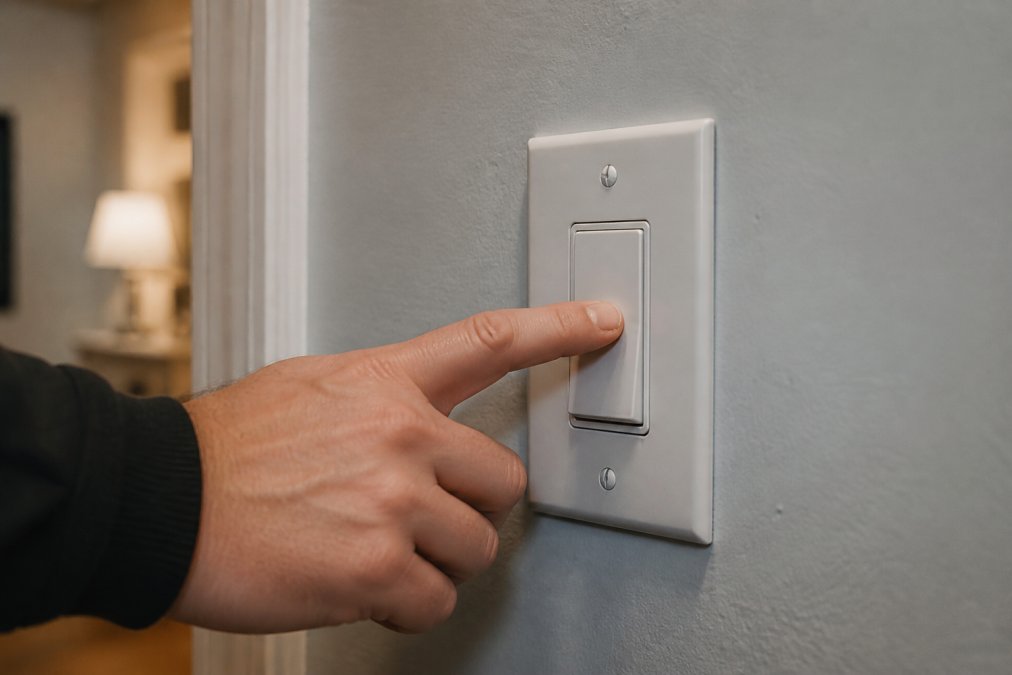
A slightly warm light switch can be normal, but a hot switch, discoloration, or a burning smell is not. If you're asking "is it dangerous if my light switch feels warm," the honest answer is: sometimes it's harmless heat from a dimmer or a heavy load, and sometimes it's a loose connection building toward a fire. At BEARS Electric, we've walked into Bristol-area homes where a "warm" switch turned out to be scorched insulation behind the wall.
Here's how to tell the difference before it becomes an emergency.
Most switches carry a small amount of current and should feel roughly room temperature. Dimmers are the exception, and we'll get to why. What matters is how warm, how often, and whether anything else looks or smells wrong.
Common Causes of a Warm Light Switch
Heat at a switch comes from resistance, and resistance comes from a short list of culprits. The U.S. Consumer Product Safety Commission tracks electrical fires as a leading cause of home fires, and loose connections are among the most common triggers.
The main causes break down into two categories: too much current for the circuit, and too much resistance at the connection.
Overloaded Circuits and High Amperage
An overloaded circuit is one drawing more current than its wiring and breaker are rated to carry. When too many fixtures, appliances, or high-wattage devices share one circuit, the wiring and the switch terminals heat up.
A 15-amp circuit feeding a bathroom, a hallway, and a space heater is a classic overload. The switch becomes the weakest link and the first place you feel the heat.
Watch for:
- Warmth that appears only when specific devices run
- A breaker that trips repeatedly
- Lights that dim when an appliance kicks on
Loose Wire Connections and Faulty Wiring
A loose wire connection creates resistance at the terminal screw, and resistance generates heat. This is the cause we worry about most, because it gets worse over time.
Backstabbed connections, where the wire is pushed into a spring clip rather than wrapped around the screw, loosen as the switch cycles on and off. Aluminum wiring, common in older homes, expands and contracts differently than copper and can work loose at terminals. Poor grounding and worn insulation compound the problem.
If you smell burning near a switch, stop using it and call a licensed electrician. Frank L., one of our customers, put it simply: "BEARS Electric was quick to respond, identified the faulty wiring fast, and solved it efficiently."
Why Dimmer Switches Run Warmer Than Standard Switches
Dimmer switches are designed to run warmer than standard switches, and a modest amount of heat is expected. A dimmer controls light by rapidly switching current on and off, and that process produces thermal dissipation at the device itself. The semiconductor inside a dimmer, a triac or, in newer models, a MOSFET, drops voltage and sheds the leftover energy as heat through the device's metal mounting strap and faceplate.
LED Compatibility and Wattage Ratings
That's where LED compatibility matters. LEDs draw far less wattage than incandescent bulbs, but not all LEDs are dimmable. A non-dimmable LED on a dimmer can flicker, buzz, and cause the dimmer to overheat. If your dimmer is warm and the lights flicker, the bulb is often the problem.
Smart Switches Dissipate Heat Differently
Smart switches, Wi-Fi, Zigbee, Z-Wave, and Matter devices, add a wrinkle that almost no guide explains. Unlike a mechanical switch, a smart switch is always drawing a small amount of power to run its radio and microcontroller, even when the light is off. That standby current produces a low, steady warmth at the faceplate that has nothing to do with the lighting load.
Causes of Burning Smell From Electrical Outlet or Switch
A burning smell from an electrical outlet or switch is never normal and should be treated as an emergency. The smell usually means insulation, plastic, or a wire nut is overheating, and the source is often a loose connection or an overloaded circuit.
Common causes include:
- A short circuit arcing inside the box
- An arc fault at a damaged wire
- A switch or outlet rated below the actual electrical load
- Rodent damage to copper wiring behind the wall
Signs of Faulty Electrical Wiring You Should Never Ignore
Faulty wiring rarely announces itself with a single dramatic failure. It leaves a trail of small warnings, and the signs of faulty electrical wiring are worth memorizing.
Watch for these:
- Discolored or scorched switch plate or outlet cover
- Flickering lights when nothing else changes
- A switch that feels hot rather than warm
- Buzzing or crackling at the electrical box
- A circuit breaker that trips without an obvious cause
- Mild shocks when you touch a switch or appliance
How to Troubleshoot a Warm Switch Safely
Troubleshooting a warm switch safely means cutting power first and observing second. Never probe inside a live box. The steps below walk you through a safe shutdown, a visual inspection of what is actually inside the box, and a controlled test, the same sequence a licensed electrician follows on a service call.
Step 1: Kill the Power and Confirm It
Turn off the circuit at the breaker, not just the switch. Confirm the circuit is dead with a non-contact voltage tester held against the switch plate and the wires before you touch anything. If the tester chirps, stop, you have the wrong breaker or a shared circuit.
Step 2: Pull the Plate and Look
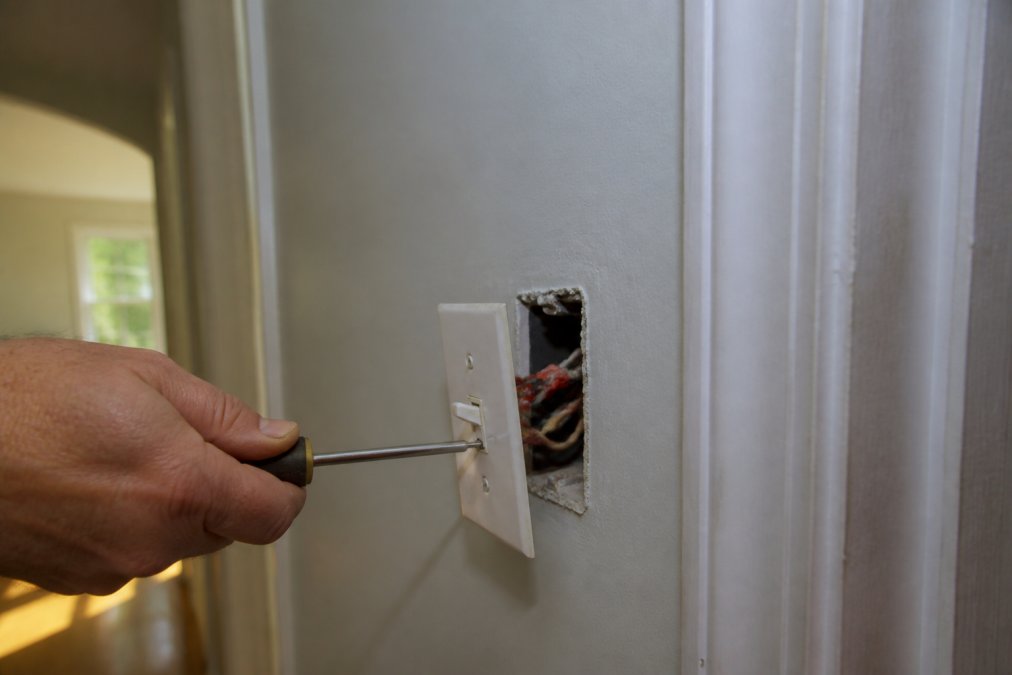
With the power off, remove the switch plate and the two screws holding the switch to the box. Slide the switch out gently, wires are still attached. This is the moment most homeowners skip, and it is the most informative part of the inspection.
Step 3: Visual Inspection Checklist
Look for these specific signs. Any one of them means the circuit needs professional attention:
- Discoloration, brown or black scorching on the switch body, the terminal screws, or the wire insulation near the terminals.
- Melted or deformed plastic, the switch housing or the box itself warped or glossy from heat.
- Charring, black soot or ash on the wires, the wire nuts, or the back of the box.
- Brittle or cracked insulation, wire sheathing that flakes or crumbles when flexed.
- Backstabbed connections, wires pushed into the small holes in the back of the switch rather than wrapped around the terminal screws. These loosen over time and are a leading cause of heat at the switch.
- Aluminum wiring, dull silver-colored conductors rather than shiny copper. Aluminum expands and contracts differently and works loose at terminals.
- Loose terminal screws, a wire that moves when you tug it gently.
Step 4: Note the Load and the Bulb
Before you button anything back up, note what is on the circuit. Too many devices on one circuit is an overload. If it's a dimmer, confirm the bulb is dimmable and that the dimmer's wattage rating, and its minimum load, are not exceeded.
Step 5: Controlled Test
Restore power briefly and feel the switch with the back of your hand. If it heats up quickly, within a minute or two, stop and call an electrician. A switch that warms slowly over hours of use is a different situation than one that gets hot fast.
When to Call a Licensed Electrician
Call a licensed electrician whenever a switch is hot, discolored, buzzing, or accompanied by a burning smell. These are not DIY repairs, and the risk of an electrical fire is real.
Call us if you notice:
- Any burning smell near a switch or outlet
- Scorch marks or melted plastic
- Repeated breaker trips
- Warmth that returns after you've addressed the load
- An older home with aluminum wiring or an aging panel
Frequently Asked Questions
Is it normal for light switches to feel warm?
Yes, a slight warmth is often normal, especially with dimmer switches, which dissipate heat through their faceplate. If the switch is hot to the touch, discolored, or buzzing, it is not normal and should be checked by a licensed electrician. In homes across Bristol, Southington, and Waterbury, we frequently find that warmth combined with flickering lights points to a loose connection or overloaded circuit.
What are the causes of a burning smell from an electrical outlet or switch?
A burning smell usually means overheating components. Common causes include loose wire connections, an overloaded circuit, a failing switch, or degraded insulation on copper wiring. If you notice this smell, turn off the power at the circuit breaker immediately and call an electrician. Do not use the switch until it has been inspected, as the risk of an electrical fire is real.
What are the signs of faulty electrical wiring I should watch for?
Watch for flickering lights, switches that are warm or hot, a burning odor, buzzing sounds, discolored switch plates, and circuit breakers that trip repeatedly. These are all signs of faulty electrical wiring. If you see any of these, especially in older homes, schedule a safety inspection with a qualified electrician. Addressing these early prevents bigger hazards.
At what point does a warm light switch become a fire hazard?
A switch becomes a fire hazard when it is hot to the touch, emits a burning smell, shows scorch marks, or sparks. A mildly warm switch with no other symptoms is usually not an emergency, but it should be monitored. If the warmth increases or you notice any of the other signs, call a licensed electrician right away. Electrical fires often start behind the wall where you can't see them.
A warm switch is a question your home is asking you, and ignoring it is how small resistance becomes a real fire risk. If you're in the Bristol area and something feels off, don't wait for a bigger warning sign. BEARS Electric brings 12 years of experience, transparent pricing, and a satisfaction guarantee to every job, from a single faulty switch to a full rewire. Get a free quote and let us make your home safe and powered efficiently.