 how-to
100 Amp Service for EV Charger: A Homeowner's Guide
Table of Contents
- Understanding Electrical Service Capacity and EV Charging Needs
- Level 2 Charging Requirements and Amperage
- Calculating Your Electrical Load Calculation for Home
- EV Charger Load Management Devices That Work With 100A Panels
- Panel Upgrade vs. Smart Load Management: Cost Comparison
- Safety Considerations for Installing EV Chargers on 100A Panels
- Getting Professional Installation for Your EV Charger
Last Updated: August 28, 2026
Understanding Electrical Service Capacity and EV Charging Needs
Whether 100 amp service is enough for an EV charger depends on your home's total electrical load and the charging speed you need. Most homes with 100-amp service can support Level 2 EV charging, but not always at maximum power. This guide from BEARS Electric covers the technical realities, practical solutions, and when you actually need a panel upgrade.
Your electrical panel distributes power to everything in your home simultaneously. A 100-amp main service provides roughly 80 amps of usable capacity after accounting for the main breaker and safety margins (nfpa.org). Level 2 chargers typically draw between 16 and 48 amps. A standard 30-amp Level 2 charger can fully charge most electric vehicles overnight. But if your home's existing load already consumes 70 amps during evening hours, adding a 30-amp charger pushes you over the safe threshold.
Modern solutions exist specifically for this scenario. Smart chargers and load-balancing devices can work within your existing 100-amp service by adjusting charging rates based on real-time home energy use. You don't always need the expensive panel upgrade that electricians sometimes recommend as the default solution.
Level 2 Charging Requirements and Amperage
Level 2 chargers are the standard for residential EV charging and operate on 240-volt circuits. The National Electrical Code (NEC) requires that a dedicated circuit for an EV charger be sized at 125% of the charger's maximum current draw (nfpa.org). If you want a 40-amp charger, you need a circuit breaker and wiring rated for 50 amps.
Most residential Level 2 chargers fall into these categories:
- 16-amp chargers: Draw 20 amps of circuit capacity, deliver roughly 3.8 kW, add 8-10 hours of charging per day
- 24-amp chargers: Draw 30 amps of circuit capacity, deliver roughly 5.8 kW, add 5-7 hours of charging per day
- 32-amp chargers: Draw 40 amps of circuit capacity, deliver roughly 7.7 kW, add 4-5 hours of charging per day
- 40-48 amp chargers: Draw 50-60 amps of circuit capacity, deliver roughly 9.6-11.5 kW, add 3-4 hours of charging per day
A 48-amp charger running continuously can consume nearly 60% of a 100-amp service's total capacity. Add in your water heater (4-5 kW, roughly 20 amps), HVAC system (3-5 kW), and kitchen appliances, and you're already at or beyond your safe limit. The solution often isn't a panel upgrade but a smarter charger that adjusts its amperage dynamically.
Calculating Your Electrical Load Calculation for Home
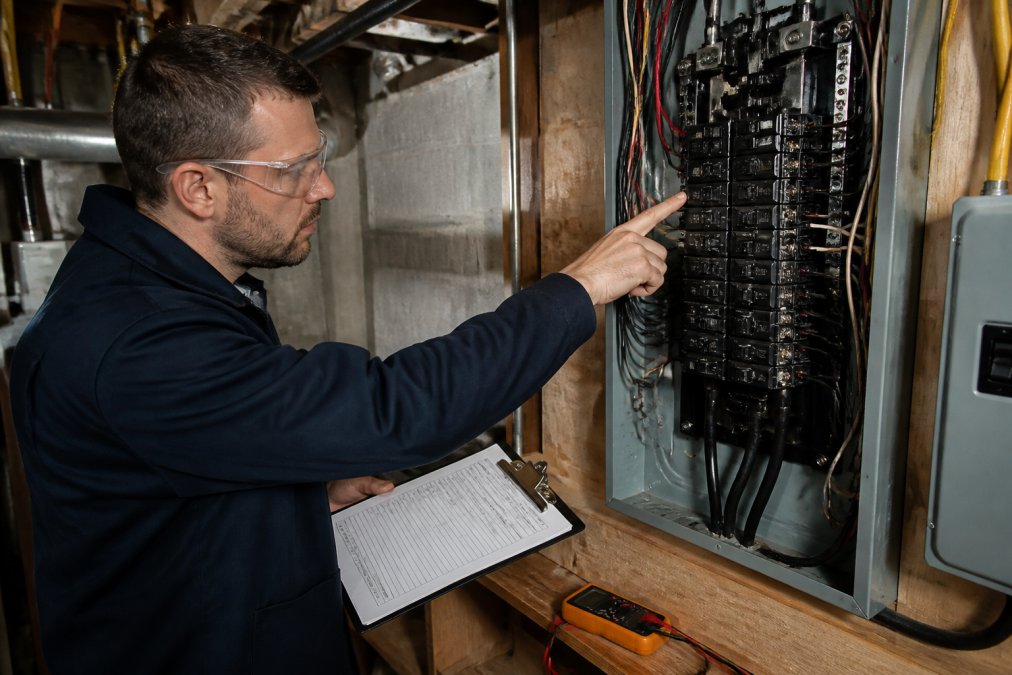
Before deciding whether your 100-amp service is adequate, you need to know your actual electrical load. Start by listing your major appliances and their amperage draws from your electrical panel label:
- Water heater (typically 20-30 amps)
- HVAC system (15-50 amps depending on type)
- Electric range or cooktop (40-50 amps)
- Clothes dryer (20-30 amps)
- Refrigerator (10-15 amps)
- Lighting circuits (15-20 amps per circuit, usually 4-6 circuits total)
- Outlets and miscellaneous loads (15-20 amps per circuit, usually 8-12 circuits total)
The National Electrical Code provides a standardized calculation method. For most homes, you calculate the demand load, the amount of power your home actually uses simultaneously, accounting for the fact that not all appliances run at the same time.
Step 1: Add up all permanent loads (water heater, HVAC, refrigerator, lighting).
Step 2: Apply demand factors. The NEC allows you to reduce the total by a percentage because not everything runs simultaneously. Apply a 70-80% demand factor to appliance circuits.
Step 3: Calculate remaining capacity. Subtract your calculated load from 80 amps (the usable capacity of a 100-amp service). The remainder is what's available for your EV charger.
Example: If your home's calculated load is 65 amps, you have roughly 15 amps of spare capacity. That's enough for a 16-amp charger but not a 32-amp charger.
EV Charger Load Management Devices That Work With 100A Panels
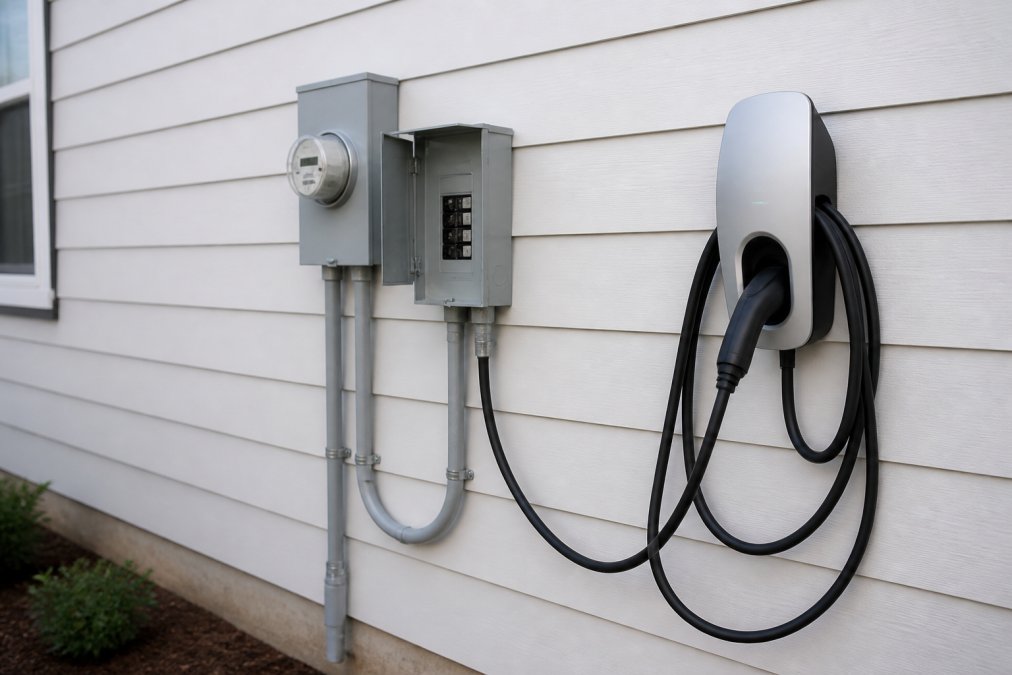
Smart load management devices are the practical solution for homeowners with 100-amp service who want EV charging without a panel upgrade. These devices monitor your home's real-time power consumption and adjust the charger's amperage dynamically.
The Emporia Energy Smart Home EV Charger integrates with the Emporia Vue home energy monitor to track household consumption in real time. The charger's PowerSmart software adjusts charging current between 6 and 48 amps automatically. During peak evening hours, the charger throttles down to 16 amps or less. During off-peak hours, it ramps up to 48 amps.
The Wallbox Pulsar Plus offers adjustable amperage from 16 to 48 amps and connects to the myWallbox app for remote monitoring. The ChargePoint Home Flex provides adjustable charging from 16 to 50 amps and integrates with the ChargePoint app for scheduling and energy tracking.
For homeowners with a 240-volt dryer outlet already installed, the NeoCharge Smart Splitter automatically switches power between your dryer and an EV charger using the same outlet. When your dryer is running, the charger stops. When the dryer finishes, the charger resumes. Installation takes under 10 minutes and costs significantly less than running a new 240-volt circuit.
The Splitvolt Splitter Switch works similarly, sharing a NEMA 10-30 or NEMA 14-30 dryer outlet between a dryer and EV charger without smart features.
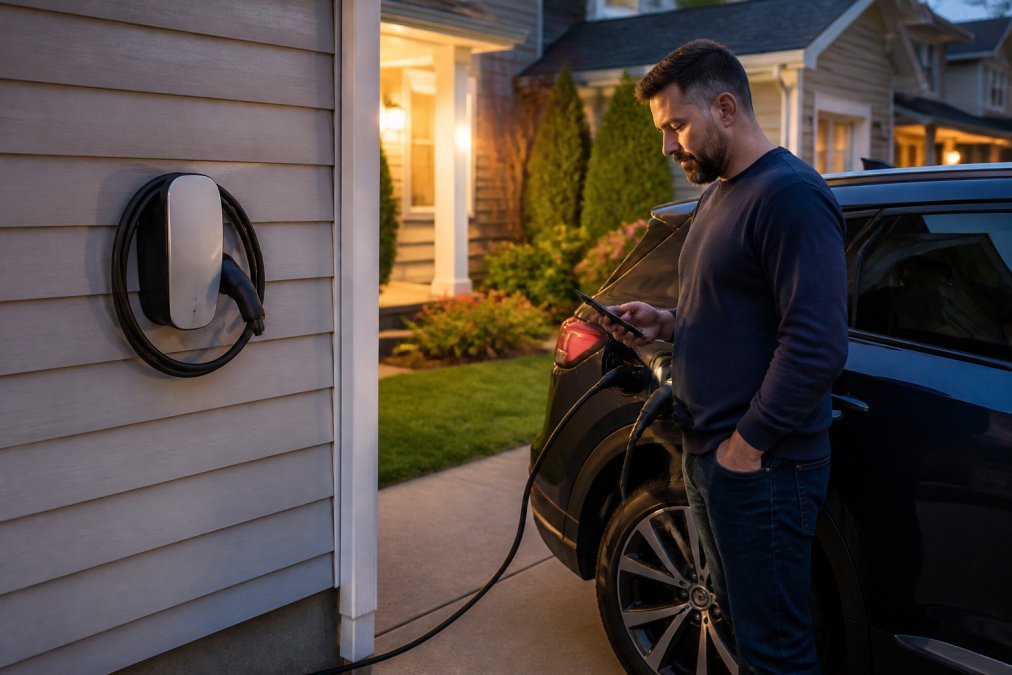
These load management solutions typically cost between $300 and $650 for the device itself. Professional installation adds additional cost, but it's substantially less than a full panel upgrade.
Panel Upgrade vs. Smart Load Management: Cost Comparison
The decision between upgrading your electrical panel and installing a smart load management device comes down to cost, timeline, and your charging preferences.
A full electrical panel upgrade from 100 amps to 200 amps involves utility company service line upgrades, main breaker replacement, panel box and internal wiring replacement, permits, and inspections. The work typically takes 1-3 days and requires utility coordination. Total costs vary widely based on location and existing infrastructure, but the expense is substantial.
Smart load management devices cost $300-$650 and can be installed in a few hours with no utility coordination, permits in many jurisdictions, or extended timeline. If you already have a suitable 240-volt outlet, a splitter device can be installed in under an hour.
The practical trade-off is charging speed. A panel upgrade gives you full 48-amp charging capacity at any time. A smart load management device throttles charging when your home's load is high. During off-peak hours, you get full charging speed. During peak hours, the charger slows down. For most homeowners, overnight charging still fully charges a typical EV by morning.
Consider your actual charging needs. If you drive 30 miles per day and charge overnight, a 16-amp charger adds roughly 3-4 hours of range per night, which is plenty. If you drive 100+ miles daily or have multiple EVs, faster charging becomes more valuable, and a panel upgrade makes more sense.
Safety Considerations for Installing EV Chargers on 100A Panels
Safety is non-negotiable when adding any electrical load to your home. The National Electrical Code exists specifically to prevent electrical fires, shocks, and equipment damage.
The primary safety concern is overloading your electrical service. When total current draw exceeds your panel's capacity, the main breaker should trip, cutting power to the entire home. The NEC requires that your total connected load never exceed 80% of your service capacity (nfpa.org). For a 100-amp service, that means 80 amps maximum. This 20% safety margin exists because electrical loads fluctuate.
Your EV charger must be installed on a dedicated circuit with its own breaker, sized at 125% of the charger's maximum current draw. Undersized wiring causes heat buildup, which can melt insulation and start fires. Professional installation ensures that every EV charger installation meets NEC requirements.
Proper grounding and bonding are critical. EV chargers require proper grounding to safely handle electrical faults. Insurance and warranty implications also matter. Some homeowners' insurance policies require that electrical work be done by licensed electricians. If an EV charger causes a fire and it was installed improperly, your insurance may deny the claim.
Getting Professional Installation for Your EV Charger
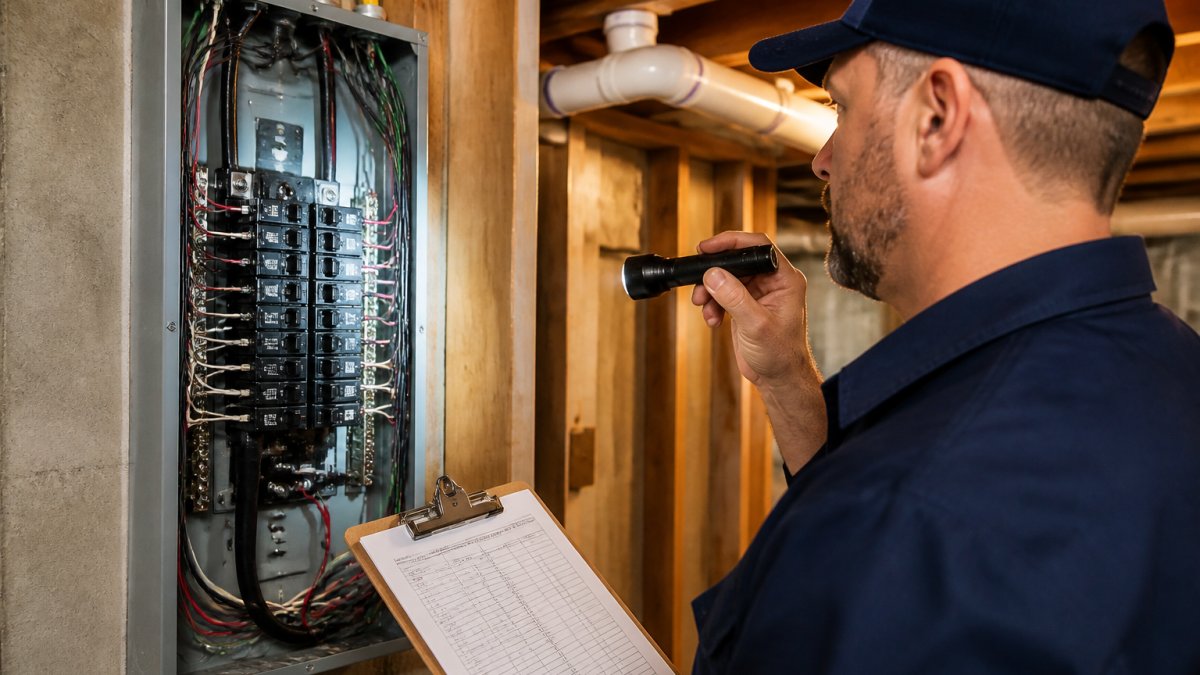
Professional installation ensures your EV charger is safe, code-compliant, and optimized for your home's electrical system. When you contact an electrician like BEARS Electric for EV charger installation, the process begins with an assessment. The electrician reviews your electrical panel, calculates your home's load, and determines what's feasible.
The assessment is crucial because it prevents over-engineering. A professional assessment identifies whether a smart charger or splitter device can solve your problem at a fraction of the cost.
Once you've decided on an approach, the electrician handles permits and utility coordination. Installation timelines vary. A straightforward charger installation on an existing circuit can be completed in a few hours. Running a new circuit takes longer, typically a full day. Smart splitter devices can be installed in under an hour. Panel upgrades require utility scheduling and typically take 1-3 days once scheduled.
BEARS Electric provides transparent pricing and a satisfaction guarantee on all electrical work. The key is to get a professional assessment before assuming you need a panel upgrade. Many homeowners with 100-amp service can install a Level 2 EV charger with smart load management or a splitter device. You only need a panel upgrade if your calculated load genuinely exceeds 80 amps and you want maximum charging speed.
Is 100 amp service enough for an EV charger? Yes, in most cases, but the answer depends on your home's electrical load and charging speed requirements. Many homeowners successfully charge EVs on 100-amp service using smart load management devices or outlet-sharing solutions that cost significantly less than panel upgrades. Contact BEARS Electric for a free evaluation of your home's electrical capacity and charging options. Our team will identify the safest, most cost-effective solution for your needs, whether that's a smart charger, load management device, or panel upgrade. Get started with transparent pricing and a satisfaction guarantee.
Frequently Asked Questions
Can you put an EV charger on a 100 amp service?
Yes, you can install a Level 2 EV charger on 100 amp service, but it depends on your home's total electrical load. After accounting for essential loads like heating, cooling, and appliances, you may have capacity available for an EV charger. If your home's peak demand is already high, you'll need either a panel upgrade or a smart load management device to avoid overloading circuits.
What is a load calculation for EV charger installation?
A load calculation determines how much electrical capacity your home uses and how much remains available for an EV charger. It accounts for permanent loads (HVAC, water heater, kitchen appliances) and demand factors set by the National Electrical Code (NEC). A licensed electrician calculates your home's total demand, then subtracts it from your service capacity. If the remaining capacity is sufficient, a Level 2 charger can be installed safely without a panel upgrade.
Do I need a panel upgrade to install a Level 2 charger?
Not necessarily. If your load calculation shows sufficient available capacity, you can install a Level 2 charger directly. However, if your home's electrical demand is already near maximum, you have two options: upgrade to a 200-amp panel or install a smart load management device that dynamically adjusts charging speed based on your real-time energy use. Smart chargers and outlet splitters allow 100-amp panels to support EV charging without upgrades in most cases.
What are the risks of overloading a 100 amp electrical panel?
Overloading a 100-amp panel creates fire hazards, circuit breaker tripping, and potential damage to appliances. If total electrical demand exceeds the panel's capacity, the main breaker trips repeatedly, leaving you without power. Sustained overloading can overheat wiring and breakers, creating fire risk. This is why the NEC requires a load calculation before EV charger installation. A licensed electrician ensures your installation stays within safe limits, protecting your home and family.
This article was written using GrandRanker