 how-to
Signs of Outdated Electrical Wiring in Historic Homes
Table of Contents
- Signs of Bad Wiring in a House: What Historic Homeowners Notice First
- Knob-and-Tube Wiring and Other Old Wiring Types to Identify
- How Electricians Inspect Old Wiring in Historic Homes
- Code, Insurance, and Historic-District Considerations
- When to Replace Old House Wiring: A Symptom-to-Urgency Plan
- Historic-Preservation-Friendly Upgrade Methods
- Frequently Asked Questions
Last Updated: October 12, 2026
Signs of Bad Wiring in a House: What Historic Homeowners Notice First
The signs of outdated electrical wiring in historic homes usually show up long before a breaker trips: flickering lights, warm outlet covers, a faint burning smell, or two-prong outlets with no ground.
Old wiring often looks fine from the outside. Cloth insulation can crumble inside a wall you never open, and a previous owner may have spliced new wire onto old.
Flickering Lights, Dimming Lights, and Warm Outlets
Flickering or dimming lights usually point to a loose connection or an overloaded circuit, not a bad bulb, especially when they pulse as a big appliance starts.
Warm or discolored outlet covers are more serious. If a cover plate feels hot or shows scorch marks, stop using that outlet and have it checked. Heat means resistance, and resistance starts electrical fires.
Watch for these early warning signs:
- Lights that flicker when the refrigerator or furnace kicks on
- A dimming pattern that repeats every time an appliance starts
- Outlet or switch covers that feel warm to the touch
Tripped Breakers, Blown Fuses, and Burning Smells
Breakers that trip often, or fuses that blow repeatedly, signal an overloaded or failing circuit.
A burning smell is the one sign you never ignore. If you catch a melting plastic odor near an outlet or panel, cut power to that area and call an electrician right away.
Many homes in older neighborhoods still run on fuse boxes rather than breaker panels.
Knob-and-Tube Wiring and Other Old Wiring Types to Identify
Most guides list old wiring types in a table and move on. That's not enough when you're standing in a dim attic in Collinsville or a stone basement in Litchfield.
First, the safety boundary. Do not remove outlet covers, pull back insulation, open a panel, or touch exposed conductors to identify wiring. Cloth and early rubber insulation can crumble from light contact, and energized conductors are present even when a switch is off.
Knob-and-Tube Wiring
Knob-and-tube was the standard from roughly the 1880s into the 1930s, lingering in some rural areas into the 1940s.
What to look for from a safe vantage point:
- White or cream ceramic spools (knobs) spaced along joists
- Single wires, not a wrapped cable, running parallel
- Ceramic tubes where wire passes through wood
Knob-and-tube has no equipment ground, its insulation becomes brittle with heat and age, and it was designed for lighting and small appliances, not a modern household's load. It isn't automatically dangerous, but it needs an assessment, especially if it's been spliced into or buried under added insulation.
Aluminum Wiring
Aluminum branch-circuit wiring shows up mainly in homes built or wired between the mid-1960s and mid-1970s, and looks like silver-colored metal rather than the copper tone most people expect.
From a safe distance, look for:
- Silver-colored conductors at visible junctions or in an open panel
- The word "aluminum" or "AL" printed on cable sheathing
- Warm or discolored cover plates on circuits that see regular use
Aluminum wiring can often be made safer with approved connection methods rather than a full rewire, but that determination belongs to a licensed electrician who can inspect the terminations.
Cloth-Insulated and Early Rubber Wiring
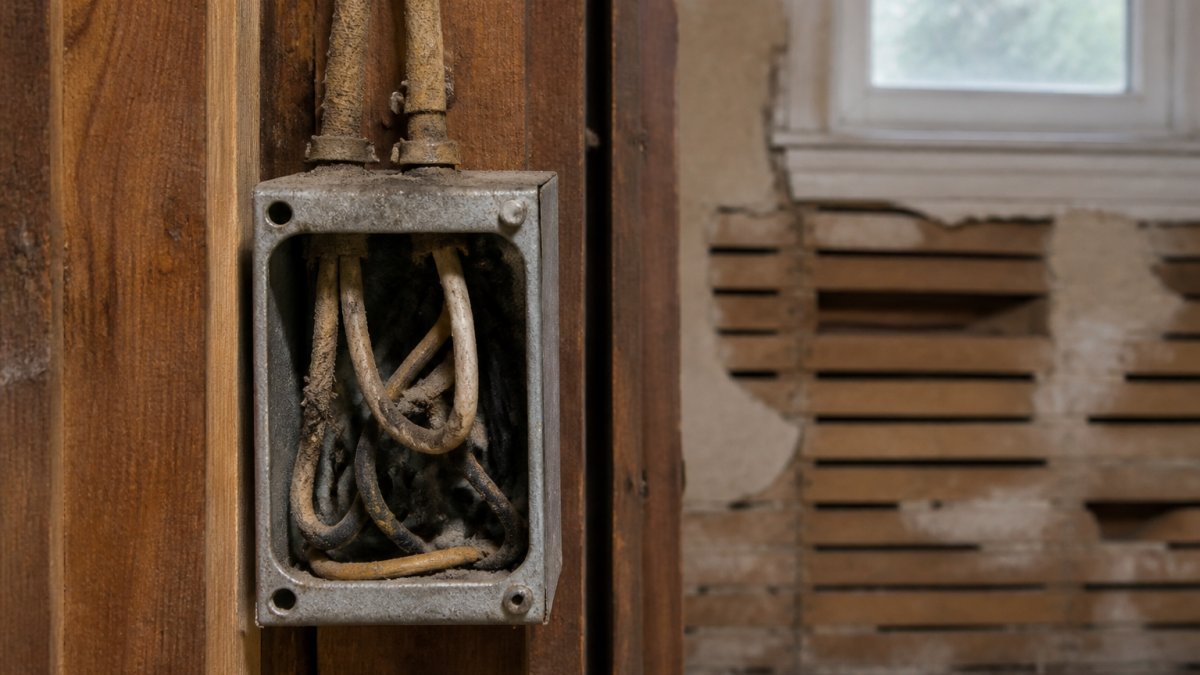
Before plastic-jacketed cable became standard, conductors were wrapped in cloth, rubber, or both. You'll find it in homes from the early 1900s through the 1950s, sometimes as a two-wire cable with a fabric outer wrap. The failure mode is the insulation itself: it dries, cracks, and crumbles, exposing conductors inside walls where no one sees it until something goes wrong.
Warning signs visible without touching:
- Fabric-wrapped cable with a frayed or powdery appearance
- Insulation flaking off near a box or fixture
- Bare conductor visible where the jacket has failed
Two-Prong Outlets and Ungrounded Circuits
Two-prong receptacles, the ones with no third hole, are a symptom, not a wiring type. They tell you the circuit has no equipment ground, which was normal when the home was built and is a shock hazard today for electronics and appliances that expect one. You may also find three-prong outlets on an ungrounded circuit, which is worse because it looks safer than it is.
A Quick Comparison
| Wiring Type | Typical Era | What It Looks Like | Main Concern |
|---|---|---|---|
| Knob-and-tube | 1880s-1940s | Ceramic knobs, single cloth wires | No ground, brittle insulation |
| Aluminum | Mid-1960s-mid-1970s | Silver-colored metal conductors | Loose connections, overheating |
| Cloth/rubber-insulated | Early 1900s-1950s | Fabric-wrapped cable | Cracked, deteriorated insulation |
| Two-prong outlets | Pre-1960s construction | Receptacles with no third hole | No grounding, shock hazard |
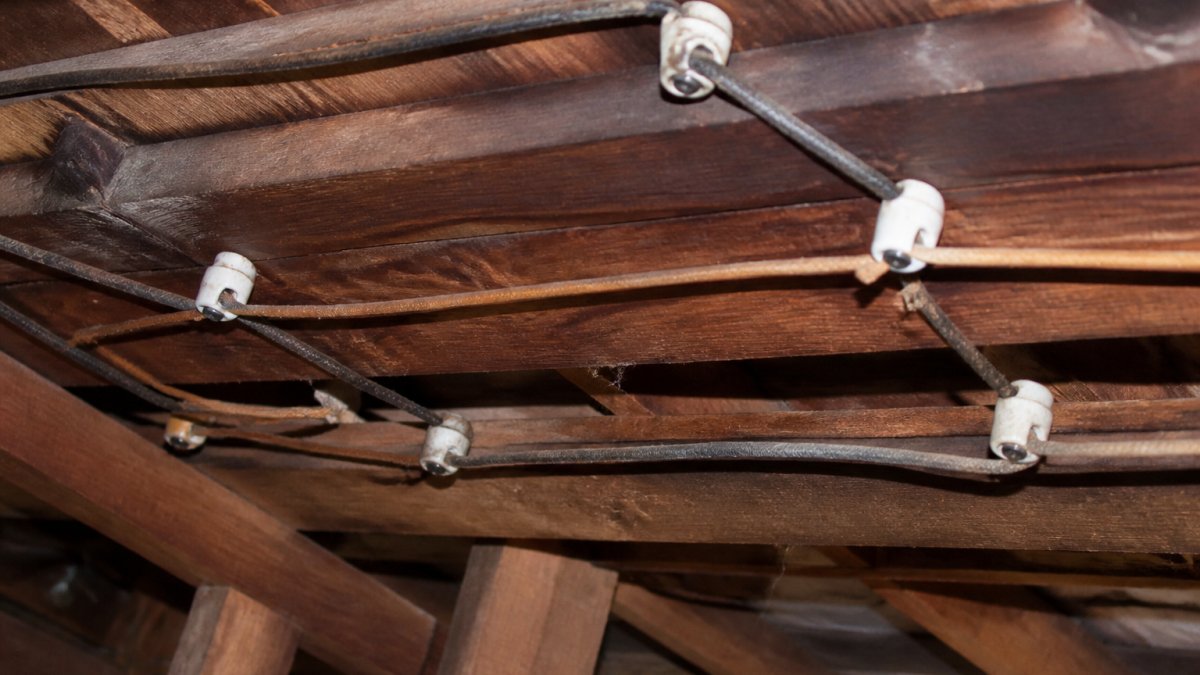
If you spot any of these in a home in Terryville, Plymouth, or Thomaston, write down what you saw and where. That description, plus photos taken from a safe distance, gives an electrician a head start.
How Electricians Inspect Old Wiring in Historic Homes
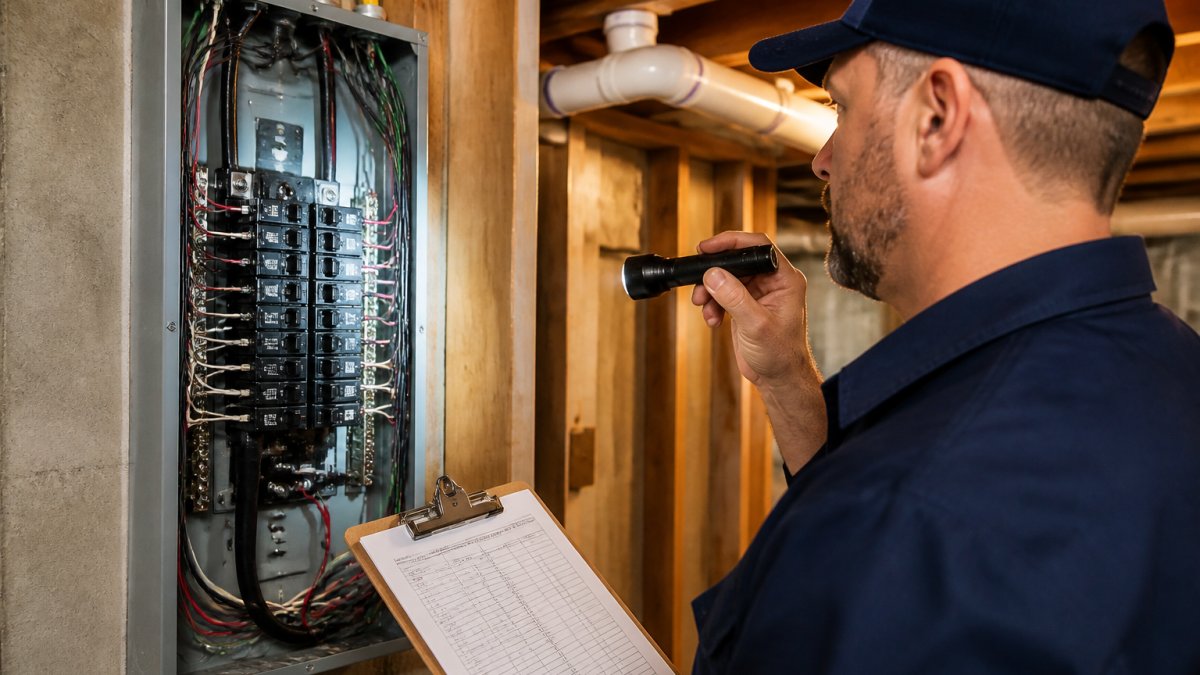
An electrical inspection starts with the panel and works outward to every outlet, switch, and fixture. The electrician checks the panel for overloaded circuits, tests outlets for grounding and loose connections, and in historic homes looks behind accessible walls and in attics and basements for wiring type.
Here's what a typical inspection covers:
- Panel and breaker condition, plus circuit load
- Outlet and switch testing for grounding and heat
- Wiring type identification in attics, basements, and crawl spaces
Expect the electrician to explain what's safe, what needs watching, and what needs replacing. If you're in a town like Farmington, Southington, or New Britain, ask whether the home has had any prior upgrades. Records help.
Code, Insurance, and Historic-District Considerations
Older wiring is often "grandfathered," meaning it was legal when installed but doesn't meet current code. That doesn't make it safe. It just means no one is forcing an upgrade until you renovate, sell, or file a claim.
Two things trip up historic homeowners:
- Insurance. Many insurers ask about wiring age and type. Knob-and-tube or aluminum wiring can raise premiums or lead to a coverage refusal.
- Historic districts. If your home sits in a designated district, exterior changes may need review. Interior electrical work usually doesn't, but always confirm before you start.
For the actual code language, check the National Electrical Code overview and your local building department. Rules vary by town, so a quick call saves headaches later.
When to Replace Old House Wiring: A Symptom-to-Urgency Plan
Not every sign means a full rewire. Use this plan to sort urgent problems from ones you can schedule.
| Symptom | Urgency | Action |
|---|---|---|
| Burning smell, scorch marks | Emergency | Cut power, call now |
| Warm outlets, melting odor | Same day | Stop using the outlet |
| Frequent tripped breakers | This week | Book an inspection |
| Flickering or dimming lights | Soon | Have the circuit checked |
| Two-prong outlets, no ground | Plan it | Schedule an upgrade |
| Knob-and-tube or aluminum | Plan it | Get a full assessment |
When to replace old house wiring comes down to three questions: Is it a safety risk right now? Is it failing under your current load? Are you planning a renovation or adding a big appliance? If any answer is yes, get a professional opinion first.
Historic-Preservation-Friendly Upgrade Methods
A modern home can be rewired with the walls open. A historic home usually can't, or shouldn't, be. Plaster, original trim, picture rails, tin ceilings, and hand-finished woodwork are part of what makes the house worth protecting, and tearing them out to run cable is expensive and irreversible. The good news: most historic homes can be brought up to a safer standard without gutting them.
Working With Plaster Instead of Through It
Plaster is harder to cut cleanly than drywall, but it can be opened in small, targeted sections and patched so the repair disappears. The standard approach is to fish new cable through existing wall cavities using the spaces behind baseboards, inside closets, and along floor joists, using flexible rods, fish tape, and long drill bits to route cable with minimal openings.
A few practical points:
- Use existing chases. Knob-and-tube era homes often have open framing cavities that make fishing easier than in newer construction.
- Work from unfinished spaces. Attics, basements, and crawl spaces give access without touching finished rooms.
- Cut small, patch carefully. A good plaster repair blends into the wall; a large cut rarely does.
Rewiring Room by Room
A whole-house rewire is disruptive and expensive. A room-by-room approach spreads the work over time, keeps the home livable, and lets you prioritize the rooms that matter most, kitchens, bathrooms, and any room with heavy modern load. It also lets you sequence work around other projects so you're not opening the same wall twice.
Adding Grounding Without Rewiring Everything
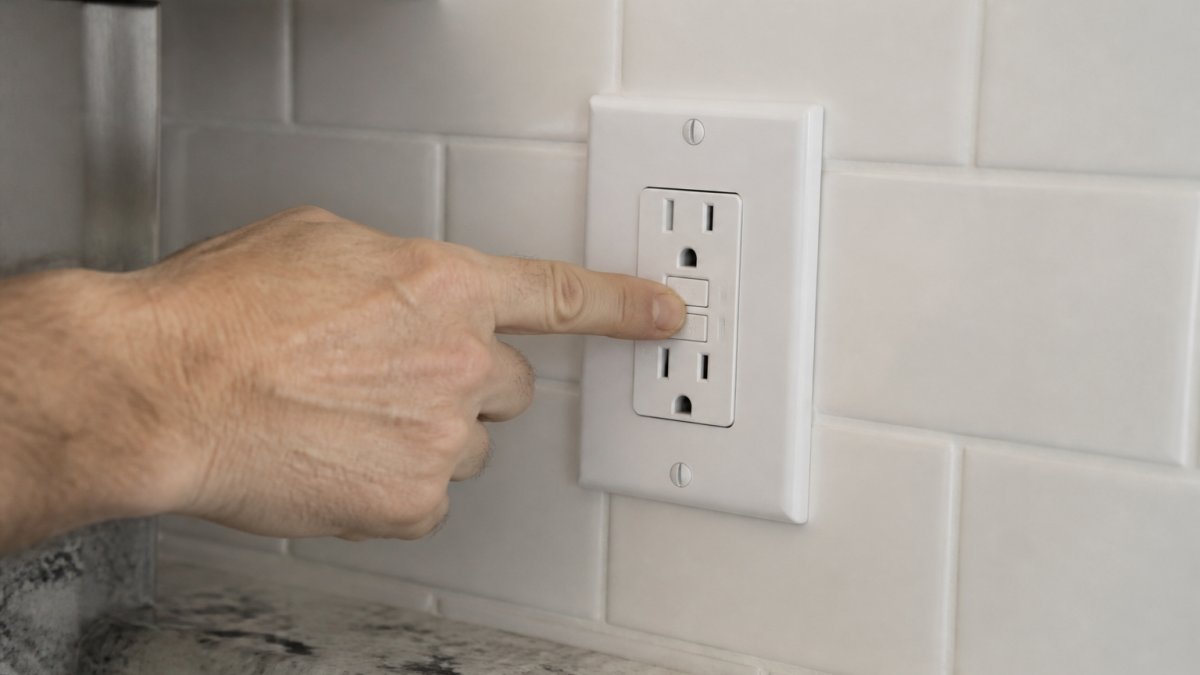
Two-prong outlets don't always require a full rewire. Depending on the circuit, an electrician may run a grounding conductor to specific receptacles, install a GFCI-protected receptacle as an approved alternative in some locations, or add a dedicated grounded circuit for a specific appliance. Each option has trade-offs, and the right choice depends on the circuit and what you're plugging in.
Panel and Service Upgrades
Many historic homes still run on a fuse box or a small panel sized for lighting and a few appliances. A modern household, refrigerator, microwave, dishwasher, laundry, HVAC, possibly an EV charger, needs more capacity. A panel upgrade is often the single highest-impact improvement because it makes everything downstream safer and gives you room for dedicated circuits.
Dedicated Circuits for Modern Loads
Kitchens, bathrooms, laundry rooms, and garages all benefit from dedicated circuits. In a historic home, this often means running one new circuit to a specific area rather than rewiring the whole house. It's a targeted fix that solves a real problem without disturbing the rest of the home.
What to Watch For
- Don't let anyone tape over cracked insulation. Taping is not a repair; it hides a hazard.
- Don't bury splices behind plaster. Every splice belongs in an accessible box.
- Don't assume a new panel fixes old wiring. The panel is one part of the system; the branch circuits matter just as much.
A Note on Historic Districts
If the home sits in a designated historic district, common in places like Farmington, Wethersfield, and Litchfield, exterior changes may need review by a preservation authority. Interior electrical work usually doesn't, but it's worth a quick call before work begins.
If you're not sure where to start, an electrician who works on older homes regularly can walk the property with you and outline a phased plan, a roadmap for the next several years that keeps you from making expensive decisions twice.
Frequently Asked Questions
What are the signs of outdated electrical wiring in a historic home?
The most common signs of outdated wiring include flickering or dimming lights, warm or discolored outlets, burning smells, frequently tripped breakers, two-prong ungrounded outlets, and visible frayed or cracked insulation. In historic homes, you may also find knob-and-tube wiring in attics or aluminum wiring at switches. Any burning odor or scorch marks warrants an immediate call to a licensed electrician.
Is knob-and-tube wiring safe in a historic home?
Knob-and-tube wiring was designed for the electrical loads of its era, not today's appliances and electronics. The wiring itself can last, but the cloth insulation becomes brittle over time, and connections inside walls can loosen. Many insurance carriers now require disclosure or replacement. A licensed electrician can assess whether your knob-and-tube circuits are still serviceable or need replacement.
How do electricians inspect old wiring in a historic home?
An electrician typically inspects the panel, opens a sample of outlets and switches, checks the attic and basement for accessible wiring runs, and tests for proper grounding and circuit loads. In plaster-walled homes, they may use specialized tools to trace wiring without major demolition. The goal is to identify deteriorated wiring, improper splices, and overloaded circuits before they become hazards.
When should old wiring in a house be replaced?
Replacement is warranted when you find aluminum branch circuits, brittle cloth insulation, ungrounded outlets throughout the home, or evidence of overheating such as scorch marks. If your panel is overloaded or you are planning a renovation or EV charger installation, upgrading the wiring and panel is often the safer path. A licensed electrician can help you prioritize based on urgency and budget.
Old wiring in a historic home is a safety issue you can manage, not a problem you have to live with. BEARS Electric handles wiring repairs, panel upgrades, and full assessments for older homes across Bristol, Southington, Waterbury, Torrington, and the surrounding area. We offer transparent pricing with no hidden fees, a satisfaction guarantee, and same-day service whenever we can. Get a free quote from BEARS Electric and know exactly where your home's electrical system stands.