 how-to
Calculate Total Wattage for Home Backup Generator Sizing
Table of Contents
- Understanding Running Wattage vs Starting Watts
- How to Calculate Total Wattage for Your Home
- Essential vs Non-Essential Appliance Power Needs
- Common Appliance Wattage Requirements
- Generator Sizing Formula and the 80% Rule
- Safety Considerations and Avoiding Overloading
- Converting Amps and Volts to Watts
- Frequently Asked Questions
Last Updated: October 2, 2026
Understanding Running Wattage vs Starting Watts
The difference between running wattage and starting watts is the foundation of proper generator sizing. Running wattage is the steady power an appliance needs while it operates. Starting watts (also called surge watts) is the extra power required during the first few seconds when an appliance turns on.
Many appliances draw significantly more power at startup than while running, a refrigerator needs 600 watts continuously but 2,200 watts when the compressor kicks in.
Undersizing by ignoring surge watts is costly: your generator must handle both running load and peak surge, or appliances won't start and equipment may be damaged.
How to Calculate Total Wattage for Your Home
To calculate total wattage generator sizing, list every appliance you want to power, identify which run simultaneously, and add a safety margin for power fluctuations and future needs.
Step 1: List All Appliances and Their Wattage Requirements
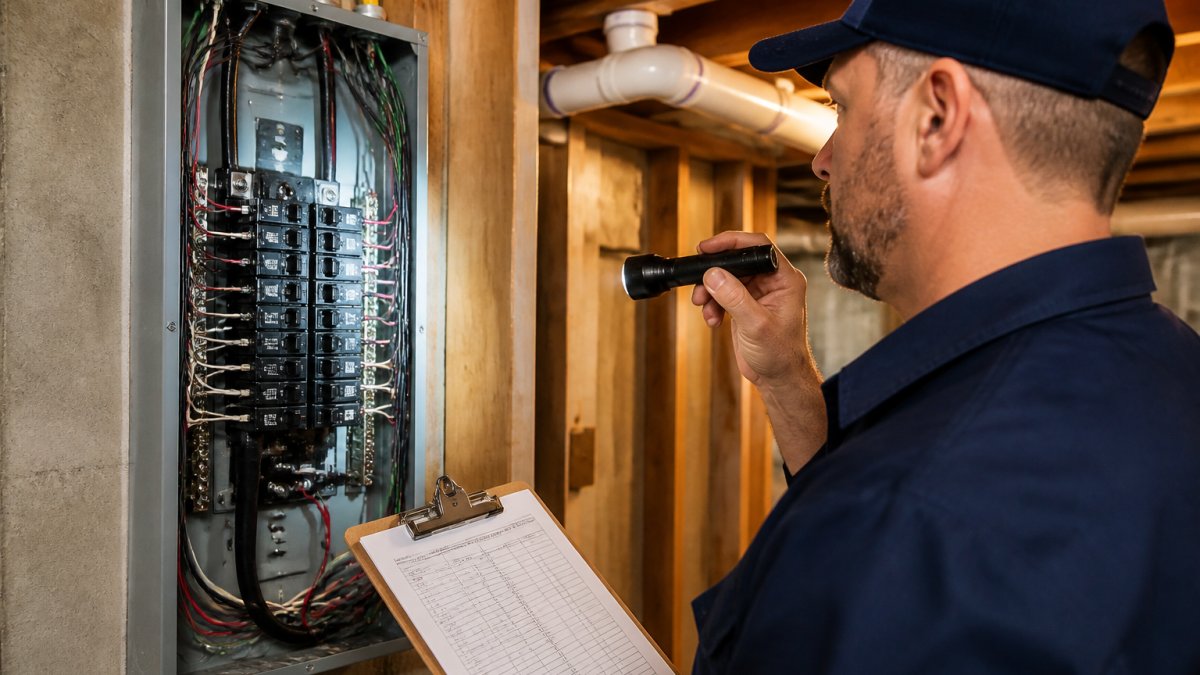
Create an inventory of every device in your home and note its running wattage from the nameplate. For appliances without visible ratings, use Watts = Volts × Amps (check your breaker panel or manual). Include small appliances, lights, chargers, and electronics add up quickly.
Step 2: Identify Peak Load and Simultaneous Usage
Peak load is the total wattage of all appliances running simultaneously. Most homes don't run everything at once, so identify your realistic scenario: which essential appliances (furnace, refrigerator, water heater, well pump, AC) might cycle on together? Add their starting watts, then add running watts of non-essential items you want to power. This total is your peak load.
Step 3: Add a Safety Margin
Never size a generator to exactly match your calculated load. The industry standard 80% rule requires your peak load never exceed 80% of rated capacity. If peak load is 10,000 watts, divide by 0.80 to get 12,500 watts. This 20% headroom protects equipment, improves efficiency, extends lifespan, and accounts for future appliances like EV chargers or HVAC upgrades.
Essential vs Non-Essential Appliance Power Needs
Essential appliances keep your home safe and livable:
- Furnace or heat pump (heating/cooling)
- Refrigerator (food safety)
- Well pump (water supply)
- Sump pump (basement flooding prevention)
- Water heater (hot water and comfort)
- Medical equipment (life-critical devices)
- Security system (home protection)
Non-essential appliances improve comfort but aren't critical:
- Television and entertainment systems
- Computers and home office equipment
- Washer and dryer
- Dishwasher
- Microwave
- Lighting (beyond critical areas)
- EV charger
Most homeowners can't afford a generator large enough to power everything. Decide in advance which appliances matter most during an outage, this drives your generator size and budget. BEARS Electric can help you assess which circuits to prioritize and ensure your generator installation meets code requirements throughout Central Connecticut.
Common Appliance Wattage Requirements
| Appliance | Running Watts | Starting Watts |
|---|---|---|
| Refrigerator | 600 | 2,200 |
| Air conditioner (central, 3-ton) | 3,500 | 6,500 |
| Electric water heater | 4,000 | 4,000 |
| Well pump (1 hp) | 1,000 | 3,500 |
| Furnace (oil or gas) | 800 | 2,000 |
| Microwave | 1,000 | 1,000 |
| Dishwasher | 1,800 | 3,000 |
| Clothes washer | 500 | 1,100 |
| Clothes dryer (electric) | 3,500 | 3,500 |
| Heat pump | 3,000 | 6,000 |
| Sump pump (1/2 hp) | 800 | 2,400 |
| Television | 100 | 100 |
| Computer setup | 300 | 300 |
| Lighting (whole house) | 200 | 200 |

Older appliances often draw more power; newer Energy Star models may use less. Always check your specific appliance's nameplate for accurate information.
Generator Sizing Formula and the 80% Rule
List all appliances running simultaneously and add their starting watts. Divide by 0.80 to apply the 80% rule. Example: 10,000-watt peak load ÷ 0.80 = 12,500-watt generator. Generators operate most efficiently between 50-80% of rated capacity; higher loads reduce efficiency, increase fuel consumption, and stress the engine. The 20% cushion keeps everything running smoothly and ensures reliable response to sudden power demands.
Safety Considerations and Avoiding Overloading
Generator safety spans three critical areas: proper sizing to prevent overload, electrical isolation to protect the grid and utility workers, and output quality to protect sensitive home electronics. Overlooking any one of these creates hazards or costly equipment damage.
Recognizing and Preventing Overload
Signs of overloading include dimming lights, tripping breakers, unusual sounds, burning smells, or slow appliances. Overloading stresses the engine and alternator, causing permanent damage in minutes and increasing fire risk. The 80% rule gives your generator breathing room to handle surges without strain.
Electrical Isolation: Transfer Switches vs. Interlock Kits
You cannot plug a generator into a wall outlet. This creates backfeeding, electricity flowing backward into utility lines, which can electrocute utility workers and damage the grid.
There are two code-compliant methods to isolate your generator from the utility:
Transfer Switch (Automatic or Manual), A dedicated electrical panel between your main breaker and utility connection that prevents the generator and utility from being connected simultaneously. Automatic transfer switches (ATS) detect outages and switch over without intervention; manual switches require you to flip a lever. Both are code-compliant and safe. Transfer switches are the gold standard for whole-home backup, allowing you to power multiple circuits simultaneously.
Interlock Kit, A mechanical or electrical device preventing the main and generator breakers from being on simultaneously. Less expensive than a transfer switch but requires manual intervention (turn off main breaker, flip interlock, turn on generator breaker).
Generator Output Quality and Sensitive Electronics
Power quality, the stability and cleanliness of the electrical signal, matters for sensitive electronics. Standard generators produce voltage fluctuations and harmonic distortion, which can corrupt data, damage power supplies and circuit boards, and void warranties on computers and smart appliances. Inverter generators produce stable, clean power by converting AC to DC and back to AC, filtering out spikes and distortion.
Carbon Monoxide and Outdoor Operation
Never run a generator indoors or in partially enclosed spaces. Always operate outside, at least 20 feet from windows, doors, and vents, carbon monoxide kills silently, and exhaust seeps through walls and cracks even with garage doors open (the CDC).
Professional Installation
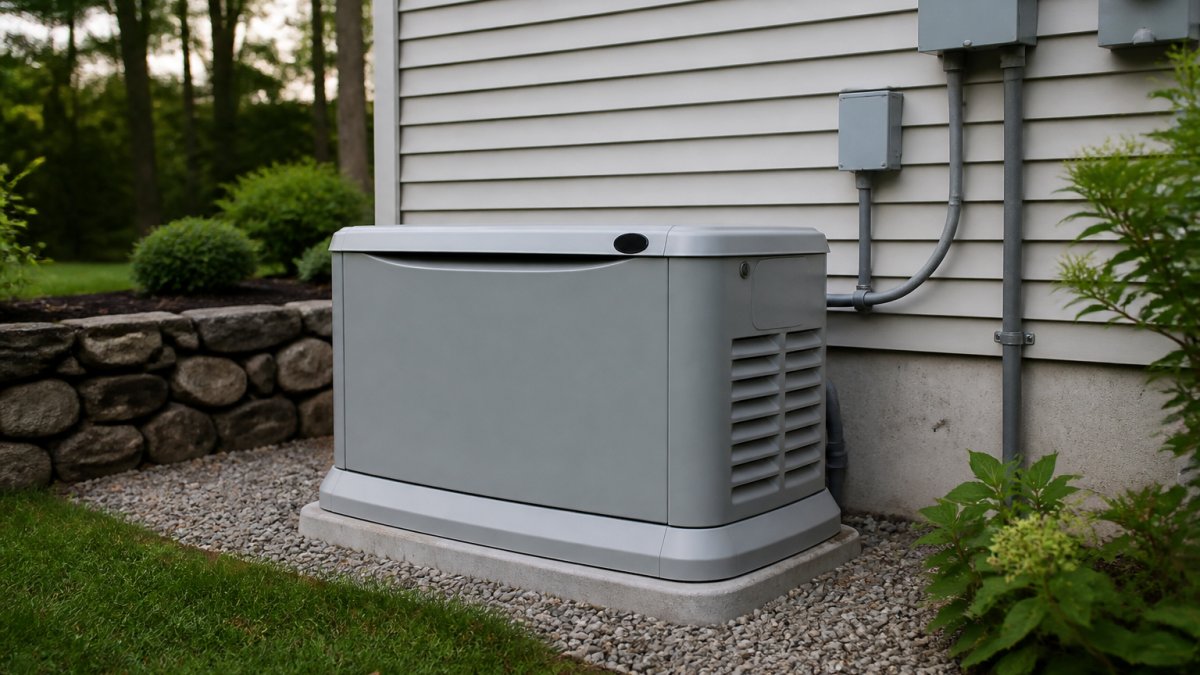
Generator installation isn't a DIY project. Proper sizing, electrical isolation, and safe connection require a licensed electrician familiar with local code. BEARS Electric handles complete generator installations throughout Central Connecticut, ensuring your system is safe, code-compliant, and properly integrated with your home's electrical infrastructure.
Converting Amps and Volts to Watts
If an appliance label shows amps and volts instead of watts, you can calculate watts using a simple formula. But the conversion is only the first step; understanding which wattage figure to use in your sizing calculation is where most homeowners stumble.
The Basic Conversion Formula
Single-phase (residential): Watts = Volts × Amps. Example: 240V × 8A = 1,920 watts. Three-phase (commercial): Watts = Volts × Amps × Power Factor × √3 (power factor typically 0.85-0.95). Check the nameplate or manual if unsure.
Running Wattage vs. Starting Wattage in Conversions
Here's where the conversion gets tricky. The amps listed on a nameplate usually represent running amperage, not starting amperage.
But motors, well pumps, air conditioning compressors, furnace blowers, sump pumps, draw significantly more amps at startup.
To estimate starting wattage for a motor:
- Calculate running wattage using the formula above.
- Multiply by 2 to 4, depending on motor type.
- Small motors (1/2 hp or less): multiply by 3-4
- Larger motors (1-2 hp): multiply by 2-3
- Compressors and pumps: multiply by 2.5-3.5
Example: A 1 hp well pump rated 240V, 8A has running wattage of 1,920 watts.
If the nameplate already lists starting amps (some do), use those directly in the formula to get starting wattage, no multiplier needed.
Accounting for Real-World Conditions: Altitude and Temperature Derating
Generator manufacturers rate their equipment at sea level and standard temperature (59°F).
Altitude Derating
At higher elevations, air is thinner, so the engine gets less oxygen for combustion.
If you live in the higher elevations of Torrington, Litchfield, or Harwinton, this matters.
Temperature Derating
Hot ambient temperatures reduce generator output because the engine runs hotter and less efficiently.
Example: Running a generator in 95°F heat (36°F above standard) reduces output by roughly 3.6%.
Combined Derating
If you live at 1,500 feet elevation and experience summer temperatures of 90°F, your 12,000-watt generator is effectively delivering:
- Altitude loss: 12,000 × 0.035 × 1.5 = 630 watts
- Temperature loss: 12,000 × 0.01 × 3.1 = 372 watts
- Effective output: 12,000 − 630 − 372 = 10,998 watts
Practical Tips for Accurate Conversion
- Always check the appliance nameplate or manual for voltage and amperage. Don't assume 120V or 240V.
- If an appliance lists both running and starting amps, use starting amps for your peak load calculation.
- For motors without starting amps listed, use the 2-4× multiplier on running wattage.
- If you live at elevation or in a hot climate, apply derating to your final generator size to ensure adequate capacity.
- Keep a calculator and notepad handy when building your appliance list. Accurate conversions prevent undersizing errors that show up during the first outage.
Frequently Asked Questions
What is the difference between starting watts and running watts?
Running watts (also called rated watts) is the continuous power an appliance needs to operate. Starting watts (surge watts) is the extra power required when an appliance first turns on, often 2 to 5 times higher than running watts. For example, an air conditioner might need 3,500 running watts but 5,000 starting watts. Your generator must handle both to avoid shutdowns or damage. This is why calculating total wattage requires accounting for which appliances start simultaneously.
How do I calculate the total wattage of my household appliances?
List every appliance you want to power, note its wattage (found on the device label or manual), then determine which ones run simultaneously during an outage. Add the running watts for appliances that operate at the same time, then add the starting watts for the largest motor-driven appliance that starts first. For example, if your HVAC (5,000 starting watts) and water heater (4,500 running watts) run together, your total is 9,500 watts. Include a 20% safety margin by multiplying your total by 1.2.
Why is it important to avoid overloading a backup generator?
Overloading a generator damages the unit, reduces its lifespan, and risks shutting down during an outage when you need it most. Generators are rated for maximum continuous power output; exceeding that rating causes voltage fluctuations that harm sensitive electronics like computers, medical equipment, and modern appliances. The 80% rule recommends sizing your generator so your actual load never exceeds 80% of its capacity, giving you headroom for power fluctuations and unexpected simultaneous appliance starts.
What is the 80% rule for generator sizing?
The 80% rule states that your actual electrical load should not exceed 80% of your generator's rated capacity. This safety margin accounts for power fluctuations, starting surges, and future appliance additions. For example, if your calculated total load is 8,000 watts, you should install a 10,000-watt generator (8,000 ÷ 0.8 = 10,000). This ensures reliable operation, protects your appliances from voltage drops, and extends your generator's service life by preventing it from running at maximum capacity continuously.