 how-to
How to Check for Electrical Code Compliance
Table of Contents
- What Electrical Code Compliance Actually Means for Your Home
- Step 1: Pull Your Permit History and Check Local Requirements
- Step 2: Run Through a Residential Electrical Inspection Checklist
- Common NEC Electrical Code Violations Homeowners Miss
- Why Do My Lights Flicker in House? When It Signals a Code Problem
- DIY vs. Professional Scope: What You Can Check and What You Cannot
- Hiring a Licensed Electrician for Code Compliance and Scheduling the Inspection
- Frequently Asked Questions
Last Updated: October 1, 2026
What Electrical Code Compliance Actually Means for Your Home
Electrical code compliance means meeting the National Electrical Code and your local building department's rules for safe wiring, panels, and outlets. This guide from BEARS Electric breaks down how to check for electrical code compliance step by step, so you can spot problems before an inspector does.
The National Electrical Code and Your Local Building Department
The National Electrical Code, or NEC, is the model code most states and towns adopt for safe electrical work, enforced locally through permits and inspections.
- The NEC sets the baseline safety standard.
- Your town adopts a version and adds local amendments.
- The building department issues permits and sends inspectors.
- An inspection confirms the work meets code before it is signed off.
Step 1: Pull Your Permit History and Check Local Requirements
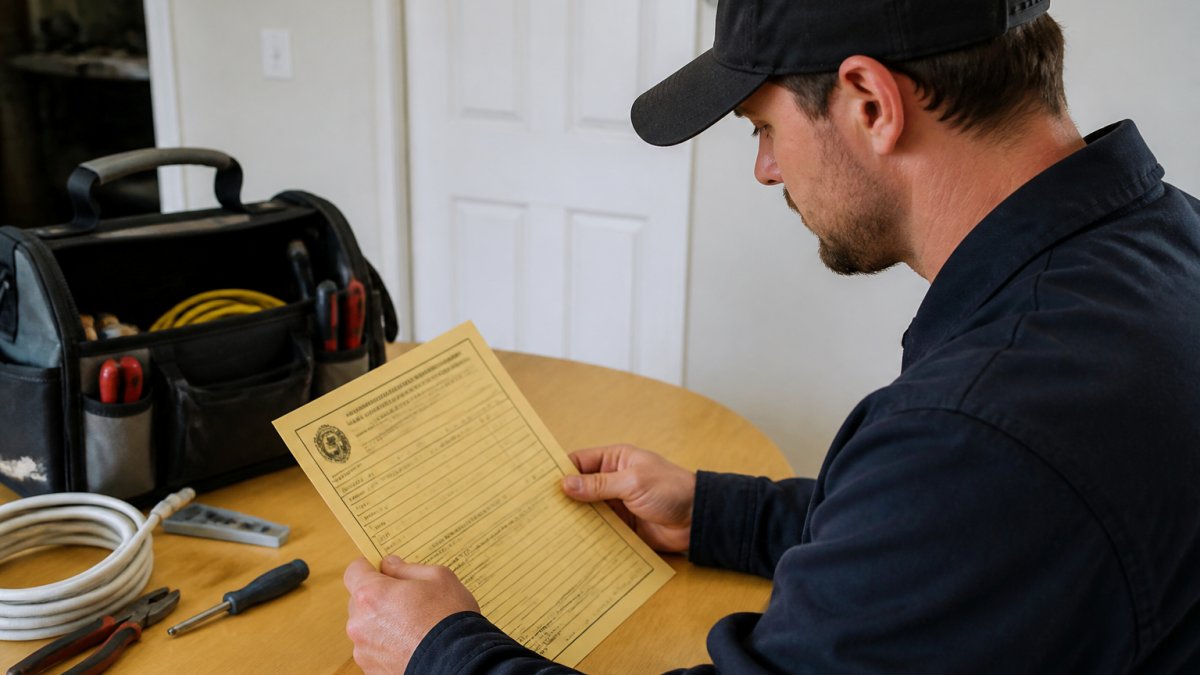
Start by finding out what permits exist on your home. Your town clerk or building department keeps these records, and many now offer them online.
- Any electrical permits pulled in the past.
- Whether the work was inspected and closed out.
- Open permits that were never finalized.
Step 2: Run Through a Residential Electrical Inspection Checklist
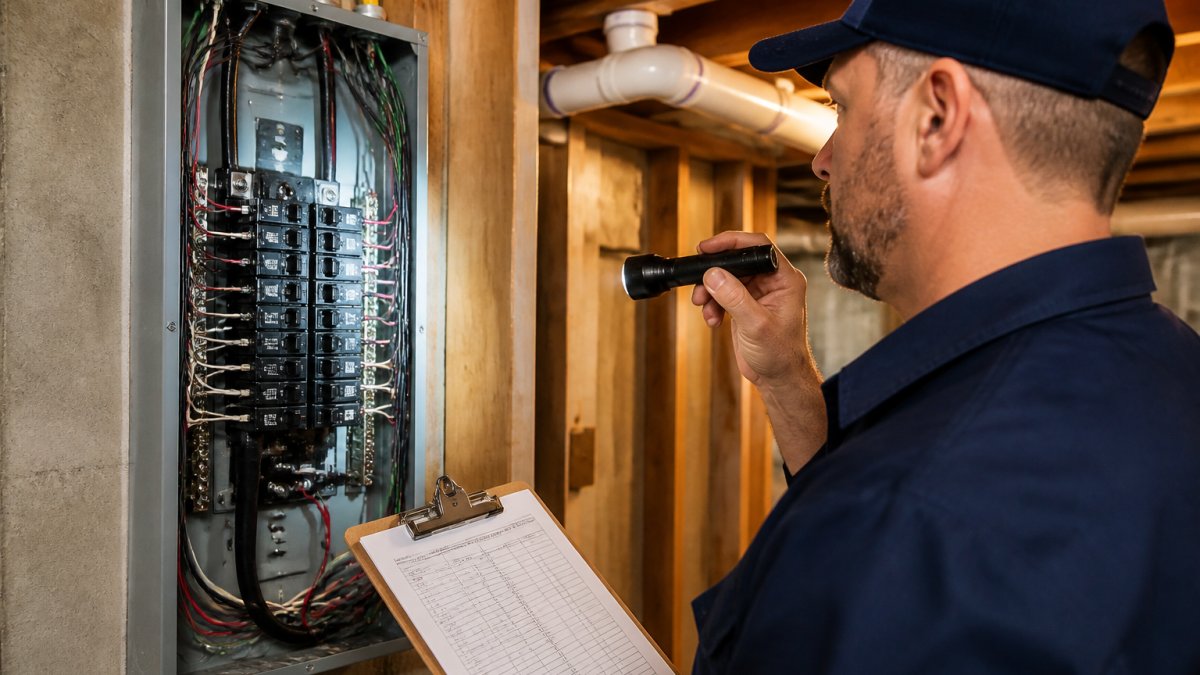
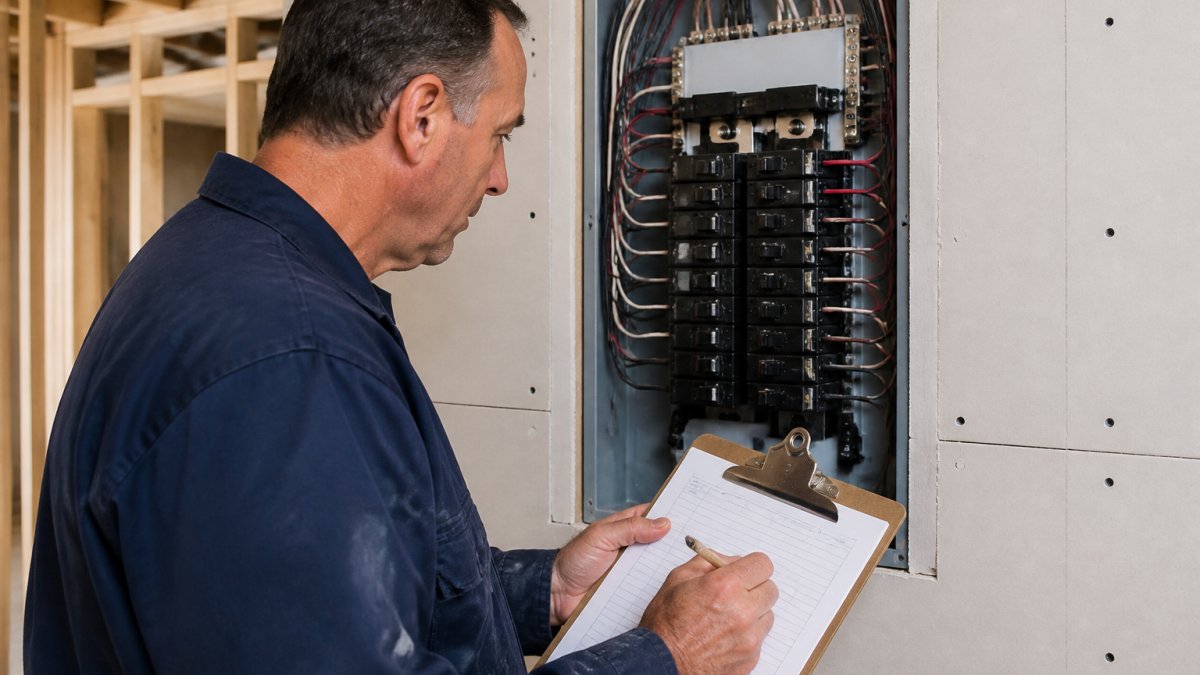
A residential electrical inspection checklist gives you a clear path to check your own system. Walk through these items one at a time and note anything that looks off. This is a visual and functional check, not a code ruling, an inspector or licensed electrician makes the final call, but it surfaces the items that most often fail.
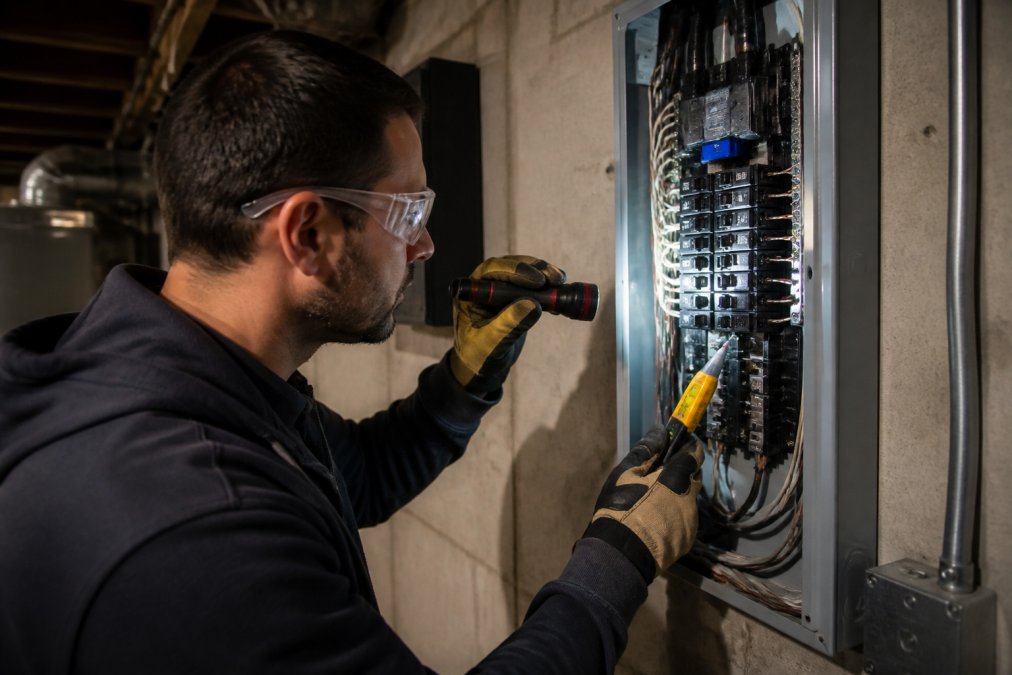
Panel, Breakers, and Load Balance
Open the panel cover only if you are comfortable and the main breaker is off. Look for the amperage rating on the main breaker. Older homes often have 100-amp service, while newer builds may have 200 amps. A 100-amp panel feeding an electric range, dryer, central air, and a heat pump is a common overload pattern in older homes.
Two more panel items worth noting:
- Double-tapped breakers. Two conductors under one terminal screw. Most breakers are listed for one conductor only. This is one of the most common defects found in older panels.
- Breaker-to-wire match. A 20-amp breaker should protect 12-gauge copper; a 15-amp breaker protects 14-gauge. A 20-amp breaker on 14-gauge wire is a fire risk because the wire can overheat before the breaker trips.
Grounding, Bonding, and Outlet Protection
Grounding gives stray current a safe path to the earth. Look for a grounding electrode conductor running from the panel to a ground rod or the water line. The connection at the rod should be tight and free of corrosion. A loose clamp is a common find and an easy fix for a pro.
A few concrete numbers help here:
- Kitchen countertop receptacles should be spaced so no point along the counter is more than 24 inches from a receptacle.
- Bathroom receptacles must be GFCI-protected.
- Receptacles within 6 feet of a sink, laundry tub, or other water source should be GFCI-protected.
- Tamper-resistant receptacles are required in most dwelling-unit areas in newer code cycles.
| What to Check | Why It Matters | Warning Sign |
|---|---|---|
| Panel amperage | Confirms capacity for your load | 100-amp panel with heavy demand |
| Breaker labels | Shows which circuit is which | Blank or wrong labels |
| Double-tapped breaker | Two wires under one terminal | Two conductors at one screw |
| Breaker/wire match | Prevents wire overheating | 20-amp breaker on 14-gauge wire |
| Grounding electrode | Sends stray current to earth | No ground rod or loose clamp |
| Bonding jumper | Keeps metal parts at same voltage | Missing or corroded jumper |
| GFCI outlets | Protects wet areas | No test/reset buttons |
| AFCI breakers | Guards against arc faults | Standard breaker in bedroom |
Common NEC Electrical Code Violations Homeowners Miss
The most common NEC electrical code violations hide in plain sight.
- Double-tapped breakers. Two wires under one terminal, which most breakers do not allow.
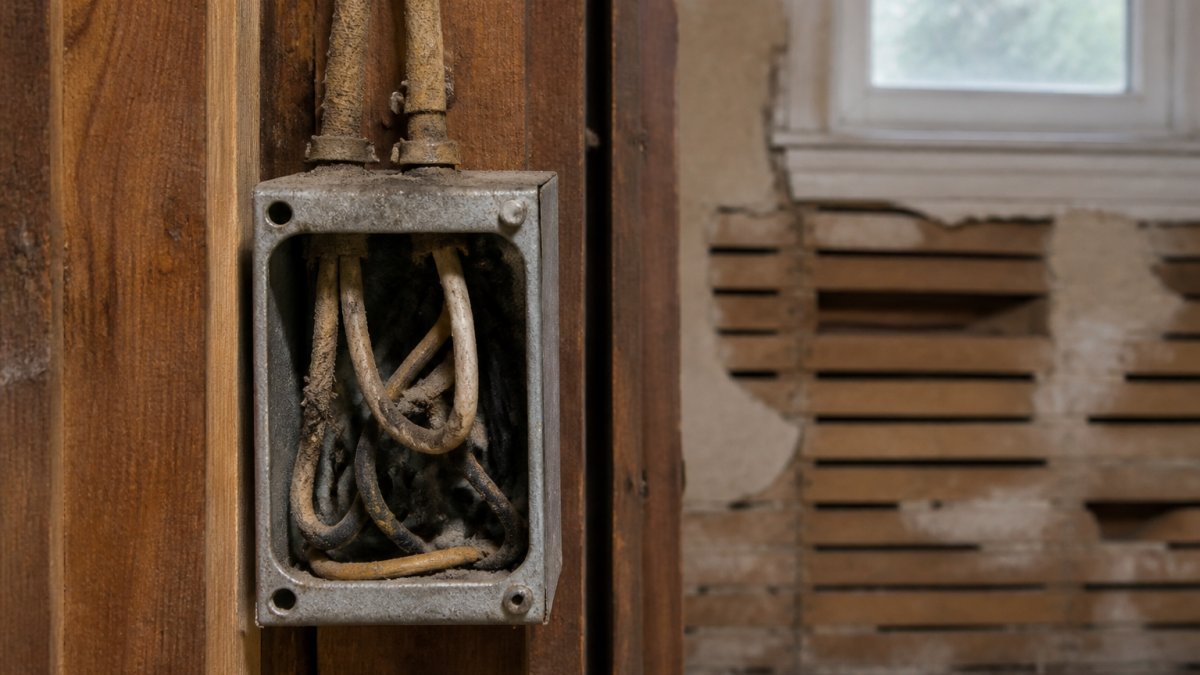
- Missing junction box covers. Exposed splices in a basement or attic.
- Wrong wire gauge for the breaker. A 20-amp breaker on 14-gauge wire can overheat.
- Unsupported cable. Romex sagging between studs without staples.
- Outlets too close to water. No GFCI near a sink or laundry tub.
- DIY additions never permitted. A finished basement wired without a permit.
Why Do My Lights Flicker in House? When It Signals a Code Problem
Flickering lights sometimes mean nothing more than a loose bulb. But when they dim every time the fridge kicks on, that points to a real problem.
Here is when flickering signals a code issue:
- Lights dim across the whole house when a big appliance starts.
- A single circuit flickers no matter what is plugged in.
- Breakers trip when you run two appliances at once.
- You hear a buzzing from the panel or a switch.
DIY vs. Professional Scope: What You Can Check and What You Cannot
You can safely check a lot of things yourself, but you cannot legally or safely do everything. The line follows the permit trigger, the licensing rule, and the insurance and resale consequences of getting it wrong.
What you can do:
- Read your panel labels and note the amperage.
- Test GFCI and AFCI devices with their buttons.
- Look for missing cover plates and exposed splices.
- Check for scorch marks, heat, or a burning smell.
- Pull your permit history from the town.
- Note the NEC edition your town has adopted (see below).
What you cannot do:
- Open a panel and work inside it live.
- Replace breakers or add circuits.
- Run new wire or install a subpanel.
- Sign off on your own code compliance.
Why the Line Moves: Regional Code Variation
The National Electrical Code is a model code, not a federal law. It has no force until a state or local jurisdiction adopts it. That adoption is where the variation lives.
- The NEC updates on a three-year cycle. A town may be on the current edition, one cycle behind, or two.
- States and towns can amend the model code. Amendments often tighten requirements for local conditions, for example, rules around grounding, AFCI scope, or receptacle placement.
- Permit thresholds differ. A job that needs a permit in one town may not in the next.
If an Inspection Fails: Post-Inspection Remediation
A failed inspection is not the end of the project, it is a punch list. Prioritize by safety severity, not by how easy a fix is.
Fix first (immediate safety hazards):
- Exposed live conductors or missing junction box covers.
- Double-tapped breakers or breaker/wire mismatches.
- Missing or loose grounding and bonding connections.
- Missing GFCI protection in wet areas.
Fix next (code and capacity issues):
- Unsupported or improperly stapled cable.
- Undersized service for the connected load.
- Missing AFCI protection where required.
Fix last (paperwork and labeling):
- Missing or incorrect breaker labels.
- Open permits that were never closed out.
Digital Tools That Help With a Self-Check
A few inexpensive tools make a homeowner self-check safer and more accurate:
- Non-contact voltage tester. Confirms whether a wire or device is live before you touch it. Useful for verifying a circuit is off at the breaker.
- GFCI/AFCI test buttons. Built into the devices; the fastest functional check.
- Receptacle tester. Plugs into an outlet and shows open ground, reversed polarity, or open neutral.
- Circuit tracer. Helps map which breaker controls which outlet when labels are missing.
Hiring a Licensed Electrician for Code Compliance and Scheduling the Inspection
Hiring a licensed electrician for code compliance is the fastest route to a clean inspection. The electrician pulls the permit, does the work, and coordinates with the building department.
What to Ask Before You Book
- Are you licensed and insured in Connecticut?
- Will you pull the permit, or do I need to?
- What is your pricing, and are there any added fees?
- Can you handle the whole job, from panel to final inspection?
- How soon can you get here?
According to the Connecticut Department of Consumer Protection, electrical work must be done by a licensed professional, and homeowners can verify any license online before hiring.
Frequently Asked Questions
Can I perform an electrical code self-inspection?
You can safely check a few things yourself: test GFCI and AFCI outlets with the test buttons, look for scorch marks or warm cover plates, confirm every breaker is labeled, and note any flickering lights or tripping breakers. Anything involving the panel interior, wiring, grounding electrode, or bonding jumper requires a licensed electrician. A self-check helps you describe problems accurately, but it does not replace an official inspection or satisfy code enforcement.
What are the most common residential electrical code violations?
The violations electricians see most often include missing AFCI or GFCI protection in required rooms, unlabeled breakers, double-tapped breakers, undersized wire gauge for the circuit, missing junction box covers, improper grounding and bonding, and DIY wiring done without a permit. Older homes frequently have ungrounded outlets, a 100-amp service that no longer matches the load calculation, and aluminum branch wiring. Each of these is a common NEC electrical code violation that shows up during a residential inspection.
How do I get an electrical certificate of compliance?
The certificate comes from your local building department after a passed inspection, not from the electrician alone. The process: apply for the electrical permit, complete the work, request the rough-in and final inspections, and pass both. The inspector then signs off and the building department issues the certificate. Keep copies with your home records. If you are hiring a licensed electrician for code compliance, confirm they will pull the permit and schedule the inspections as part of the job.
Why do my lights flicker in house, and is it a code issue?
Flickering can be as simple as a loose bulb, but it often points to a loose neutral, a failing breaker, an overloaded circuit, or a poor connection at the panel. If the flicker happens when a large appliance starts, the load balance or service entrance may be undersized. Persistent flickering anywhere in the house is worth an electrical system audit because loose connections generate heat and are a fire hazard. An electrician can test voltage drop and amperage capacity to find the cause.