 listicle
Residential Electrical Panel Upgrade Costs: 2026 Pricing Guide
Table of Contents
- What Residential Electrical Panel Upgrade Costs Include
- Electrical Panel Upgrade Cost Factors That Drive Your Project Price
- 100 Amp to 200 Amp Panel Upgrade Cost Breakdown
- Electrical Panel Upgrade Permit Requirements and Inspection
- Electrical Panel Upgrade Timeline: How Long Installation Takes
- Add-On Costs Beyond the Panel Itself
- How to Compare Contractor Quotes and Verify Scope
- Frequently Asked Questions
Last Updated: October 13, 2026
What Residential Electrical Panel Upgrade Costs Include
A residential electrical panel upgrade replaces or expands your home's main electrical distribution center, where utility power is divided into individual circuits.
Scope determines the final bill. A basic replacement means swapping the panel and reconnecting existing wiring.
Knowing what's bundled into each project type helps you compare quotes accurately. Electricians in Bristol, Plainville, and Southington often see homeowners surprised by add-on costs they assumed were included.
Electrical Panel Upgrade Cost Factors That Drive Your Project Price
Panel amperage and capacity needs
Panel amperage determines how much load your home can safely handle. Most older homes have 100-amp panels; newer construction typically has 200 amps.
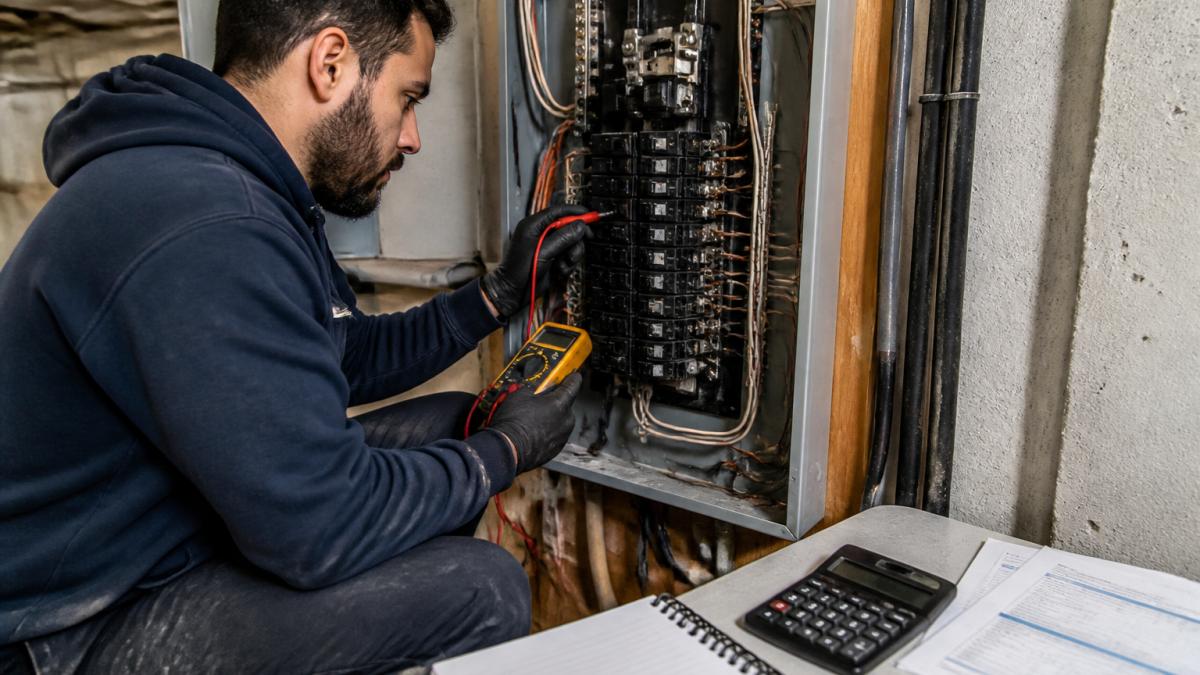
Your current panel size and target amperage are the biggest cost drivers.
Homes needing more than 200 amps, rare, but possible in large homes with multiple heat sources or commercial-grade equipment, face steeper costs. Three-phase or specialty installations fall outside typical residential pricing.
Home wiring condition and age
The age and condition of your wiring directly impacts upgrade costs.
Homes built before the 1980s are more likely to need extra work: corroded connections, deteriorated insulation, and undersized wires all add labor hours.
The main service entrance matters too: damaged conduit or a corroded meter base must be replaced before the new panel goes in.
Labor and electrician expertise
Labor is typically the largest single cost component.
Project complexity determines hours: a straightforward replacement with good wiring and clear access might take 4-6 hours, while an amperage upgrade with rewiring can take 16-24 hours or more.
Experience matters too. A contractor with 12 years in the field, like the BEARS Electric team serving Bristol and surrounding areas, completes work efficiently and reduces unnecessary labor hours.
100 Amp to 200 Amp Panel Upgrade Cost Breakdown
When a 100-amp panel becomes insufficient
A 100-amp panel was standard through the 1990s, adequate for that era's heating, cooling, kitchen appliances, and lighting. Today's homes draw far more: EV chargers alone pull 30-50 amps continuously, a third of a 100-amp panel's capacity.
Symptoms of an undersized panel include frequent breaker trips, flickering lights when appliances run simultaneously, and an inability to add circuits. For an EV charger installation in Farmington or Unionville, upgrading from 100 to 200 amps is often the only safe option.
What a 200-amp upgrade includes
A 200-amp upgrade replaces your service entrance with equipment rated for double the capacity: a new 200-amp main breaker, new utility service lines, a new meter base, and a panel with more breaker slots.
The project includes a full inspection and any grounding or bonding work needed to meet current code. If your wiring is sound, the electrician reconnects existing circuits; if upgrades are needed, they happen during the same project.
Electrical Panel Upgrade Permit Requirements and Inspection
An electrical panel upgrade is a permitted project in essentially every jurisdiction. The permit triggers the inspection confirming your new service entrance, grounding, and bonding meet code. Reputable contractors, including BEARS Electric, treat permit acquisition as part of the standard scope.
What the permit actually covers
A panel or service upgrade typically requires an electrical permit, and in many towns a separate service-entrance permit.
Requirements vary by town, so the contractor pulls the permit in the home's municipality, Bristol, New Britain, Meriden, Waterbury, Torrington, Middletown, and surrounding towns each run their own building department with its own form and inspection schedule.
How permit fees are structured
Permit fees are almost always calculated from the declared value or scope of work, not a flat rate. A same-amperage replacement generally falls into a lower fee tier than a full service upgrade with new service conductors and a meter base.
That's why "permit included" and "permit billed at cost" quotes can land in different places once the town's fee schedule applies. Ask each contractor whether the permit fee is capped, estimated, or passed through at actual cost.
The inspection sequence
Panel work usually involves more than one inspection:
- Rough-in inspection (where required). For service upgrades with new conduit, a new mast, or new grounding electrode conductors, some departments want to see the wiring before the panel is closed up.
- Final inspection. After the panel is installed and circuits terminated, the inspector verifies breaker sizing, conductor ampacity, grounding and bonding, working clearances, and labeling.
- Utility connection. The utility won't reconnect or energize the new service without inspection sign-off, the step that most often stretches the calendar, since the utility schedules its own crew separately.
What inspectors actually look for
A final inspection is not a rubber stamp. Commonly flagged items include:
- Missing or improperly sized grounding electrode conductor
- Bonding jumpers omitted at the water meter or gas piping
- Breakers that don't match the panel's listed brand or series
- Insufficient working clearance in front of the panel
- Unlabeled circuits
- Missing knockout seals or open unused openings
Each is fixable, but a failed inspection means a return visit, and some towns charge for it.
Why skipping the permit is a bad trade
Unpermitted electrical work creates problems that surface later, often at the worst possible time:
- Insurance. A carrier can deny a claim for a fire or loss traced to unpermitted work; policy language typically requires code-compliant installation.
- Sale or refinance. Buyers, appraisers, and lenders routinely ask for permit history. A panel with no permit on record can stall a closing or force a retroactive permit at the seller's expense.
- Utility disconnect. If the utility discovers an unpermitted service change, it can refuse to energize until the work is inspected and approved.
The permit fee is a small line item next to those risks. If a contractor offers to skip it to save money, that's a signal about how the rest of the job will be handled.
National Electrical Code (NFPA 70) overview
Electrical Panel Upgrade Timeline: How Long Installation Takes
The useful question isn't how many days the job takes, but which parts you control, which the electrician controls, and which wait on the utility and inspector. Those three tracks rarely move at the same speed, and the slowest sets your completion date.
Track 1: The electrician's on-site work
A same-amperage replacement is typically a one-day job: kill power, remove the old panel, mount and wire the new one, terminate branch circuits, install breakers, and test.
An amperage upgrade, say 100 to 200 amps, adds a second day or more: new meter base, new service-entrance conductors, a new grounding electrode system, and often a new mast or conduit run.
Track 2: The utility's schedule
This track surprises homeowners. The utility must disconnect the old service, then later reconnect and energize the new one, two separate appointments, often scheduled days or weeks apart depending on crew availability.
The utility also has its own requirements for the meter base, mast height, and point of attachment.
A realistic pattern: the electrician finishes rough work, the utility disconnects, the electrician completes the swap, the inspector signs off, and the utility reconnects. Each handoff has its own queue.
Track 3: Permits and inspections
Permit issuance usually takes a few business days once submitted, though staffing affects timing.
If the inspection fails, the clock resets: the electrician corrects the item, the town is notified, and a re-inspection is scheduled. That's why experienced contractors build a buffer into the calendar rather than promising a hard completion date.
What actually determines your total timeline
The biggest variable isn't the electrician's speed, it's how quickly the utility and inspector can be scheduled. A well-run project in Bristol or Southington might wrap in three to five business days; a town with a slower inspection queue or a utility backlog can run two to three weeks.
Factors that reliably extend the timeline:
- Utility disconnect and reconnect scheduled on separate days
- A service mast or meter base that doesn't match utility specs on the first try
- Discovery of aluminum branch wiring or deteriorated insulation during the swap
- A failed inspection requiring a return visit
- Winter weather affecting overhead service work
How to keep the project on schedule
Ask your contractor three questions before signing:
- Who schedules the utility disconnect and reconnect, you or them?
- What's the typical gap between the electrician's finish and the inspection in this town?
- What happens to the schedule if the inspection fails?
A contractor who answers those specifically has done the job in your town before. One who can't is guessing, usually optimistically.
Add-On Costs Beyond the Panel Itself
Rewiring and grounding work
Rewiring is the most common add-on. If your home has aluminum wiring, cloth-wrapped wire, or connections that don't meet code, those sections must be replaced.
Grounding and bonding upgrades are often necessary during panel work. Older homes frequently lack proper grounding rods or bonding straps. Bringing these systems up to code requires additional materials and labor.
Meter-base and utility company fees
The utility charges for installing or upgrading service lines, and the cost varies by utility and distance. Some charge a flat fee; others charge by complexity. These fees are separate from your electrician's charges and typically passed through as a line item.
The meter base, the enclosure where the utility's meter attaches, must be replaced during an amperage upgrade. It's standard in most panel upgrades, but worth confirming with your contractor.
Drywall repair and finishing
If rewiring opens walls, drywall repair becomes necessary. Your electrician typically cuts into walls to access wiring runs, but patching and finishing, taping, mudding, sanding, and painting, is sometimes subcontracted or billed separately.
How to Compare Contractor Quotes and Verify Scope
When you request quotes from electricians in Bristol, Watertown, or Harwinton, ask each contractor to itemize.
Verify each quote addresses the same scope. One contractor might include rewiring or drywall repair while another doesn't.
Request references and ask about experience with projects like yours.
Confirm the contractor is licensed and insured, and ask for proof of both before signing.
Ask about their guarantee.
Upgrading your electrical panel is a significant investment in your home's safety and capability.
Frequently Asked Questions
How much does it cost to upgrade a residential electrical panel?
Residential electrical panel upgrade costs vary based on your home's current setup, panel amperage, and local labor rates. Factors like whether you're replacing an existing panel or upgrading service, the condition of your home wiring, and any add-on work such as rewiring or grounding all affect the final price. For an accurate estimate for your home, contact a licensed electrician who can assess your specific situation and provide a detailed quote with transparent pricing.
What factors affect the cost of an electrical panel upgrade?
Key factors include panel amperage (100-amp versus 200-amp), your home's age and wiring condition, labor costs, permit and inspection fees, utility company charges, and any additional work like rewiring, grounding, meter-base replacement, or drywall repair. The complexity of your installation and local code requirements also play a role. A licensed electrician can walk you through which factors apply to your project and help you understand where costs are concentrated.
Does upgrading an electrical panel require a permit?
Yes, electrical panel upgrades require a permit in most jurisdictions. The permit process ensures your work meets local electrical codes and safety standards. Your electrician typically handles permit applications and coordinates with local inspectors. Inspection fees and utility company work (if your service entrance needs upgrades) are separate costs that may apply. Always verify permit requirements with your local building department, as rules vary by location.
How long does a residential electrical panel upgrade take?
A standard panel upgrade typically takes one to three days, depending on the complexity of your project and whether additional work like rewiring or grounding is needed. Older homes with outdated wiring may require more time. The permit approval and utility company inspection process can add several days or weeks to your overall project timeline. Your electrician can provide a realistic schedule once they've assessed your home's specific needs.