 ultimate-guide
Signs Your Home Wiring Is Dangerous: What to Watch For
Table of Contents
- Signs Your Home Wiring Is Dangerous: A Safety Overview
- Flickering or Dimming Lights: What It Means
- Circuit Breakers That Trip Frequently or Fuses That Blow
- Hot Outlets, Warm Switch Plates, and Burning Smells
- Visible Wiring Problems and Outdated Systems
- Electrical Safety Inspection Checklist for Homeowners
- Understanding the Cost to Rewire a House and When It's Necessary
- DIY Inspection vs. Professional Assessment
- Frequently Asked Questions
Last Updated: September 1, 2026
Signs Your Home Wiring Is Dangerous: A Safety Overview
Dangerous home wiring hides behind walls and inside panels, quietly creating fire hazards and electrical risks that most homeowners don't notice until something goes wrong. At BEARS Electric, we've spent over a decade helping homeowners identify these hidden threats before they become emergencies.
Signs your home wiring is dangerous often develop gradually. A flickering light or warm outlet seems minor, but these signals matter, they're your home's way of telling you something in the electrical system isn't working as it should. Catching these warning signs early can prevent fires, electrical shocks, and costly damage.
This guide walks you through the most critical indicators that your wiring needs professional attention, what each sign means, why it matters, and when to call an electrician.
Flickering or Dimming Lights: What It Means
Flickering or dimming lights usually mean the electrical connection is loose or unstable, causing voltage fluctuations. A loose wire at the circuit breaker, corroded connection at an outlet, or failing breaker can all cause flickering.
Flickering lights indicate that electricity isn't flowing smoothly through your system. That interruption creates heat, which degrades insulation, and degraded insulation is how electrical fires start.
If your entire home dims when you turn on a major appliance like your air conditioner or electric dryer, you may have a voltage drop problem. This happens when your electrical panel can't deliver enough power to handle the load, particularly common in older homes with 100-amp panels trying to support modern demands.
Circuit Breakers That Trip Frequently or Fuses That Blow
Frequent breaker trips or blown fuses mean your electrical system's safety mechanism is working overtime. Circuit breakers cut power when they detect a short circuit or overloaded circuit.
An overloaded circuit is the most common cause, you're drawing more amperage than the circuit is rated to handle. A short circuit is more serious: a hot wire touches a neutral wire or ground, creating an unintended path for electricity (osha.gov). Short circuits generate intense heat quickly and are a primary cause of electrical fires.
Older homes with knob-and-tube wiring (common before 1950) or aluminum wiring (installed in some homes during the 1960s-1970s) are particularly vulnerable. Knob-and-tube insulation deteriorates over time. Aluminum wiring oxidizes and creates poor connections that generate heat.
If you're still using a fuse box instead of a breaker panel, you have an outdated system. Upgrading from a fuse box to a modern electrical panel is one of the most important safety improvements you can make in an older home.
Hot Outlets, Warm Switch Plates, and Burning Smells
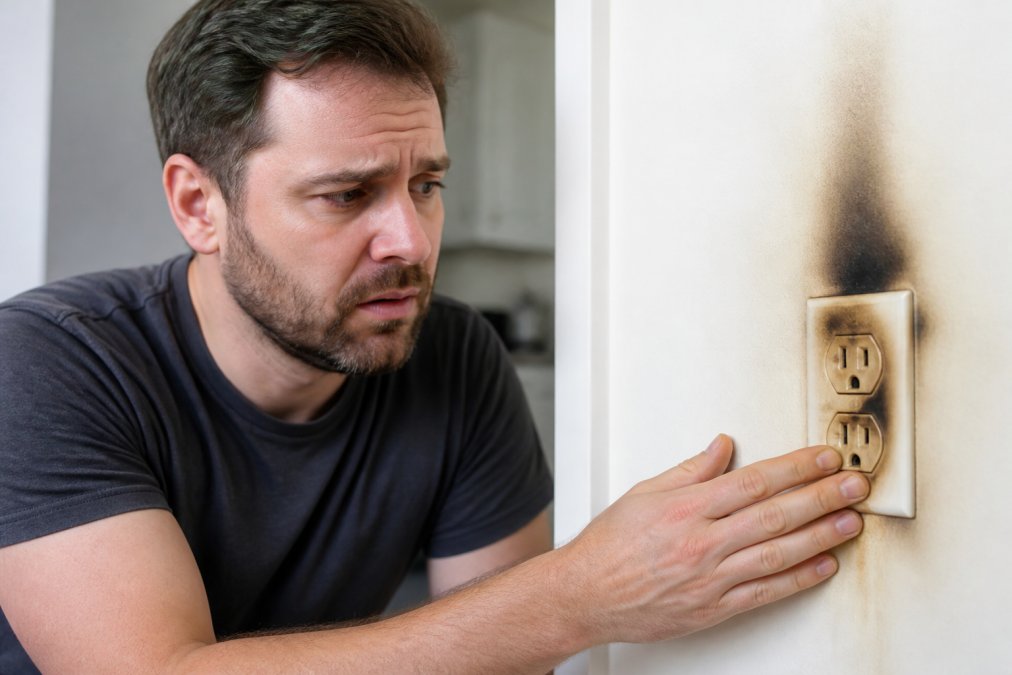
An outlet or switch plate that feels warm to the touch is a red flag. Electrical components should never generate noticeable heat during normal operation. Warm or hot outlets usually indicate a loose connection inside the outlet or in the wiring behind it, creating resistance that converts electrical energy into heat.
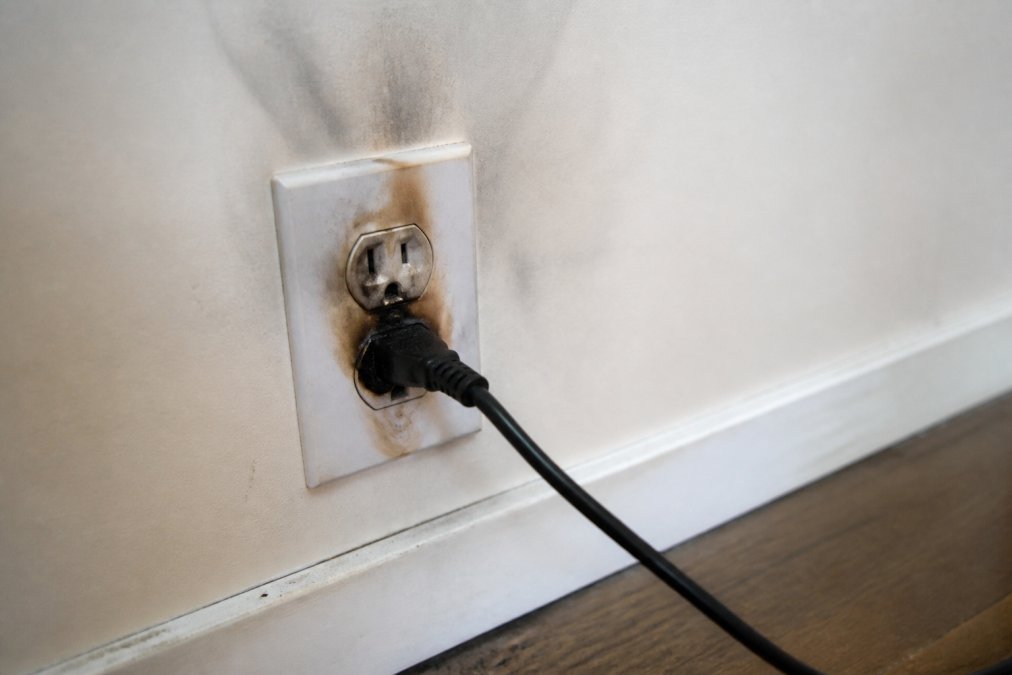
A burning or acrid smell near an outlet is a serious warning, usually insulation burning. When insulation burns, the wire is exposed, and exposed wiring can arc, spark, and ignite nearby materials. If you smell burning near an electrical outlet, stop using it immediately and call an electrician.
Scorched marks around an outlet or switch plate indicate past arcing or heat damage. Even if the outlet seems to work now, those marks mean it's been damaged and needs replacement.
Visible Wiring Problems and Outdated Systems
Sometimes you can see the problem directly. Frayed wiring, chewed insulation, or exposed conductors are all signs that your electrical system has deteriorated to the point where it poses a real hazard.
Frayed or damaged insulation exposes the copper conductor inside. Exposed wiring can arc to nearby materials, creating sparks and heat. Chewed wiring is usually the work of rodents, once they've breached the insulation, you have exposed conductors that can arc or short.
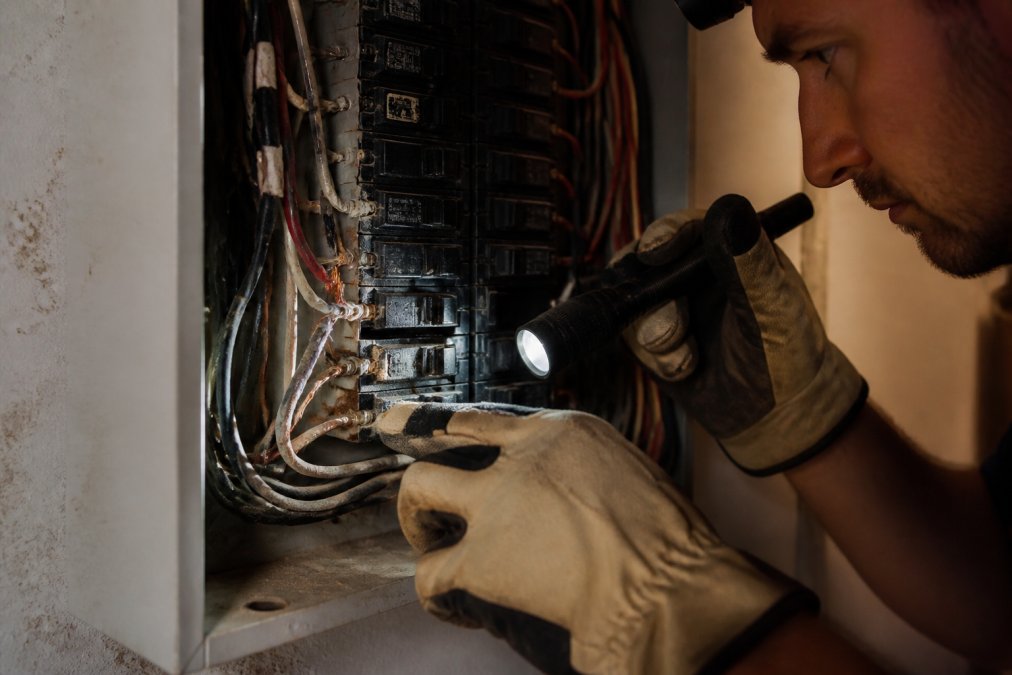
Knob-and-tube wiring, installed primarily before 1950, uses individual wires separated by ceramic knobs (nfpa.org). The insulation becomes brittle and cracks over time. If your home still has knob-and-tube wiring, plan for rewiring as a major safety upgrade.
Aluminum wiring, installed in some homes during the 1960s and 1970s, oxidizes over time, creating a layer that increases resistance at connections (cpsc.gov). Aluminum also expands and contracts more than copper when heated, loosening connections further. If your home has aluminum wiring, a professional should inspect it regularly.
Your home's wiring should meet current National Electrical Code (NEC) standards. Older systems may lack proper grounding, have inadequate amperage for modern loads, or use materials identified as hazardous.
Electrical Safety Inspection Checklist for Homeowners
A systematic inspection can help you identify potential problems before they become emergencies.
Start with your electrical panel. Look for visible damage, corrosion, or loose connections. The panel should be clearly labeled with circuit breakers or fuses marked to show what each one controls. Check for moisture around the panel, water and electricity don't mix.
Walk through each room and inspect outlets and switch plates for discoloration, scorching, or heat damage. Feel outlets carefully for warmth. Test GFCI outlets by pressing their test buttons.
Check your attic, basement, and crawl spaces for frayed insulation, damaged wire coverings, or signs of rodent activity. Observe how your lights behave, do they flicker or dim? Pay attention to sounds: buzzing or crackling from outlets or switches indicates arcing or loose connections.
| Inspection Item | What to Look For | Action If Found |
|---|---|---|
| Electrical panel | Corrosion, loose connections, moisture | Call electrician for professional inspection |
| Outlets and switches | Scorching, discoloration, warmth | Stop using outlet, call electrician |
| Visible wiring | Frayed insulation, chewed covering, exposure | Document location, call electrician |
| Lights | Flickering, dimming, behavior changes | Note which circuits affected, call electrician |
| Sounds | Buzzing, crackling, hissing | Locate source, call electrician immediately |
| GFCI outlets | Test button response, frequent tripping | Replace outlet or call electrician |
Understanding the Cost to Rewire a House and When It's Necessary
The cost to rewire a house depends on several factors: the size of your home, the complexity of the existing system, accessibility of walls and attics, and local labor rates. A full rewiring project typically involves replacing all wiring, upgrading the electrical panel, and bringing everything up to current code.
You don't always need a complete rewire. Sometimes targeted repairs are sufficient. A professional electrician can evaluate your specific situation and recommend whether you need a complete rewire, rewiring of specific circuits, an electrical panel upgrade, replacement of outdated wiring types, or installation of additional circuits to reduce overloading.
When considering major electrical work, get multiple professional assessments. A qualified electrician can explain what needs to be done, why it's necessary, and what options are available. BEARS Electric provides free quotes and transparent pricing so you understand exactly what work is needed and what it will cost.
DIY Inspection vs. Professional Assessment
You can perform a basic visual inspection of your home's electrical system yourself. Looking for obvious signs of damage, checking outlets for warmth, and observing how your lights behave are all things a homeowner can do safely.
A professional electrical inspection goes much deeper. An electrician has specialized tools like multimeters and thermal imaging cameras to detect voltage problems, ground faults, and overloaded circuits that aren't visible to the naked eye. They can identify code violations and safety hazards that require expertise to recognize.
DIY inspection is useful for catching obvious problems and knowing when to call a professional. It's not a substitute for professional assessment. If you've noticed any warning signs, flickering lights, warm outlets, burning smells, tripping breakers, call a professional.
At BEARS Electric, we offer professional electrical inspections with transparent pricing and no hidden fees. Our team can identify dangerous wiring conditions and recommend the right solutions for your home. We pride ourselves on same-day service availability and clear communication about what we find and what it costs to fix.
Frequently Asked Questions
How do I know if my house wiring is bad?
Bad wiring typically shows multiple warning signs: frequent circuit breaker trips, flickering lights, warm outlets, burning smells, or visible damage to wires and insulation. If your home is over 40 years old with knob-and-tube or aluminum wiring, that's a significant hazard. A professional electrical inspection is the most reliable way to assess wiring condition. Don't wait if you notice several of these signs together, electrical fires can develop quickly.
Can faulty wiring cause lights to flicker in my house?
Yes, flickering lights are often caused by loose connections, voltage drops, or overloaded circuits. While occasional flickering might be minor, frequent or widespread dimming suggests a wiring problem. Faulty wiring can create arcing and short circuits, which both cause flickering. If this happens throughout your home or in specific rooms regularly, have an electrician inspect your electrical panel and wiring for loose connections or degraded insulation.
What should I include in an electrical safety inspection checklist?
A thorough electrical safety inspection checklist should cover: outlet and switch plate condition, signs of scorching or discoloration, ground fault circuit interrupter (GFCI) function in bathrooms and kitchens, circuit breaker operation, visible wiring condition, age of the electrical panel, presence of outdated wiring types, and any burning odors or buzzing sounds. Test outlets for proper grounding, check for overloaded circuits, and verify that your home meets current electrical code compliance standards. Professional inspectors also use specialized equipment to detect hidden hazards.
How much does it cost to rewire a house?
The cost to rewire a house varies based on home size, wiring complexity, and local labor rates. Pricing depends on whether you're replacing the entire system or partial circuits, the type of wiring used, and whether walls need opening. Older homes with outdated systems typically cost more to rewire than partial updates. Contact BEARS Electric for a transparent quote, we provide no hidden fees and can assess your specific needs during a free consultation to give you an accurate estimate.
Electrical safety isn't something to guess about. If you've noticed any signs your home wiring is dangerous, flickering lights, warm outlets, burning smells, or frequently tripping breakers, get a professional assessment. BEARS Electric specializes in identifying electrical hazards and delivering safe, reliable solutions with transparent pricing and a satisfaction guarantee. Get a free quote today and find out exactly what your home needs to be safe.
This article was written using GrandRanker