 comparison
Circuit Breaker Panel vs Fuse Box: Safety Comparison
Table of Contents
- How Overcurrent Protection Works in Your Home
- Circuit Breaker Panel vs Fuse Box: The Core Differences
- Safety Comparison: Are Breakers Safer Than Fuses?
- Signs of an Outdated Electrical Panel
- Resetting vs. Replacing: Convenience and Cost
- Electrical Panel Upgrade Benefits for Modern Homes
- Insurance and Real Estate Implications
- Should You Upgrade? A Decision Framework
- Frequently Asked Questions
Last Updated: September 30, 2026
How Overcurrent Protection Works in Your Home
Every home relies on overcurrent protection to prevent electrical fires and injuries. When too much current flows through a wire, heat builds up. Without protection, that heat can ignite surrounding materials. Your electrical panel contains either circuit breakers or fuses, both devices interrupt current flow when it exceeds safe limits.
The difference between these two protection methods matters more than most homeowners realize. One requires replacement after every trip. The other resets with a simple switch. One responds faster to dangerous conditions. The other leaves your home vulnerable to arc faults and ground faults that modern breakers catch automatically.
At BEARS Electric, we've helped homeowners in Bristol, Waterbury, and across the surrounding areas understand which system protects their home best. This guide breaks down how each protection method works, which one is safer, and whether upgrading makes sense for your specific situation.
Circuit Breaker Panel vs Fuse Box: The Core Differences
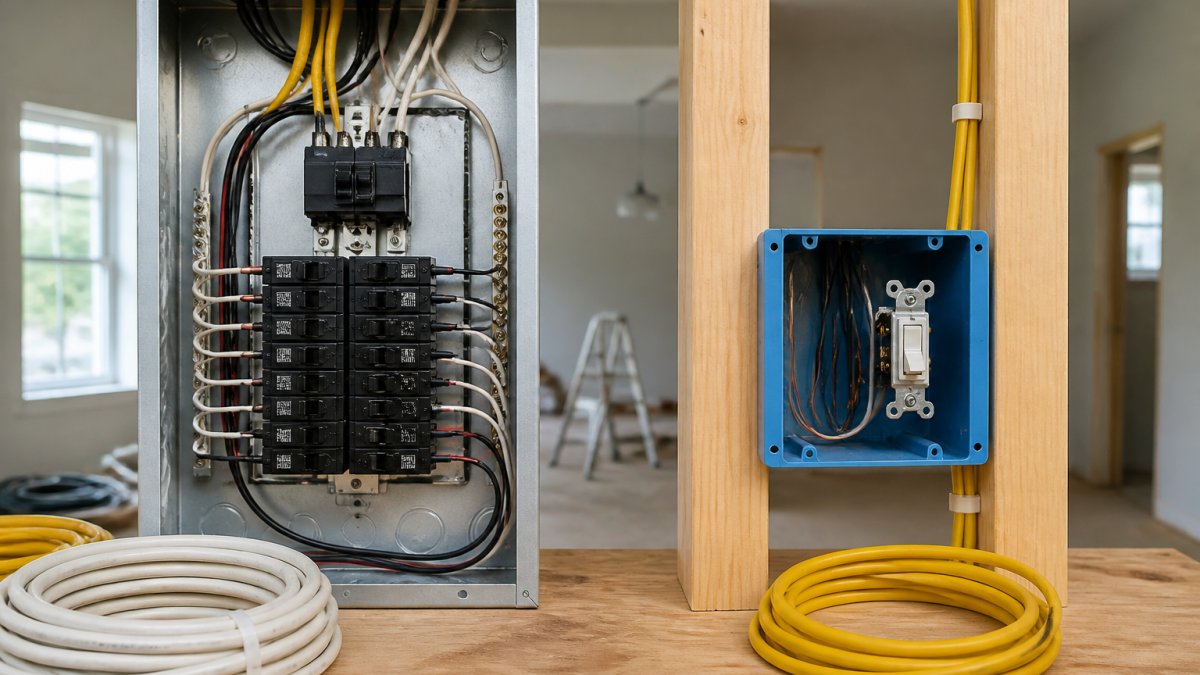
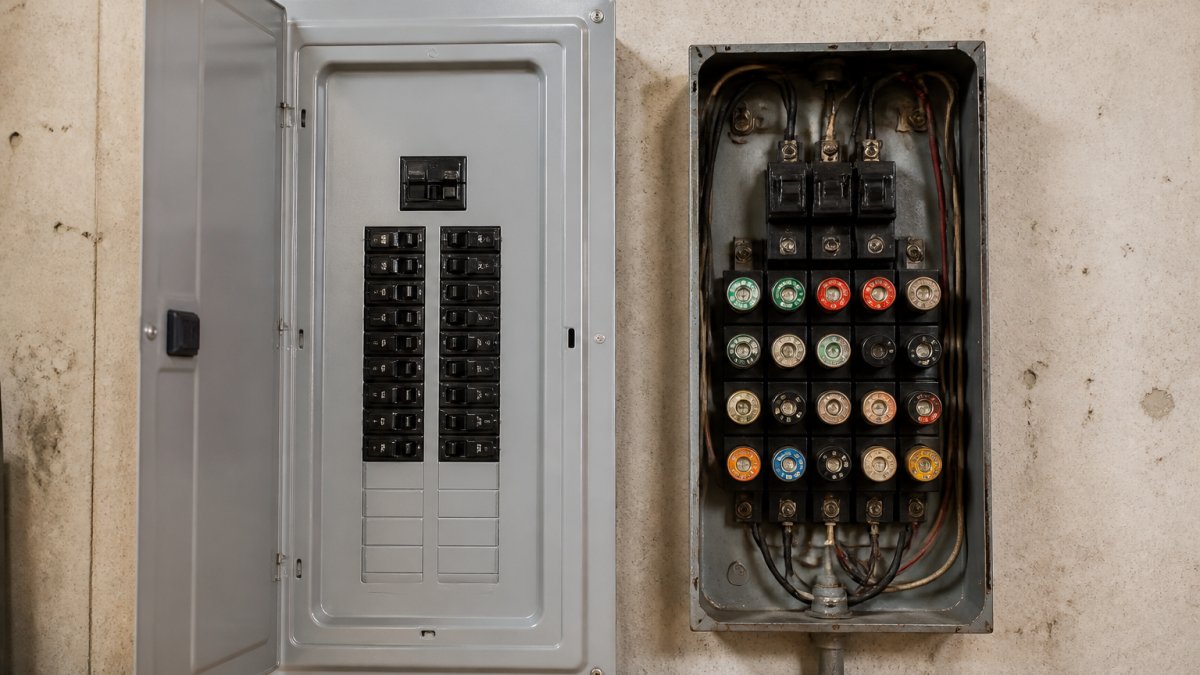
A circuit breaker panel is a modern electrical distribution system that uses resettable switches to interrupt current flow during overloads or short circuits. A fuse box is an older system that relies on metal filaments that melt and must be physically replaced after each fault.
The core difference is resettability. Circuit breakers flip back on. Fuses burn out permanently.
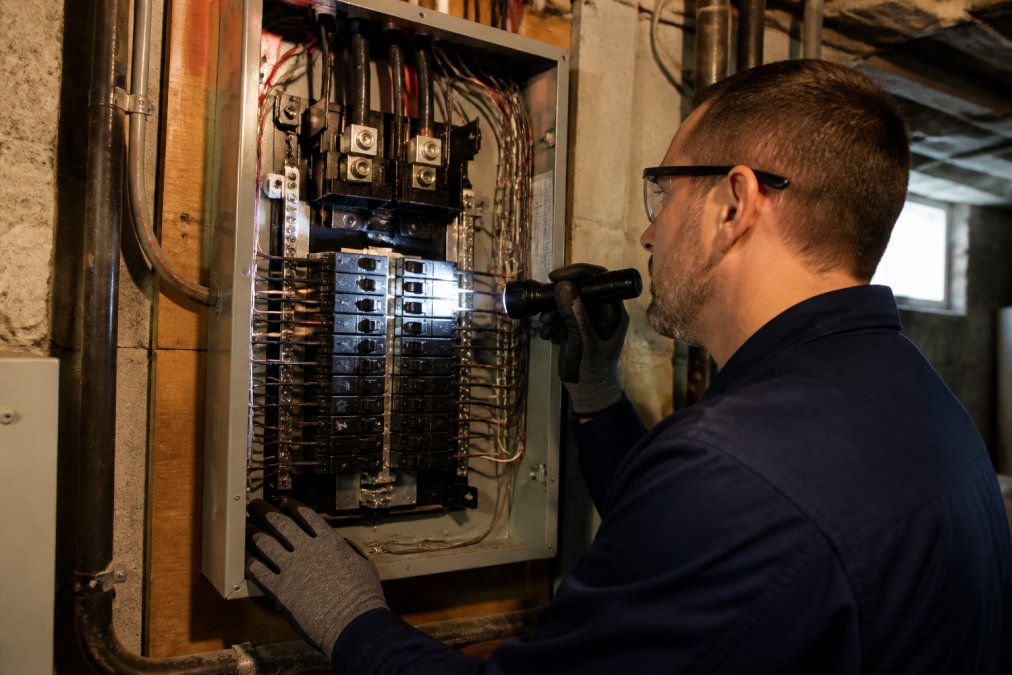
How Circuit Breakers Work
Circuit breakers use two mechanisms to detect overcurrent. A thermal element responds to sustained overloads, when current gradually exceeds the breaker's amperage rating over several seconds. An electromagnet responds to short circuits, when current spikes instantly to dangerous levels.
When either condition triggers, a spring-loaded mechanism trips the breaker switch to the "off" position, cutting power to that circuit. You can then reset the breaker by flipping the switch back to "on" once you've addressed the problem. Modern breakers also include features like AFCI (arc fault circuit interrupter) protection, which detects dangerous arcing conditions that standard breakers miss, and GFCI (ground fault circuit interrupter) protection, which catches earth leakage, the small current that flows when electricity reaches ground through an unintended path, like wet hands or standing water.
The thermal-magnetic design makes breakers reliable and responsive. They handle voltage spikes without nuisance tripping. They provide the interrupting capacity needed for modern electrical loads.
How Fuses Work
A fuse contains a metal element, typically a small wire or strip, rated to melt at a specific amperage. When current exceeds that rating, the fuse element heats up and melts, breaking the circuit continuity and stopping current flow.
The fuse element is designed to melt quickly during short circuits but tolerate brief overloads. However, once it melts, the fuse is destroyed. You must physically remove the fuse and replace it with a new one rated for the same amperage.
Fuses offer no protection against arc faults or ground faults. They simply stop current when it exceeds their rating. This makes them effective at preventing electrical fires caused by sustained overloads, but ineffective at catching the arcing conditions that cause many modern electrical fires.
| Feature | Circuit Breaker | Fuse |
|---|---|---|
| Resettable | Yes (flip switch) | No (requires replacement) |
| Response Time | Milliseconds (electromagnet) | Milliseconds (element melts) |
| Arc Fault Protection | Yes (AFCI available) | No |
| Ground Fault Protection | Yes (GFCI available) | No |
| Convenience | High (reset instantly) | Low (must buy replacements) |
| Initial Cost | Higher | Lower |
| Maintenance | Minimal | Regular replacement needed |
Safety Comparison: Are Breakers Safer Than Fuses?
Circuit breakers are objectively safer for modern homes. They provide protection fuses cannot match.
Fuses stop overcurrent, which prevents fires from sustained electrical overloads. But arc faults, where electricity jumps across a gap and ignites insulation, are a leading cause of electrical fires in homes with older wiring. Fuses don't detect arcing. Breakers with AFCI protection do.
Ground faults occur when current escapes to ground through an unintended path, like wet skin or water. This can cause electrocution. Standard fuses offer no ground fault protection. GFCI breakers sense this condition and cut power in milliseconds, protecting against shock and death.
The National Electrical Code (NEC) now requires AFCI and GFCI protection in specific locations. Kitchens, bathrooms, laundry rooms, and bedrooms must have GFCI outlets or breakers. Living areas require AFCI protection on branch circuits. These requirements exist because arc faults and ground faults kill people and destroy homes.
Fuse boxes predate these hazards being understood. They cannot be retrofitted with modern safety features. A fuse box cannot protect against arcing or ground faults, period. It can only interrupt current when amperage exceeds a threshold.
Signs of an Outdated Electrical Panel
An old electrical system shows predictable warning signs. Flickering lights, especially when using high-draw appliances like air conditioning or electric ovens, indicate your panel cannot safely handle the load. Outlets that don't hold plugs firmly or feel warm to the touch signal deteriorating connections and fire risk.
Frequent breaker trips or blown fuses suggest your electrical demand exceeds your panel's capacity. A 100-amp panel, common in homes built before 2000, struggles to power modern homes with multiple air conditioning units, electric vehicles, and high-powered appliances. Many homes need 200 amps today.
If you can see the fuse box or an older breaker panel and it contains cloth-wrapped wiring, aluminum bus bars showing corrosion, or signs of burn marks around the enclosure, the panel is deteriorating and creating fire hazard. Corrosion indicates moisture intrusion, which degrades electrical connections.
A panel more than 25-30 years old is approaching the end of its service life, even if it's still functioning. The components inside, breakers, bus bars, and internal connections, degrade over time. Replacing an aging panel before it fails prevents dangerous situations.
Resetting vs. Replacing: Convenience and Cost
Resetting a tripped breaker takes 30 seconds. You walk to the panel, identify the breaker in the "off" position, flip it back to "on," and you're done. No cost. No trip to the hardware store.
Replacing a blown fuse requires you to have spare fuses on hand, identify the correct amperage rating, remove the old fuse, and install the new one. If you don't have spares, you make a trip to the hardware store. The fuse itself costs a few dollars, but the inconvenience compounds over time.
More importantly, the act of replacing a fuse tells you nothing about why it blew.
Electrical Panel Upgrade Benefits for Modern Homes
Upgrading from a fuse box or undersized breaker panel to a modern 200-amp circuit breaker panel delivers immediate safety and practical benefits.
Insurance and Real Estate Implications
Insurance companies view fuse boxes as a liability. Many carriers charge higher premiums for homes with fuse boxes or require panel upgrades as a condition of coverage. Some insurers decline to insure homes with fuse boxes at all, especially in older neighborhoods where electrical fire risk is elevated.
Should You Upgrade? A Decision Framework
Upgrading makes sense if any of these conditions apply:
You have a fuse box. Fuse boxes lack arc fault and ground fault protection. Upgrading to a breaker panel is a safety imperative, not optional maintenance.
Frequently Asked Questions
What is the main advantage of a circuit breaker panel over a fuse box?
Circuit breakers are resettable, you flip a switch to restore power after a trip. Fuses must be replaced each time they blow, which is inconvenient and costly. Breakers also respond faster to electrical overloads and short circuits, providing superior protection against electrical fire hazards. For homes in areas like Waterbury, Meriden, and Wallingford, modern breaker panels offer reliability that fuse systems cannot match.
Are fuse boxes considered a fire hazard in modern homes?
Yes, fuse boxes pose greater fire risk than circuit breaker panels. Fuses lack the thermal-magnetic tripping mechanism that breakers use to detect dangerous current flow. If someone installs an oversized fuse to avoid repeated replacements, the system loses overcurrent protection entirely, creating serious electrical fire hazard. Many insurance companies now require homes to upgrade from fuse boxes to breaker panels for coverage.
How do I know if my electrical panel needs an upgrade?
Signs include frequent breaker trips, flickering lights, outlets that don't work reliably, or a 100-amp or smaller service entrance. If you're planning to add high-demand appliances like EV chargers or heat pumps, an outdated electrical panel won't support the load. Homes in areas like Southington, Plainville, and Farmington with aging panels should have a professional inspection to determine if upgrade benefits justify the investment.
Do insurance companies require homes to replace fuse boxes with circuit breaker panels?
Many insurance companies now mandate circuit breaker panels or charge higher premiums for homes with fuse boxes. Some insurers won't cover electrical fire damage if a fuse box was the cause. Check your homeowner's policy, requirements vary by insurer and location. This is another reason why upgrading electrical panels has become essential for homeowners seeking full coverage and peace of mind.
How much does it cost to change from a fuse box to a breaker panel?
Pricing depends on your home's electrical complexity, current panel size, wiring condition, and local code requirements. Upgrading from a 100-amp fuse box to a modern breaker panel may involve more than just swapping the panel, with rewiring potentially needed. Contact BEARS Electric for a free quote to understand the full scope and investment for your home in Bristol, Terryville, or any of our service areas.