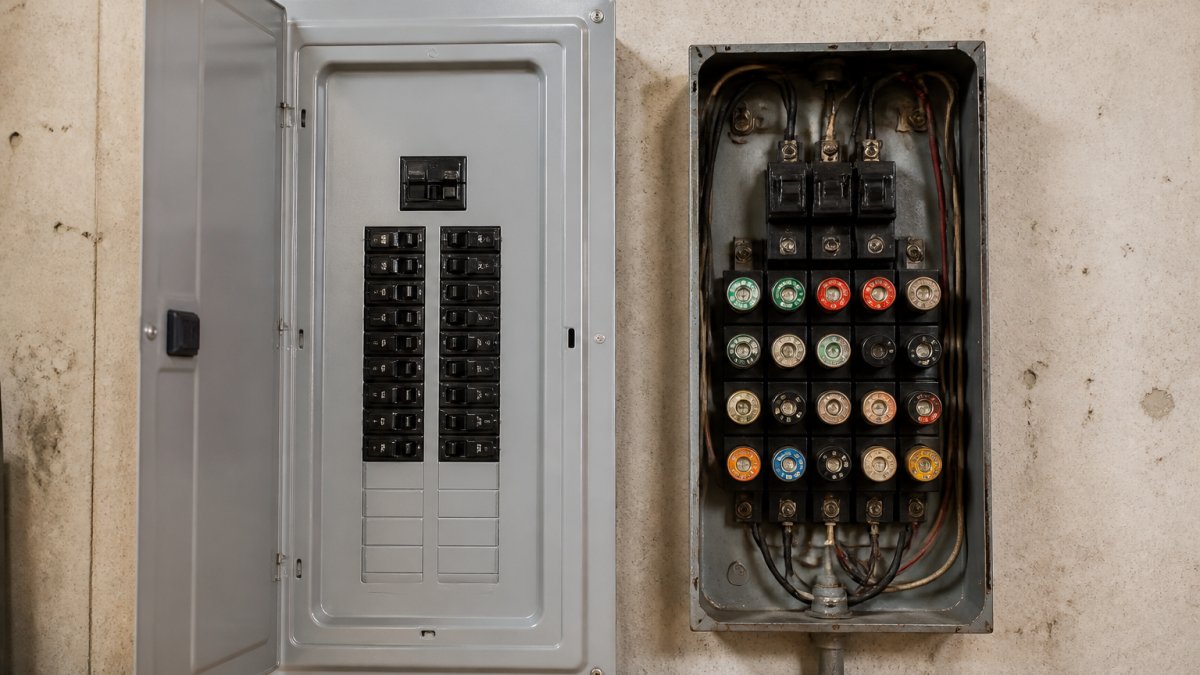
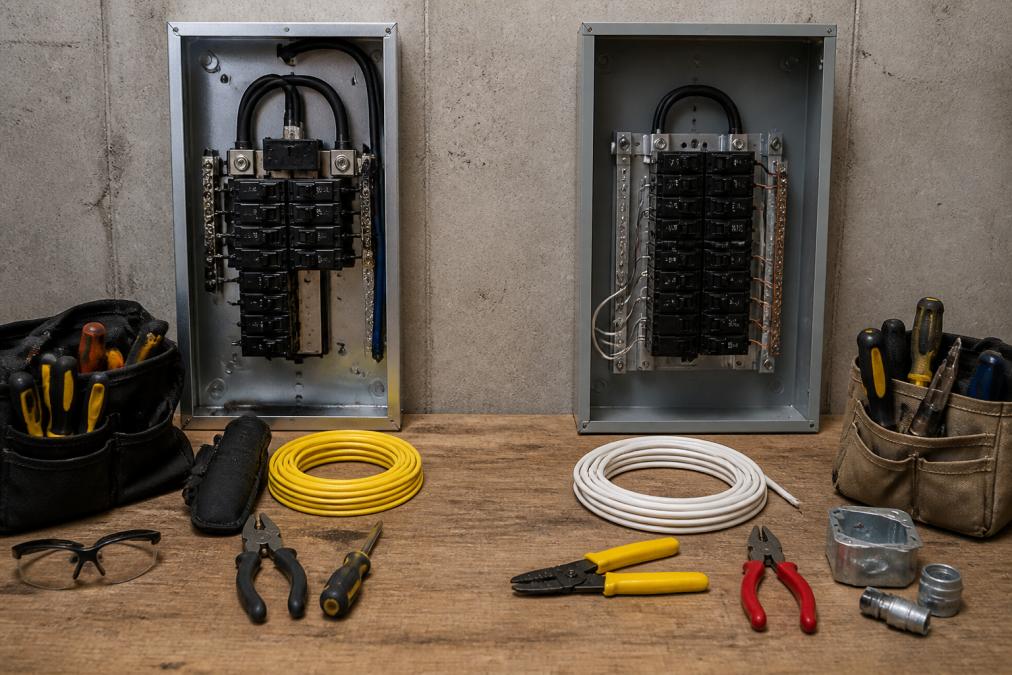
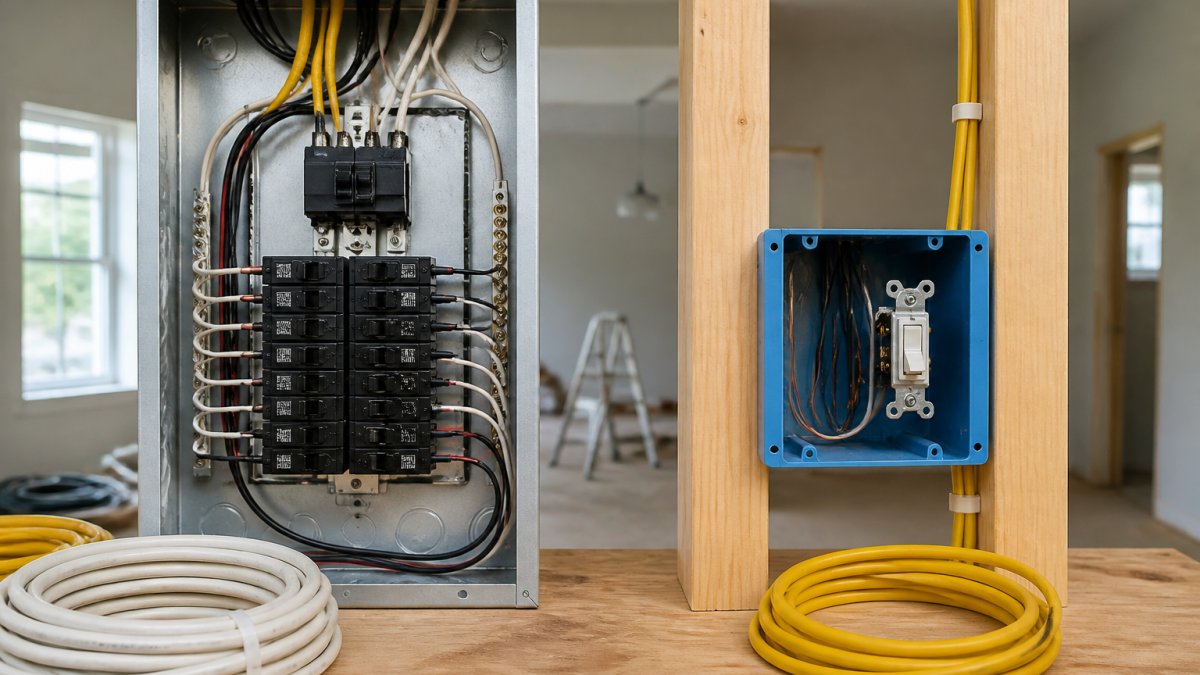
 comparison
Full Home Rewiring vs Partial Circuit Replacement
Table of Contents
- Full Home Rewiring vs Partial Circuit Replacement: How Electricians Decide
- Signs a House Needs Rewiring: What Homeowners Consistently Report
- Electrical Inspection Before Rewiring: Circuit-by-Circuit Testing and Documented Findings
- When Partial Circuit Replacement Is Enough
- When Complete Home Rewiring Is the Safer Choice
- How Disruptive Is a Full House Rewire? Timeline, Wall Openings, and Restoration
- Full House Rewire Cost: What Drives the Estimate
- Permits, Inspections, and Code Requirements for Rewiring Work
- Frequently Asked Questions
Last Updated: October 4, 2026
Full Home Rewiring vs Partial Circuit Replacement: How Electricians Decide
The choice between complete home rewiring and partial circuit replacement comes down to one question: how much of your existing wiring still tests safe?
A full rewire replaces every branch circuit; partial rewiring replaces only the circuits that fail testing. The right call depends on your wiring's condition, renovation plans, and how long you intend to stay.
What Each Option Actually Replaces
Complete home rewiring is the replacement of every branch circuit, outlet, switch, and run of cable throughout a house. Partial circuit replacement is the targeted replacement of specific circuits or circuit groups that testing identifies as unsafe or obsolete.
The scope difference is enormous: a full rewire opens walls, replaces the panel feed, and touches every room, while partial work might mean replacing two bedroom circuits.
How This Decision Affects Safety and Future Renovation Plans
Safety drives the decision, but renovation timing runs a close second. If you're already opening walls for a kitchen remodel, the marginal cost of rewiring those circuits drops sharply. If your walls are closed and your wiring tests safe, tearing them open rarely makes sense.
The trade-off is long-term. Wiring that passes today can degrade, and a piecemeal approach means repeat visits down the road.
Signs a House Needs Rewiring: What Homeowners Consistently Report
Homeowners usually call us after noticing the same handful of warning signs. These aren't proof of a full rewire, but they justify a proper electrical assessment.
- Flickering or dimming lights when appliances kick on
- Outlets that feel warm or show scorch marks
- Cloth-insulated or aluminum wiring visible in the basement
Frank L., one of our Bristol customers, put it simply: "BEARS Electric was quick to respond, identified the faulty wiring fast, and solved it efficiently." One symptom rarely means the whole house is failing, but it always means something needs testing.
Electrical Inspection Before Rewiring: Circuit-by-Circuit Testing and Documented Findings
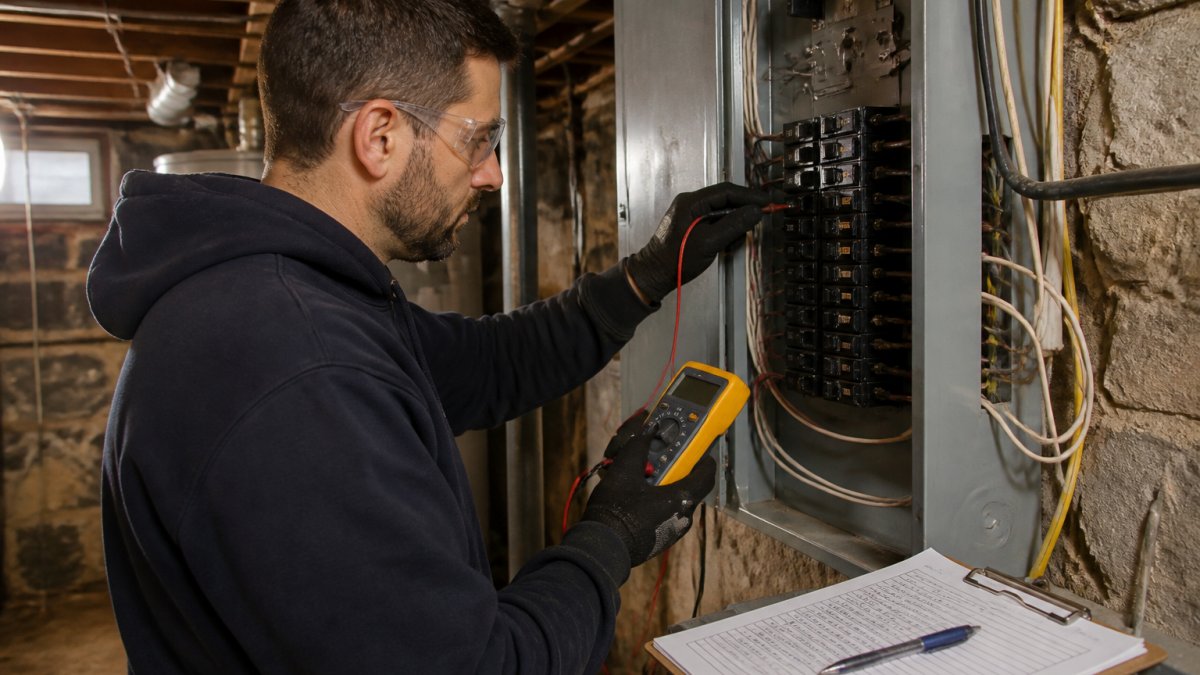
No electrician can responsibly quote a rewire without testing first. Circuit-by-circuit testing determines which circuits can stay and which must go.
What a Licensed Electrician Tests and Records
A proper electrical inspection checks voltage drop, ground continuity, insulation resistance, and load capacity on each circuit, plus the panel, service entrance, and visible wiring runs.
Every reading gets recorded, turning opinion into evidence.
How Test Results Become a Written Scope of Work
The test results become a written scope of work: a document listing each circuit, its condition, and whether it should be replaced or retained. Demand that scope before signing anything.
When Partial Circuit Replacement Is Enough
Partial circuit replacement is enough when testing shows the existing wiring is generally safe and only isolated circuits fail, the most common outcome in homes with one or two problem areas.
Retaining Existing Wiring That Tests Safe
Circuits that pass insulation and grounding tests can stay in service, saving money and avoiding unnecessary wall damage. The key is documentation showing those circuits were tested and cleared.
Targeted Replacement for a Single Fault or Circuit Group
A single damaged cable, a failed circuit, or one overloaded run often calls for targeted replacement, fixing the actual problem instead of replacing miles of sound wiring.
When Complete Home Rewiring Is the Safer Choice
A full rewire is the safer choice when a large share of circuits show failure risk, when the wiring type itself is obsolete, or when walls are already open for a major renovation.
| Situation | Partial Circuit Replacement | Complete Home Rewiring |
|---|---|---|
| One or two failed circuits | Best fit | Overkill |
| Widespread failure risk | Risky long-term | Best fit |
| Walls open for remodel | Limited savings | Best value |
| Insurance requirement | Rarely satisfies | Usually required |
| Planning to stay 10+ years | Repeat visits likely | One-time solution |
If you're weighing this decision, our team at BEARS Electric can run the testing and give you a straight answer either way.
How Disruptive Is a Full House Rewire? Timeline, Wall Openings, and Restoration
Disruption is why many homeowners hesitate on a full rewire. Here's what the work actually looks like, room by room, and how it compares to a partial replacement.
How the Work Is Sequenced
A full rewire is almost never done all at once. The typical sequence is:
- Permit and inspection scheduling. The permit is pulled before any cable is run, and the rough-in inspection happens before walls are closed.
- Panel and service work. Panel or service upgrades usually happen early so new branch circuits can terminate into them.
- Room-by-room circuit replacement. The electrician works in zones, running new cable, setting boxes, and pulling old wiring where practical.
- Rough-in inspection. The inspector verifies the work with walls still open.
- Device trim-out. Receptacles, switches, GFCIs, AFCIs, and fixtures are installed after inspection.
- Restoration. Drywall or plaster patching, priming, and painting follow.
- Final inspection. The job is signed off, and the permit is closed.
Realistic Timelines
Timelines scale with square footage, access, and restoration scope. A common pattern:
- Smaller homes with good basement and attic access: roughly one to two weeks of electrical work.
- Mid-size homes with some finished areas: roughly two to four weeks.
- Larger or older homes with plaster walls and limited access: four weeks or more, plus restoration time.
These are working ranges, not promises.
Can You Stay in the Home?
In most cases, yes, with caveats. Power is shut off in sections, so expect planned outages of a few hours at a time rather than days without power. Occupants typically relocate during the heaviest panel work, and households with young children, medical equipment, or work-from-home needs often schedule around the noisiest phases.
Wall Openings and What Restoration Really Involves
A full rewire requires opening walls to run new cable. The amount of cutting depends heavily on access:
- Open basement and attic: minimal wall cutting, mostly small access holes.
- Finished basement or no attic access: substantially more wall openings.
- Plaster and lath: slower to open, slower to patch, and harder to match after painting.
Restoration is usually a separate trade. Some contractors include patching as an allowance; others exclude it. Ask before you sign, because painting an entire room after patching is a real cost that never appears on the electrical invoice.
How Partial Replacement Compares
Partial replacement is far less invasive because it touches fewer walls and rooms. If the failing circuits are concentrated in one area, say, two bedrooms in a Newington cape, disruption may be limited to those rooms. But if they're scattered, a partial job can open nearly as many walls as a full rewire without the same long-term benefit.
| Factor | Partial Circuit Replacement | Complete Home Rewiring |
|---|---|---|
| Wall openings | Limited to affected circuits | Throughout the home |
| Typical electrical timeline | Days | One to several weeks |
| Occupant disruption | Low to moderate | Moderate to high |
| Restoration scope | Small, localized | Whole-home patching and paint |
| Repeat visits likely | Yes, as other circuits age | No, one-time solution |
Full House Rewire Cost: What Drives the Estimate
Most homeowners searching this comparison want what the typical service page never gives them: a straight answer about what actually moves the number. A full rewire is priced from the written scope, not a flat rate, but the drivers behind that scope are predictable, and knowing them lets you sanity-check any estimate.
The Cost Drivers, Ranked by How Much They Move the Number
- Square footage and circuit count. A 1,200-square-foot ranch in Plainville and a 2,800-square-foot colonial in Farmington are not the same job. More rooms means more branch circuits, outlets, switch legs, and cable.
- Wiring type being removed. Knob-and-tube and early cloth-insulated wiring are slower to remove and often hide surprises inside walls. Aluminum branch wiring adds termination and compatibility work. The older the system, the more labor hours per circuit.
- Wall and ceiling construction. Plaster and lath is far slower to open and restore than drywall. Homes in older neighborhoods of Bristol, Terryville, and Thomaston frequently have plaster throughout, one of the biggest swing factors in any quote.
- Access. A full basement, walk-up attic, and unfinished crawlspace let an electrician fish cable with minimal cutting. A finished basement, low crawlspace, or slab-on-grade addition in Southington or Wolcott forces far more wall openings.
- Panel and service capacity. If the existing panel is undersized, obsolete, or a known-hazard type, the service entrance and panel may need upgrading alongside the branch circuits. That is a separate scope item and should appear as its own line.
- Device and fixture count. Replacing every receptacle, switch, dimmer, GFCI, AFCI breaker, smoke/CO interconnect, and hardwired fixture adds material and labor that scales with the home.
- Restoration scope. Patching drywall or plaster, priming, and painting are usually a separate trade. Whether restoration is included, excluded, or billed as an allowance is a common source of estimate shock.
Why Full Rewires Get Quoted More Often Than Partial Work
A partial replacement requires the same diagnostic labor, circuit-by-circuit testing, tracing, and documentation, as a full rewire, but spreads that cost across far fewer billable hours. Many contractors therefore default to quoting the full job. That's not automatically wrong, but ask any electrician to show you the test results behind the recommendation.
How to Compare a Full Rewire Quote Against a Partial One
When you line up two estimates, compare them on the same axes:
- Circuits in scope, how many, and which ones
- Panel and service work, included or excluded
- Permit and inspection, pulled by the contractor or left to you
A partial quote that omits restoration and permit costs is not cheaper than a full quote that includes them, just less complete.
Ask for the estimate broken into labor, materials, permit, and restoration line items. A single lump-sum number tells you nothing about which parts of the job are actually being done.
Because every home tests differently, we quote from the written scope rather than a flat rate. Pricing depends on the circuits involved, access, and restoration needs, so request a free quote based on your actual test results. That's how you avoid the surprise line items that plague this trade, whether you're in New Britain, Meriden, or a 1920s house in Collinsville.
Permits, Inspections, and Code Requirements for Rewiring Work
Rewiring work requires permits and inspections in most jurisdictions, and the work must meet current electrical code. The National Fire Protection Association on NFPA 70, the National Electrical Code sets the baseline standard that local amendments build on.
Your electrician should pull the permit and schedule the inspection. The U.S. Consumer Product Safety Commission on home electrical safety also tracks electrical hazards in older homes, which is why documented, inspected work matters.
For guidance on safe electrical practices in residential settings, the Electrical Safety Foundation on home wiring safety publishes homeowner resources worth reviewing before you approve any scope.
Choosing between complete home rewiring and partial circuit replacement is a safety decision, not a sales decision, and it should always start with testing rather than a guess. We've served Central Connecticut homeowners since 2012, and we strive to offer same-day service when something goes wrong.
Frequently Asked Questions
How much does it cost to rewire a 2,000-square-foot house?
There is no single figure because full house rewire cost depends on wall access, existing wiring type, circuit count, and whether the panel needs upgrading. Homes with finished walls, plaster, or limited attic and basement access take longer to wire and restore. The honest answer is that any estimate must follow an on-site assessment. BEARS Electric provides written, itemized quotes before work begins, so you can see exactly what is included instead of comparing guesses.
When is partial circuit replacement enough?
Partial circuit replacement is enough when circuit-by-circuit testing shows most of the wiring is safe and only a limited area has failed. Examples include a single damaged cable, one overloaded circuit, or a room being renovated where the rest of the system tests clean. The key is documented test results, not guesswork. A written scope should list which circuits are replaced, which existing wiring is retained, and why the retained sections passed inspection.
Can you rewire a house one circuit at a time?
Yes, and this is exactly what partial rewiring means in practice. An electrician replaces selected circuits in phases, often starting with the kitchen, bathrooms, or any circuit showing fault risk. The catch is that phased work only makes sense if the remaining wiring still has usable service life. If 60% or more of circuits show failure risk, a phased approach usually costs more over time than a full rewire done once.
Does a full rewire require opening walls?
Not always, but some wall access is common. Electricians often route new cable through attics, basements, and crawl spaces to limit damage. In homes with finished walls and no accessible cavities, small openings are cut and later patched. How disruptive a full house rewire feels depends mostly on wall access and whether you are already renovating. Scheduling the rewire during a remodel, while walls are open, reduces both cost and mess.
How often should a house have a full rewire?
There is no fixed schedule. The decision follows wiring condition, not age alone. Homes with older two-wire systems, degraded insulation, or repeated faults are candidates sooner. The practical step is an electrical inspection before rewiring, where a licensed electrician runs circuit-by-circuit testing and documents findings. If test results show widespread risk, complete home rewiring is the safer path. If most circuits pass, targeted replacement can extend the system's life.