 ultimate-guide
Cost of Installing EV Charger at Home: 2026 Guide
Table of Contents
- What Determines the Cost of Installing EV Charger at Home
- Level 1 vs Level 2 Charging: Installation Differences and Costs
- Electrical Panel Upgrade for EV Charger Installation
- NEMA 14-50 Outlet Installation Cost and Wiring Requirements
- Permits, Inspections, and Licensed Electrician Requirements
- EV Charger Tax Credit 2024 and Incentive Programs
- Smart Charging and Load Management: Future-Proofing Your Installation
- DIY vs Professional Installation: Risks and When to Hire a Licensed Electrician
Last Updated: August 22, 2026
What Determines the Cost of Installing EV Charger at Home
The cost of installing EV charger at home varies dramatically depending on a handful of critical factors. Your total installation expense breaks down into three main categories: the charger itself, the electrical work required to support it, and permits plus inspections. A straightforward installation in a home with adequate electrical capacity might run considerably less than a property requiring a full service panel upgrade.
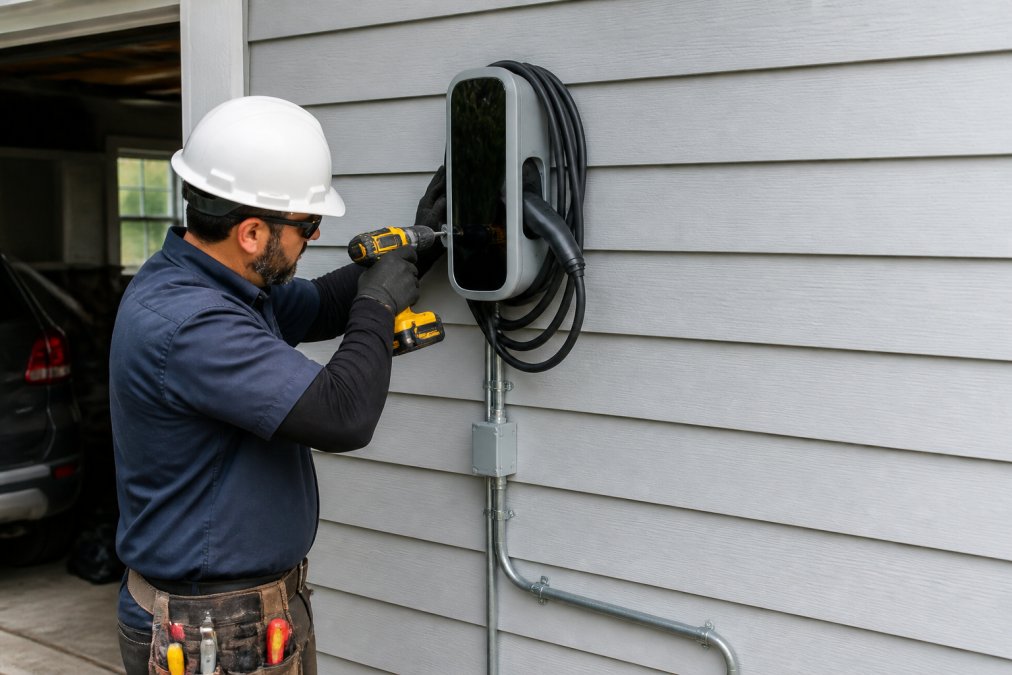
Charger type and power output
Level 1 chargers plug into standard 120V household outlets and charge slowly, adding about 3-5 miles of range per hour (fueleconomy.gov). Level 2 chargers operate on 240V circuits and deliver 25-30 miles of range per hour, making them the standard choice for home installations (fueleconomy.gov). The charger hardware itself represents only a portion of your total cost; the electrical infrastructure to support it typically exceeds the equipment price.
A Level 2 EVSE (electric vehicle supply equipment) ranges from basic hardwired models to sophisticated smart-enabled units with load management capabilities. Smart chargers cost more upfront but can reduce strain on your electrical system during peak demand hours and future-proof your installation against capacity issues.
Distance from electrical panel to charger location
Longer distances mean more conduit, wire, and labor. If your charger location sits 50 feet from your panel, expect significantly higher costs than a 20-foot run. Trenching through concrete or under landscaping adds expense and complexity. The wire gauge required depends on amperage and distance; a 240V circuit for a Level 2 charger typically needs 6-8 gauge copper wire, and longer runs might require thicker gauge to minimize voltage drop.
Current electrical capacity and panel condition
Homes built before 2000 often have 100-amp service panels, which can barely accommodate an EV charger without upgrades. Newer homes with 200-amp service usually have spare capacity. Older panels may also contain outdated breakers or corroded components requiring replacement before a licensed electrician will approve new circuits. Federal safety codes mandate proper grounding, bonding, and ground fault circuit interrupter (GFCI) protection on all EV charging circuits (nfpa.org).
Level 1 vs Level 2 Charging: Installation Differences and Costs
Level 1 charging requires almost no installation work; you plug the charger into any standard outlet and begin charging. This makes Level 1 the cheapest option upfront, with minimal labor required. However, the trade-off is painfully slow charging speed, making Level 1 impractical for daily use unless you have consistent access to 24+ hours of charging time.
Level 2 charging demands dedicated 240V circuits, which means running new wiring from your electrical panel to the charger location. This is where most installation costs appear. A licensed electrician must size the circuit properly, install appropriate breakers, run conduit and wire, and ensure the installation meets local electrical codes. Level 2 chargers typically operate on 30-50 amp circuits, and installation labor usually dominates your total expense.
The speed advantage justifies the investment for most homeowners. Level 2 chargers add 25-30 miles of range per hour, allowing overnight charging to fully replenish a typical EV battery. If you drive less than 40 miles daily, a Level 2 charger overnight will cover your needs every single day.
Electrical Panel Upgrade for EV Charger Installation
When a panel upgrade is necessary
Your existing panel needs an upgrade if available amperage falls below the charger's requirements plus a safety margin. Most Level 2 chargers demand 40-50 amps, and code requires your total service capacity to exceed your peak demand by at least 20 percent. A 100-amp panel with existing loads from heating, cooling, and appliances may have only 30-40 amps available, forcing an upgrade.
An electrician evaluates your panel's main breaker size and calculates available capacity by subtracting existing circuit demands. Some older homes have 60-amp service, which almost certainly requires upgrading to 150 or 200 amps to safely accommodate an EV charger.
Service panel expansion costs and timelines
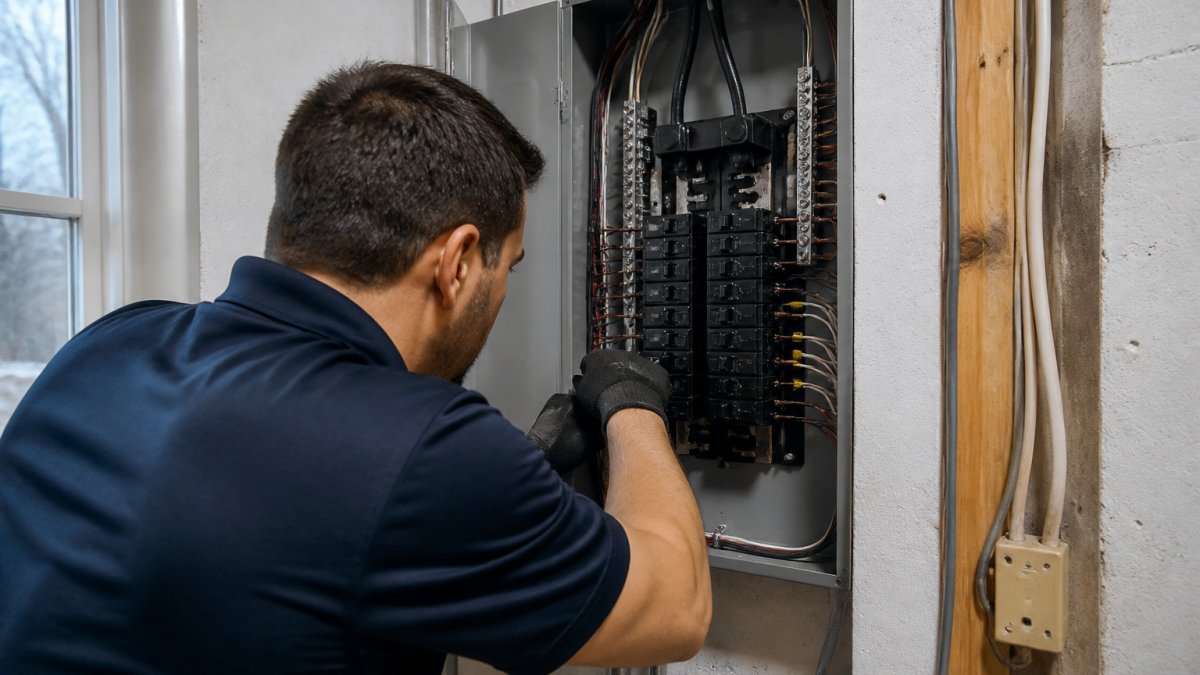
Service panel upgrades involve replacing the main breaker, rewiring internal bus bars, and potentially upgrading the meter and utility connection. Most utilities require an inspection and approval before and after the upgrade. Timeline for a panel upgrade typically runs 2-4 weeks from initial electrician assessment through final utility inspection and approval.
The cost of installing EV charger at home increases substantially when panel work is required, but it's a one-time investment that also improves your home's electrical capacity for future upgrades.
NEMA 14-50 Outlet Installation Cost and Wiring Requirements
240V circuit setup and wire gauge specifications
A NEMA 14-50 outlet is a standard 240V connector designed for EV charging. Installing one requires running a dedicated circuit from your electrical panel to the outlet location. For a 50-amp circuit (common for Level 2 chargers), you'll need 6-gauge copper wire or larger. Conduit protects the wire from physical damage and environmental exposure.
Ground fault circuit interrupter (GFCI) protection is mandatory on all EV charging circuits. This safety device cuts power instantly if it detects a ground fault, preventing electrical shock.
Hardwired vs plug-in charger installation labor
Hardwired chargers connect directly to the circuit wiring, with no removable plug. This approach eliminates a potential failure point and is slightly more efficient. Plug-in chargers use a NEMA 14-50 outlet, allowing you to unplug the charger if needed. Labor costs for either approach are similar because the electrical work dominates the time.
Permits, Inspections, and Licensed Electrician Requirements
Permit fees and inspection timelines
Most jurisdictions require electrical permits for EV charger installations. Permit fees vary widely based on project scope. Inspections happen at two stages: rough inspection after wiring is complete but before the charger is installed, and final inspection after everything is operational. Inspectors verify that wire gauges match circuit amperage, that conduit is properly installed, that grounding is correct, and that GFCI protection is functional.
A licensed electrician handles permit applications and scheduling inspections. Attempting DIY work without permits creates liability if something fails or if you sell the home later.
Safety codes and GFCI protection standards
The National Electrical Code (NEC) governs EV charger installations across the United States. GFCI protection is mandatory under NEC Article 625, which covers EV charging equipment. A ground fault of as little as 5 milliamps can cause serious injury or death. GFCI protection cuts power in milliseconds when it detects such a fault.
Proper grounding and bonding prevent electrical shock and equipment damage. Your electrician ensures that the charger frame, conduit, and all metal components are bonded together and grounded to your home's main ground rod.
EV Charger Tax Credit 2024 and Incentive Programs
Federal tax credits and eligibility requirements
The federal government offers an EV charger tax credit for qualified residential installations. This credit applies to the cost of the charger equipment and installation labor for a Level 2 EVSE installed at your primary residence. Eligibility typically requires that the charger be installed at your main home and that you claim the credit on your federal tax return.
The credit reduces your federal tax liability dollar-for-dollar, making it a direct reduction in your out-of-pocket costs.
State and utility rebates for residential charging
Beyond federal credits, many states offer additional rebates or grants for residential EV charging installations. Utility companies sometimes offer rebates as well, particularly in regions where EV adoption is a strategic priority. Some utilities offer time-of-use rates that charge lower electricity prices during off-peak hours, making overnight charging even more economical.
Researching available incentives before getting installation quotes can significantly reduce your net cost. BEARS Electric can help identify programs applicable to your location and guide you through the application process.
Smart Charging and Load Management: Future-Proofing Your Installation
Smart chargers communicate with your home's electrical system and can adjust charging speed based on available capacity. If your air conditioning kicks on during peak demand, a smart charger automatically reduces its draw to prevent overloading your panel. This capability becomes invaluable if you eventually install a second EV charger or add other high-draw equipment.
Load management technology prevents the scenario where charging your EV conflicts with heating water or running your HVAC system. Smart chargers eliminate this friction by prioritizing loads intelligently and provide data about your charging habits, energy consumption, and costs.
Future-proofing your installation means installing adequate panel capacity and circuit capacity for potential expansion. If you think you might add a second EV charger in five years, installing a larger circuit now costs far less than running new wiring later. BEARS Electric can assess your long-term needs and design an installation that scales with your plans.
DIY vs Professional Installation: Risks and When to Hire a Licensed Electrician
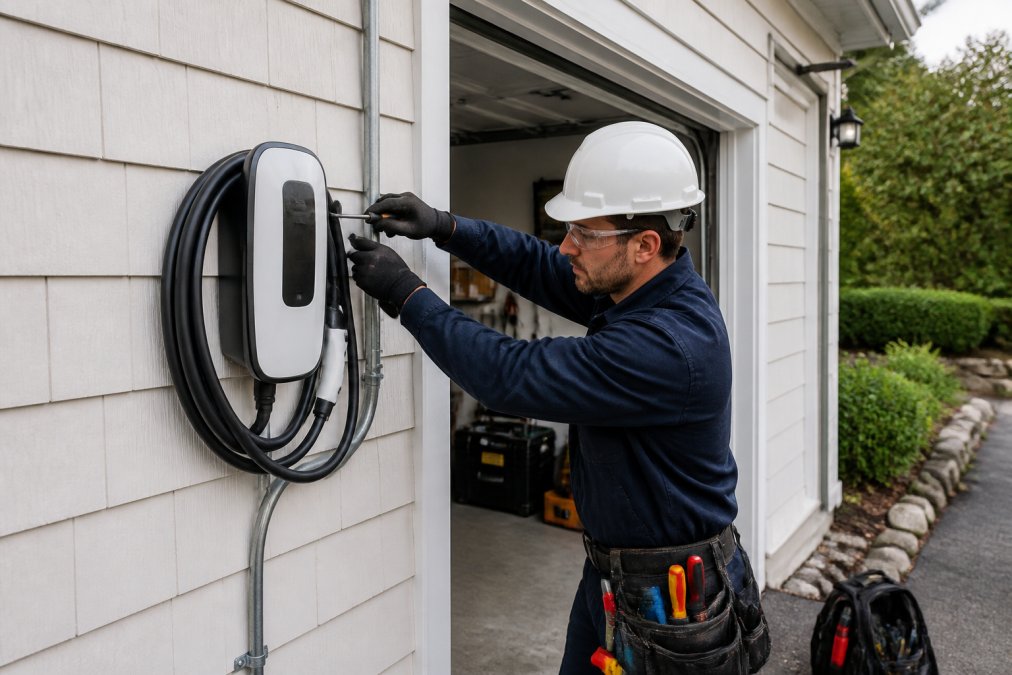
Attempting DIY EV charger installation exposes you to serious risks that far outweigh any cost savings. Electrical work mistakes create fire hazards, shock risks, and code violations that endanger your family and your home's resale value.
Licensed electricians carry insurance, follow code requirements, and understand local permitting processes. They have the training to size circuits correctly, select appropriate wire gauges, and ensure proper grounding and GFCI protection. An electrician's work is inspected by local authorities, creating accountability and assurance that the job meets safety standards.
The liability exposure of DIY electrical work is substantial. If someone is injured by faulty wiring you installed, your homeowner's insurance may deny the claim. If you sell your home and a buyer's inspector discovers unpermitted electrical work, you may be forced to hire an electrician to bring everything into compliance before closing, at your expense.
Hiring a professional electrician is the only prudent choice for EV charger installation. The cost of installing EV charger at home with a licensed professional is money spent on safety, code compliance, and peace of mind. BEARS Electric brings 12 years of experience installing EV chargers, electrical panels, and complex wiring systems. Our team understands local permitting requirements, handles inspections, and guarantees quality workmanship. We provide free quotes so you know exactly what to expect before work begins. Our satisfaction guarantee means you can trust that the job will be done right.
Frequently Asked Questions
Are there tax credits for installing an EV charger at home?
Yes. The federal government offers tax credits for residential EV charger installation. Eligibility depends on the charger type, installation date, and income limits. Check the IRS guidelines and your state's incentive programs, as many states and utilities also offer rebates that can reduce your out-of-pocket costs significantly. These incentives can cover a substantial portion of both equipment and labor.
Do I need a permit to install an EV charger?
Yes, most jurisdictions require a permit for EV charger installation. A licensed electrician will handle the permit application, which includes safety inspections to ensure the installation meets electrical codes. Permit fees vary but are typically a small fraction of total installation cost. Skipping the permit process creates liability and safety risks, so always work with a professional.
How much does an electrician charge to install a NEMA 14-50 outlet?
Installation labor costs for a NEMA 14-50 outlet depend on distance from your electrical panel, existing wiring, and whether a panel upgrade is needed. A straightforward installation with adequate existing capacity costs less than one requiring trenching, conduit work, or service panel modifications. Request a detailed estimate from a licensed electrician to understand labor charges specific to your home's electrical setup.
Does an EV charger installation require a panel upgrade?
Not always. If your home has sufficient electrical capacity and a modern service panel, you may only need a dedicated circuit and new outlet. However, older homes with 100-amp or smaller panels often require upgrades to safely support Level 2 charging. A load calculation by a licensed electrician determines whether your existing panel can handle the charger's amperage requirements.
What's the difference between Level 1 and Level 2 charging installation costs?
Level 1 uses a standard 120V household outlet and requires no installation, just plug in. Level 2 requires a 240V circuit, dedicated wiring, and often a new outlet or hardwired EVSE unit. Level 2 installation costs more upfront but charges vehicles much faster. Most homeowners choose Level 2 for practical daily charging, despite higher installation labor and potential electrical upgrades.
Is it worth installing a Level 2 charger at home?
For most EV owners, Level 2 charging is worth the investment. It provides convenient overnight charging, reduces dependence on public charging networks, and adds home value. While installation costs vary, the combination of federal tax credits and utility rebates often makes the net cost manageable. Level 1 charging is impractical for regular EV use, making Level 2 the practical choice for residential installations.
How long does it take to install a home EV charger?
A straightforward Level 2 installation typically takes one to two days once permits are approved. If electrical upgrades or panel modifications are needed, the timeline extends to several days or weeks depending on the scope. Permit approval itself can take days to weeks depending on your jurisdiction. Plan for the full timeline when budgeting, and work with a licensed electrician who can provide accurate scheduling.
The cost of installing EV charger at home depends on your specific electrical situation, but understanding the key cost drivers helps you plan accurately. BEARS Electric has guided hundreds of homeowners through EV charger installations, panel upgrades, and complex electrical projects. We offer transparent pricing, same-day service availability, and a satisfaction guarantee on every project. Get a free quote today and learn exactly what your installation will cost.
This article was written using GrandRanker