 ultimate-guide
Does Home Insurance Cover Old Wiring Replacement?
Table of Contents
- What Home Insurance Typically Covers for Old Wiring
- Signs of Outdated Electrical Wiring You Should Never Ignore
- Why Insurers Deny Claims for Old Wiring
- Electrical Rewiring Cost for Old Homes: What to Expect
- Electrical Panel Upgrade Cost and Insurance Implications
- How to Get Coverage: Riders, Endorsements, and Code Upgrade Coverage
- Frequently Asked Questions
Last Updated: September 30, 2026
What Home Insurance Typically Covers for Old Wiring
The short answer to does home insurance cover old wiring replacement is no: standard policies do not pay for it. Policies cover sudden, accidental damage from a covered peril, not the gradual deterioration that makes aging wiring a problem in the first place. This guide from BEARS Electric walks through what actually gets paid, what gets denied, and how Central Connecticut homeowners can close the gap.
Sudden and Accidental Damage vs. Wear and Tear
Sudden and accidental damage is the trigger language to look for in your policy. An electrical fire that starts behind a wall on a Tuesday night is sudden and accidental. A circuit breaker that has been tripping for two years is neither.
- The damage the fire caused (charred framing, smoke-stained drywall, ruined insulation) is typically covered under dwelling coverage.
- The wiring that caused it is often excluded, because the failed conductor itself is considered deteriorated property.
Signs of Outdated Electrical Wiring You Should Never Ignore
Several warning signs point to wiring that has reached the end of its service life. Some are visible. Others you will only notice through how your home behaves.
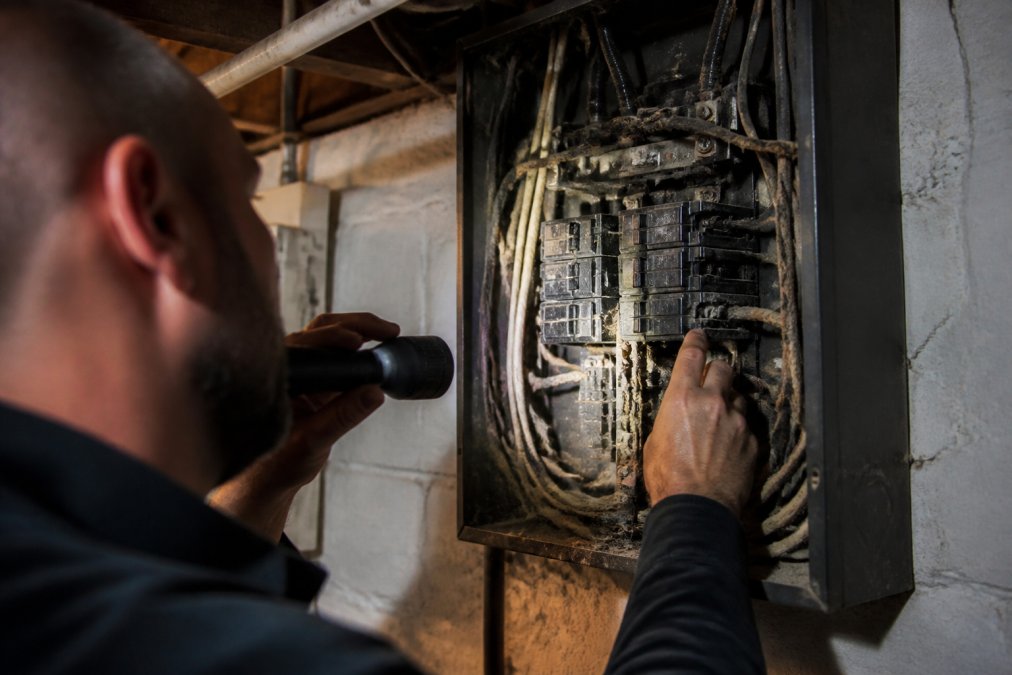
Watch for these:
- Flickering or dimming lights when appliances cycle on
- Warm or discolored outlet covers and switch plates
- A burning smell near outlets with no obvious source
- Breakers that trip repeatedly, especially on the same circuit
- Two-prong outlets with no grounding path
- Buzzing from outlets, switches, or the electrical panel
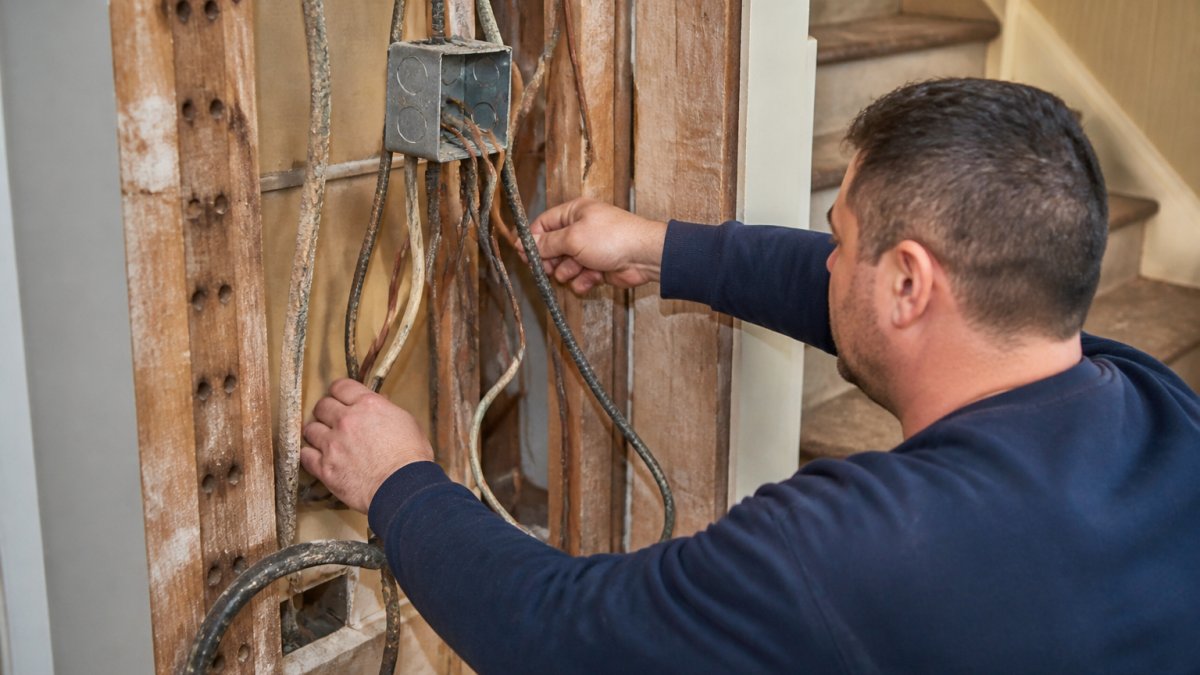
- Cloth-wrapped or brittle wiring insulation visible in an unfinished basement or attic
Knob and Tube and Aluminum Wiring Risks
Knob and tube wiring is the oldest common system still found in older homes. It has no ground conductor, its insulation is often brittle, and it was never designed for the electrical loads a modern household puts on it.
Why Insurers Deny Claims for Old Wiring
Denials trace back to underwriting, the process insurers use to decide what risk they will accept and at what insurance premium. Old wiring raises the probability of a loss, so carriers respond in three ways: they exclude it, they surcharge it, or they decline the policy.
The most common denial reasons:
- Wear and tear exclusion. The wiring failed from age, not from a covered event.
- Faulty workmanship. Unpermitted or amateur electrical work is excluded, even if it contributed to the loss.
- Maintenance neglect. A documented history of ignored warnings weakens any claim.
- Material misrepresentation. If you told the insurer the home had updated wiring and it did not, the policy exclusion for misrepresentation can void coverage entirely.
Electrical Rewiring Cost for Old Homes: What to Expect
Electrical rewiring cost for old homes is driven by square footage, wall construction, how much of the system needs replacing, and whether the walls have to be opened. Because every home is different, any honest number has to come from an on-site assessment rather than a phone estimate, but you can still understand what moves the number before anyone walks through your door.
What actually moves the number up or down:
| Factor | Effect on Project Scope |
|---|---|
| Home size and outlet count | More circuits and runs mean more labor |
| Finished vs. unfinished walls | Finished walls require patching and repainting |
| Partial vs. full rewire | Rewiring one circuit costs far less than the whole house |
| Accessibility | Basements and attics simplify routing; plaster does not |
| Permit and inspection requirements | Local building codes set the minimum standard |
| Age of the service entrance | Older meters and mast hardware often need replacement alongside the rewire |
The Cost-Benefit Framework Most Guides Skip
Rewiring is expensive, and no honest contractor will tell you it pays for itself through premium savings alone. But the math is not just about premiums. Run it in three columns:
- Insurance access. If your carrier has issued a non-renewal notice or a surcharge tied to knob-and-tube or aluminum wiring, the cost of not rewiring is losing coverage entirely, which can force you into a surplus-lines policy at a materially higher rate.
- Premium delta. Ask your agent, in writing, what your premium would look like after a documented full rewire versus what you pay now with the old system on the books. Some carriers re-rate the home; others simply remove the surcharge. The delta is real but rarely covers the full project cost on its own.
- Loss exposure. A rewire eliminates the single largest fire-risk line item in most older homes. That is a risk-reduction decision, not a premium-arbitrage decision, and it is the column most homeowners underweight.
Electrical Panel Upgrade Cost and Insurance Implications
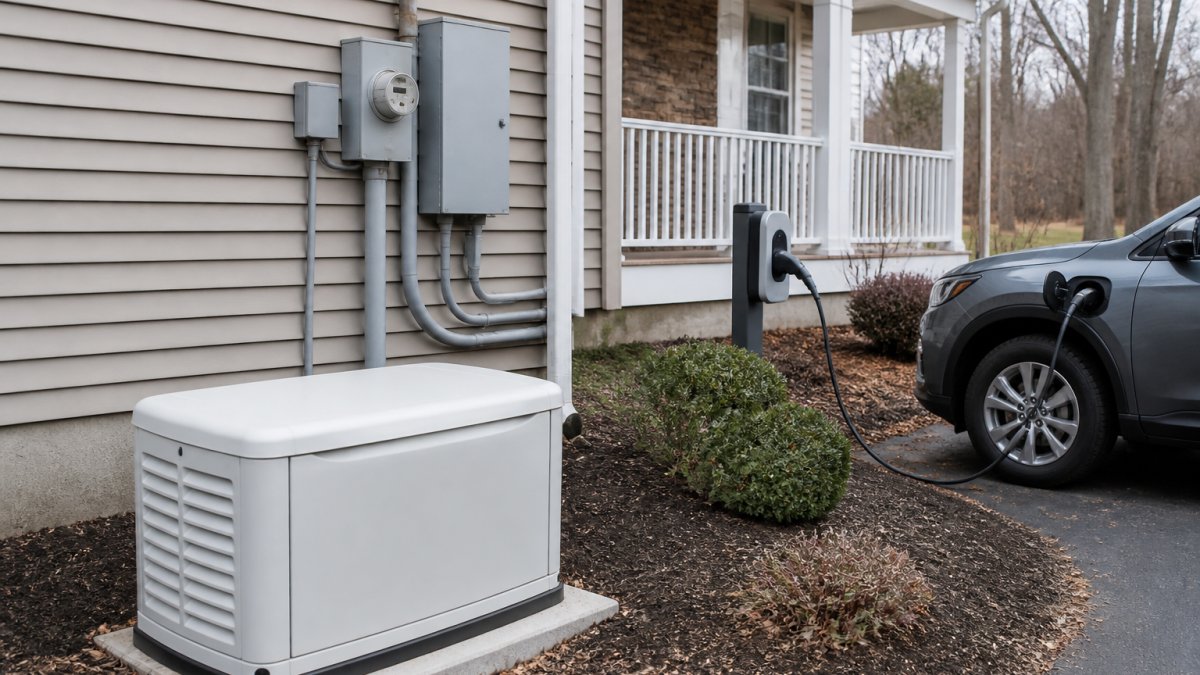
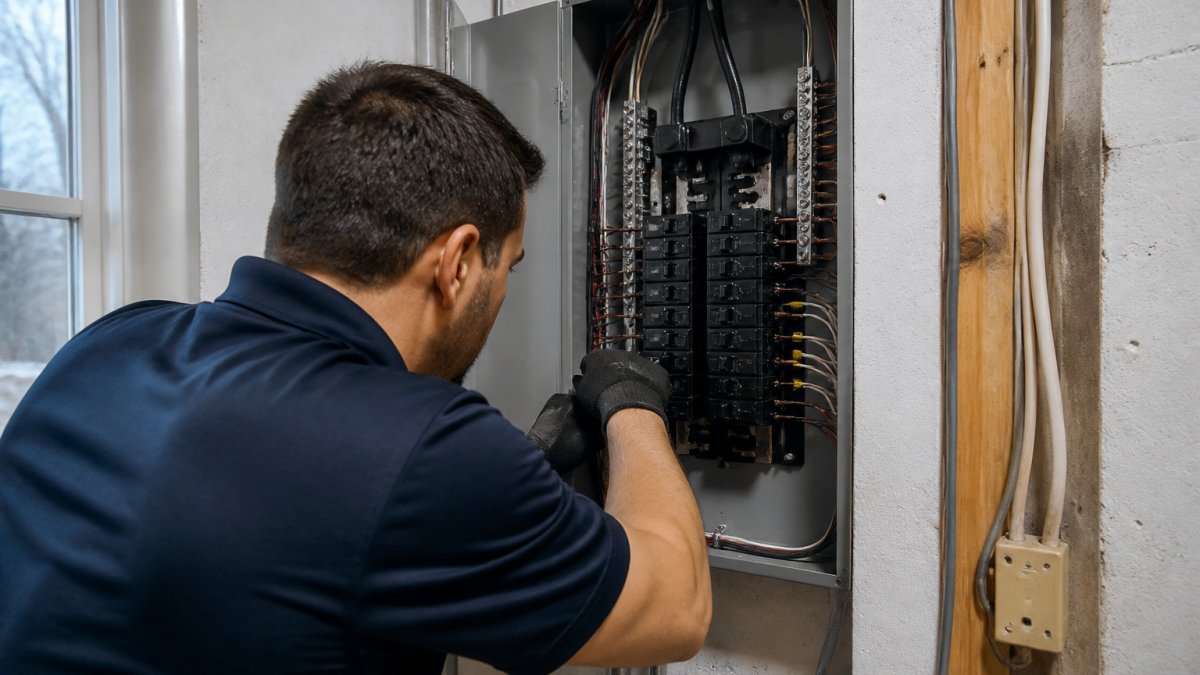
Electrical panel upgrade cost depends on the amperage you need, the condition of the service entrance, and whether the utility has to disconnect and reconnect. A 100-amp panel that cannot keep up with modern demand is the scenario we hear about most, especially from homeowners adding an EV charger, a heat pump, or a finished basement in towns like Avon, Simsbury, Cheshire, and Southington.
How to Actually Request an Endorsement
Most articles stop at "it depends." Here is the process, step by step:
- Get the panel evaluated by a licensed electrician. The report should state amperage, panel brand and model, condition of the bus and breakers, presence of any known recall-affected components, and whether the service entrance meets current requirements.
- Send the report to your agent and ask, in writing, for an endorsement or rider. Use the words "endorsement" and "rider", they are the contract language your carrier's underwriting department recognizes.
- Ask specifically about Ordinance or Law coverage. This is the endorsement that pays the extra cost of bringing damaged work up to current building codes after a covered loss. Without it, a carrier may pay to restore what was there, not what code now requires.
- Confirm the limit and the trigger. Ask: what is the coverage limit, what counts as a triggering loss, and does it apply to the panel specifically or to the whole dwelling?
- Get the answer in writing before you need it. A verbal "you're probably fine" from a call center is not an endorsement.
Why a Safety Inspection Certificate Changes the Conversation
An underwriter pricing a home with "old wiring" is pricing a checkbox. An underwriter pricing a home with a licensed electrician's safety inspection certificate, permit records, and a documented panel upgrade is pricing a specific risk. Those are very different conversations.
What the certificate should cover:
- Panel amperage, brand, and condition
- Presence and condition of grounding and bonding
- GFCI and AFCI protection where required
- Condition of visible wiring in accessible areas
- Any deficiencies found and whether they were corrected
Standard policies cover repair to the pre-loss condition. Code upgrade coverage pays the difference when current code demands more. If your home has older wiring, this endorsement is the single most useful addition you can make, and a written safety inspection certificate is what makes an underwriter willing to offer it.
How to Get Coverage: Riders, Endorsements, and Code Upgrade Coverage
Getting coverage for older wiring is a process, not a phone call. Here is how to work through it:
- Get the system evaluated. A licensed electrician documents the actual condition, not a guess.
- Ask your agent about an endorsement. An insurance rider or endorsement can add coverage your base policy excludes. Not every carrier offers one for old wiring, so ask directly.
- Request code upgrade coverage in writing. Confirm the limit and what triggers a payout.
- Complete the upgrades that matter most. A documented panel replacement or partial rewire changes how underwriting views your home.
- Re-shop at renewal. Once the work is done and documented, your risk assessment improves and so do your options.
Frequently Asked Questions
Will homeowners insurance pay to rewire a house?
Most standard policies will not pay to rewire a house just because the wiring is old. Insurance covers sudden and accidental damage, like a fire caused by a faulty circuit, but not the gradual deterioration of wiring insulation. Some policies offer code upgrade coverage or endorsements that can help with the cost of bringing old wiring up to current building codes after a covered loss. Review your policy or ask your agent about specific exclusions for old wiring coverage.
How do I know if my home needs a full electrical rewire?
Warning signs of outdated electrical wiring include flickering lights, frequent circuit breaker trips, burning smells near outlets, and two-prong outlets with no grounding. If your home has knob and tube or aluminum wiring, a licensed electrician should inspect it. Homes built before 1970 often need at least a partial rewire. A professional risk assessment can tell you whether a full rewire or targeted repairs will make your home safe and insurable.
Does insurance cover electrical fires caused by outdated wiring?
Yes, most homeowners insurance policies cover electrical fires as a covered peril, even if the fire starts because of old wiring. However, if the insurer can prove you knew about a serious hazard and did nothing, they may deny the claim for faulty workmanship or neglect. Regular preventative maintenance and documented inspections help protect your claim. After a fire, a claims adjuster will assess the damage and determine what property damage is covered.
Can I upgrade my electrical panel without rewiring my house?
Yes, you can often upgrade an electrical panel without a full rewire. An electrician may replace a 100-amp panel with a 200-amp service to support modern appliances, EV chargers, or a generator. However, if the existing wiring is aluminum, knob and tube, or has damaged insulation, a partial rewire may be required to meet current safety standards and building codes. Get a professional inspection to determine the best path for your home.
Old wiring is a problem that gets more expensive the longer it waits, and the insurance side rarely rewards delay. Whether you need a single circuit repaired, a panel upgraded, or a full rewire documented for your carrier, BEARS Electric can assess the system, explain your options in plain language, and complete the work to code. Get a free quote and find out exactly where your home stands.