 ultimate-guide
What Is Considered an Electrical Emergency? A 2026 Guide
Table of Contents
- What Is Considered an Electrical Emergency?
- Signs of Faulty Electrical Wiring You Should Never Ignore
- Causes of Burning Smell From Electrical Outlet and Other Fire Hazards
- How to Shut Off Main Power in an Emergency
- Common Causes of Electrical Hazards in Older Homes
- Dangers of DIY Electrical Repairs and When to Call a Professional
- Post-Emergency Recovery, Insurance, and Preventative Maintenance
- Frequently Asked Questions
Last Updated: October 1, 2026
What Is Considered an Electrical Emergency?
An electrical emergency is any situation where electricity poses an immediate risk of fire, shock, or injury to people or property. Burning smells, sparking outlets, exposed wiring, and buzzing sounds from your service panel all qualify. When these occur, you need a licensed electrician immediately, not next week.
U.S. Fire Administration electrical fire safety guidance
The Triage Decision Matrix: Emergency vs. Urgent vs. Monitor
Not every electrical issue demands a middle-of-the-night call. Use this framework to decide how fast you need help:
| Situation | Classification | Action Needed |
|---|---|---|
| Burning plastic smell, smoke, sparks | Emergency | Evacuate and call 911, then an electrician |
| Hot faceplates, buzzing panel, flickering lights | Urgent | Call a licensed electrician same day |
| Occasional flicker, single dead outlet | Monitor | Schedule an inspection within a week |
| Tripped breaker that resets fine | Monitor | Note the frequency and watch for patterns |
Signs of Faulty Electrical Wiring You Should Never Ignore
The clearest signs of faulty electrical wiring are flickering lights, buzzing sounds, and hot faceplates. Each points to a specific problem: loose connections, arcing electricity, or overloaded circuits struggling under too much electrical load.
Here's what each symptom typically means:
- Flickering lights across multiple rooms often signal voltage fluctuations or a failing neutral connection
- Buzzing sounds from outlets or the service panel indicate arcing electricity inside the walls
- Hot faceplates mean heat is building behind the wall, a direct fire hazard
- Melted wire insulation or a burning plastic smell points to an overloaded circuit or short circuit
Causes of Burning Smell From Electrical Outlet and Other Fire Hazards
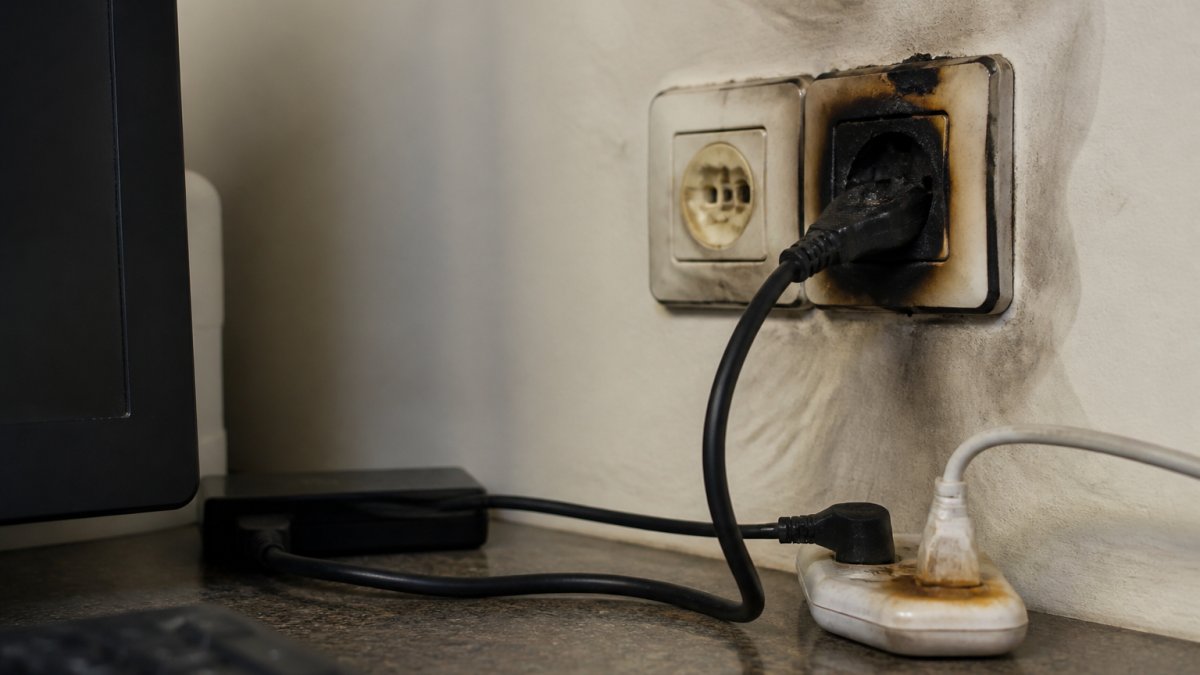
A burning smell from an electrical outlet almost always traces back to overheating. The usual culprits are loose wiring connections, overloaded circuits, and worn-out outlets that can no longer handle the electrical load placed on them. But before you call anyone, the single most useful thing you can do is figure out whether the problem lives in the appliance or in the circuit feeding it.
The appliance-versus-circuit test
A faulty appliance is a self-contained problem. A faulty circuit is a building problem. Here's how to tell them apart:
| What you observe | Likely source | What to do |
|---|---|---|
| Smell or heat only when one specific appliance runs | Faulty appliance | Unplug it, stop using it, replace or repair the appliance |
| Smell or heat at the outlet or faceplate with nothing plugged in | Faulty circuit or outlet | Stop using that circuit and call a licensed electrician |
| Breaker trips only when one appliance runs | Appliance drawing too much current, or a weak breaker | Test the appliance on a different circuit to isolate it |
| Breaker trips with different appliances on the same circuit | Faulty circuit, shared neutral, or overloaded wiring | Call a licensed electrician |
| Warm faceplate across multiple outlets in one room | Loose connections or undersized wiring behind the wall | Call a licensed electrician |
Appliance-specific emergencies worth knowing
- Dryers: Lint buildup combined with a failing heating element is a leading cause of house fires. Clean the lint trap every load and the vent duct at least annually.
- Space heaters: Plugging a high-wattage heater into an extension cord overloads the circuit fast. Heaters belong on a dedicated wall outlet, never a power strip.
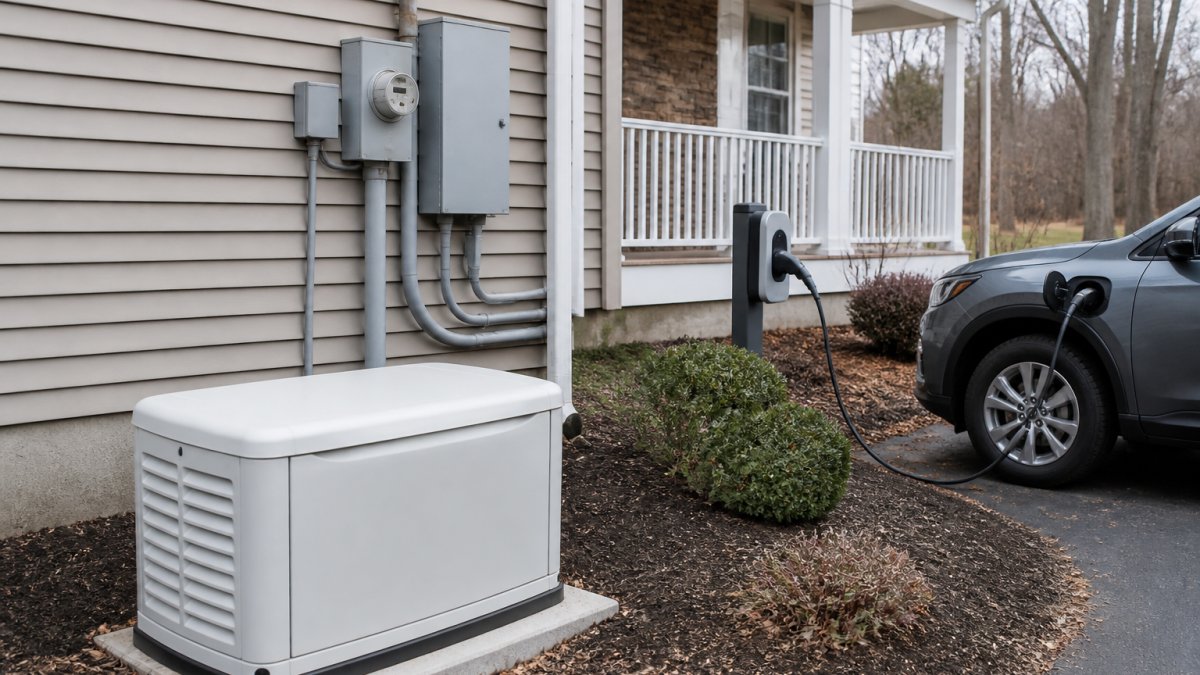
- EV chargers: Improperly installed chargers can draw more current than a circuit was designed to carry. A Level 2 charger typically needs a dedicated 240-volt circuit, not a shared one.
- Microwaves and toaster ovens: These draw high current for short bursts. On a shared kitchen circuit, they can push a marginal connection past its limit.
- Window air conditioners: A unit that dims the lights when it kicks on is telling you the circuit is already near capacity.
If any appliance produces a burning plastic smell or trips its breaker repeatedly, stop using it and have the circuit inspected. If the smell persists after the appliance is unplugged, treat it as a circuit emergency and leave the area.
When the smell has no obvious source
If you can't tie the smell to a specific appliance, work outward from the panel. A smell concentrated near the service panel points to a failing main breaker, a corroded bus bar, or a loose service conductor. A smell in one room points to that room's circuit. A smell that seems to move is often a shared neutral or a junction box behind a wall.
How to Shut Off Main Power in an Emergency
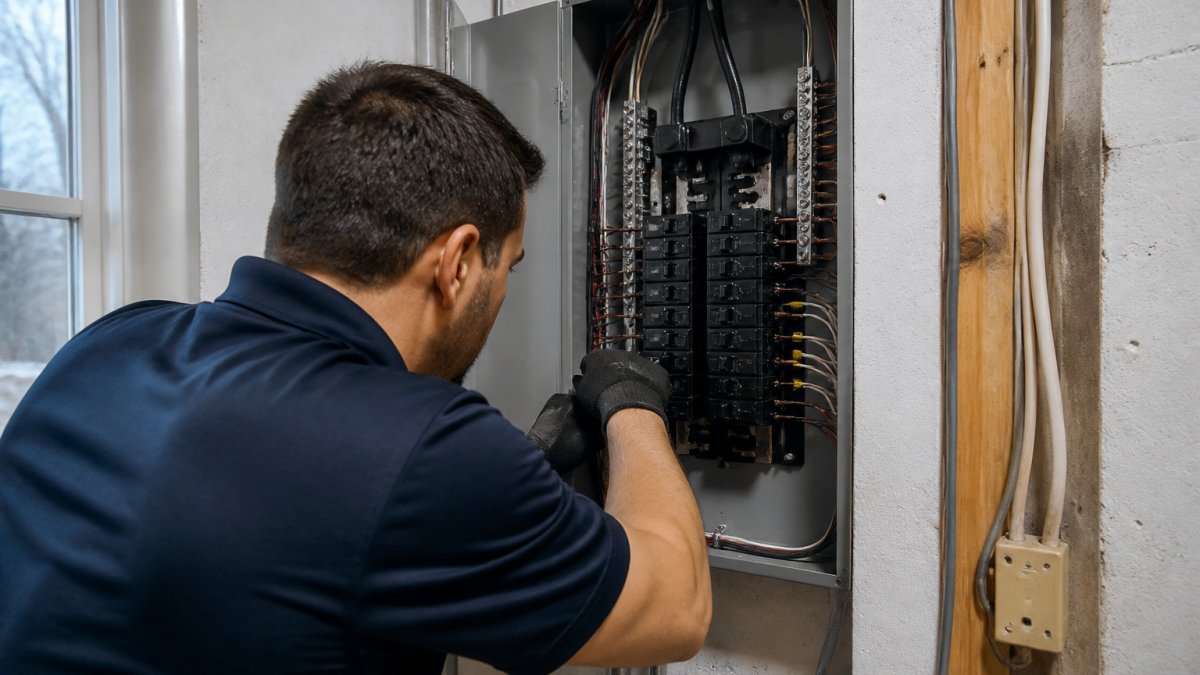
To shut off main power in an emergency, open your service panel and flip the largest breaker at the top to the OFF position. This de-energizes the whole home. Do it only if you can reach the panel safely and there's no smoke or standing water nearby.
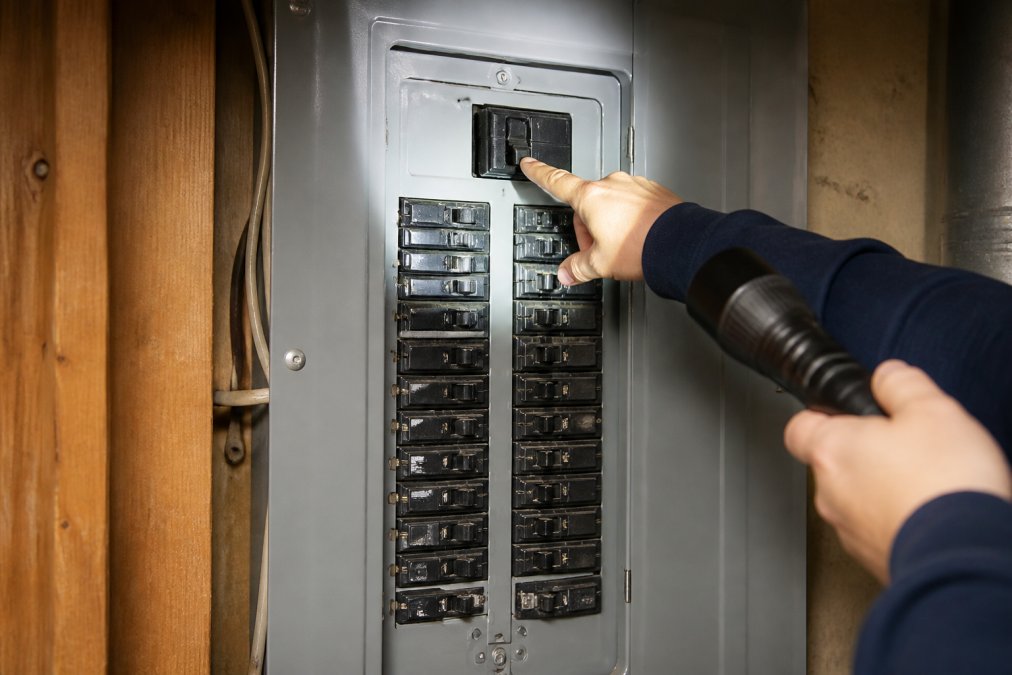
Follow these steps:
- Locate your service panel, usually in a basement, garage, or utility closet
- Stand on a dry surface and avoid touching the panel with wet hands
- Flip the main breaker, the large switch at the top or center, to OFF
- Confirm power is off by checking that lights and appliances have stopped
- Leave the home if you smell smoke, then call 911
Common Causes of Electrical Hazards in Older Homes
Older homes carry higher electrical risk because their wiring was designed for far less demand than modern households place on it. Knob-and-tube wiring, two-prong outlets, and 100-amp panels are common in homes built before the 1980s, and each presents distinct hazards.
The most frequent problems we see:
- Faulty wiring that has degraded behind the walls
- Overloaded circuits from modern appliances on legacy wiring
- Missing ground fault protection in kitchens, baths, and laundry areas
- Corroded connections in the service panel
Dangers of DIY Electrical Repairs and When to Call a Professional
DIY electrical repairs are dangerous because most of the risk is invisible. Wiring behind a wall can look fine while hiding melted insulation or a loose connection that will arc the moment power returns. The shock risk is obvious. The slower risk is the one that gets homeowners: work that passes a casual look but fails under load months later.
What actually goes wrong
Three failure modes account for most DIY electrical injuries and fires:
- Backstabbed connections. Pushing a wire into the small hole on the back of an outlet is fast, but the contact area is tiny. Under a heavy load, that point heats, oxidizes, and eventually arcs. Pigtailing to the screw terminals is the durable method.
- Undersized or mismatched wire. Replacing a 15-amp receptacle with a 20-amp one on 14-gauge wire doesn't increase capacity; it removes the safety margin. The breaker is sized to the wire, not the outlet.
- Missing or improper grounding. A ground wire that's clipped short, painted over, or bonded to a plastic box provides no fault path. Without it, a fault energizes the metal parts you touch.
The permit and inspection layer most homeowners never hear about
Electrical work beyond simple like-for-like replacement typically requires a permit and an inspection. This isn't bureaucracy for its own sake. The inspection is the only independent check that the work meets the adopted electrical code, and it creates a record that the work was done by a qualified person.
Unpermitted work creates three problems:
- It surfaces at resale. A home inspector or buyer's electrician will flag it, and you'll pay to open walls and correct it under time pressure.
- It complicates insurance. If a fire traces back to unpermitted or DIY work, a claim can be denied. Insurers look for evidence the work was done to code.
- It voids some manufacturer warranties. Improper installation can void coverage on the equipment itself.
When to call a professional, the clear triggers
Call a licensed electrician when you encounter any of the following:
- Any burning smell, sparking, or smoke
- Repeated tripped breakers with no obvious cause
- Water contact with outlets or the panel
- Work inside the service panel itself
- Any repair requiring new wiring or a new circuit
- Any work that requires a permit or inspection
- Aluminum branch-circuit wiring, knob-and-tube wiring, or a fuse box
- A panel that's full, unlabeled, or a known recalled brand
National Fire Protection Association electrical safety resources
What "call a professional" should actually mean
A licensed electrician should be able to tell you three things before starting: what the fault is, what the repair involves, and whether a permit is required. If a contractor can't answer those, that's a signal. Ask for the license number and confirm it's active. For work in older housing stock, ask specifically whether the existing wiring can support the new load before any work begins.
Post-Emergency Recovery, Insurance, and Preventative Maintenance
After an electrical emergency, recovery involves three phases: making the home safe, documenting damage for insurance, and preventing a repeat. Most homeowners skip the third step, which is why the same problem returns.
Your recovery checklist:
- Have a licensed electrician inspect the entire system, not just the failed component
- Photograph all damage before any repairs begin
- Save receipts and the electrician's report for your insurance claim
- Ask whether the cause was covered under your policy
- Schedule preventative maintenance to catch future issues early
Electrical Safety Foundation International home safety tips
Frequently Asked Questions
Is a flickering light considered an electrical emergency?
A single flickering bulb usually is not an emergency, but flickering across multiple rooms, especially alongside buzzing sounds or dimming when appliances kick on, points to a loose neutral or overloaded circuit. Those conditions can overheat wiring behind the walls. If flickering is widespread or paired with a burning plastic smell, treat it as an electrical emergency and call a licensed electrician.
Is it safe to ignore a burning smell from an electrical outlet?
No. A burning plastic smell near an outlet often means melted wire insulation or arcing electricity inside the box. Unplug anything connected to that outlet, avoid touching the faceplate, and shut off the circuit at the breaker if you can reach it safely. Then call an electrician. Ignoring the smell is one of the most common causes of electrical fires in older homes.
Can an electrical fire start if the breaker is off?
Yes, in rare cases. The breaker cuts power to the circuit it controls, but a fault upstream, such as at the service panel or meter base, can still arc and ignite. That is why a burning smell or smoke near the panel itself is a call-911 situation even after you flip breakers. Only utility or licensed professionals should work on the lines feeding the panel.
When should I evacuate my home due to electrical issues?
Evacuate immediately if you see flames, smell smoke with no visible source, hear loud popping from an outlet or panel, or notice sparks. Get everyone outside, call 911, and do not re-enter until firefighters clear the building. After any fire event, a licensed electrician should inspect the wiring and panel before power is restored.