 how-to
Can You Install a Smart Thermostat on an Old Electrical System?
Table of Contents
- Can You Install a Smart Thermostat on an Old Electrical System?
- Signs of Outdated Electrical Wiring That Affect Smart Thermostat Installation
- C-Wire Adapter Installation: What to Do When Your Old System Has No Common Wire
- Smart Thermostat Compatibility Checklist for Older HVAC Systems
- Step-by-Step: Installing a Smart Thermostat on an Old Electrical System
- Electrical Rewiring Cost for Old Homes: When to Budget for an Upgrade
- When to Call a Licensed Electrician for Smart Thermostat Installation
- Frequently Asked Questions
Last Updated: October 3, 2026
Can You Install a Smart Thermostat on an Old Electrical System?
Here's the good news. That means your old fuse box or 100-amp panel usually has nothing to do with whether a smart thermostat will work.
What matters is whether your thermostat has a C-wire, also called a common wire. Without one, many smart thermostats won't get steady power.
Below, we'll walk through how to check your wiring, what to do when the C-wire is missing, and when to call a licensed electrician instead of guessing.
Signs of Outdated Electrical Wiring That Affect Smart Thermostat Installation
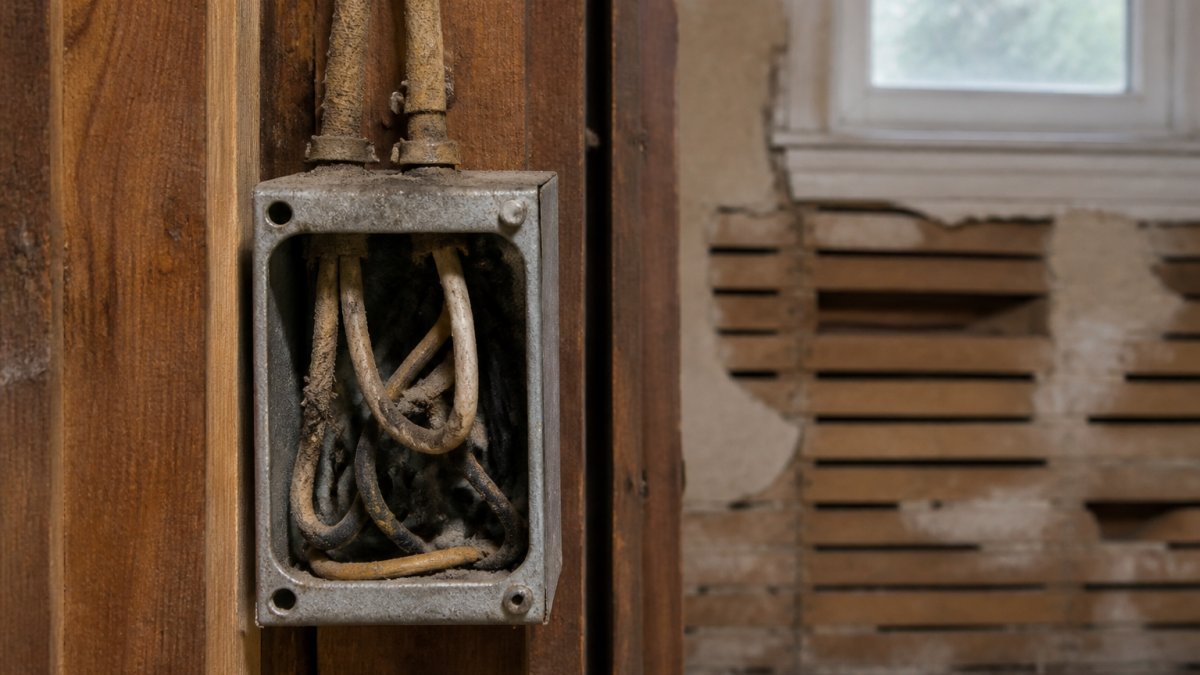
The clearest signs of outdated wiring are two-wire thermostat cables, cloth or fabric insulation, and no C-wire terminal.
Other warning signs include:
- Fabric-wrapped or brittle wire insulation that crumbles when touched
- A thermostat with just R and W terminals, no C
- Aluminum wiring in the walls
Age alone isn't the issue. A 1950s home with updated wiring handles a smart thermostat fine.
The one real risk is line voltage. Some older homes, especially those with electric baseboard heaters, run line voltage straight to the thermostat. That's 120 or 240 volts.
How to Tell if Your Thermostat Wiring Is Low Voltage or Line Voltage
Low-voltage wiring is thin, usually 18 to 22 gauge, and carries 24 volts. Line-voltage wiring is thicker, often 12 or 14 gauge, and carries 120 or 240 volts.
Here's how to check safely:
- Turn off power at the breaker or fuse box.
- Remove the thermostat cover.
- Look at the wire thickness and terminal labels.
- Low voltage: thin wires, labels like R, W, Y, G, C.
- Line voltage: thick wires, labels like L1, L2, or plain black and white pairs.
If you see thick wires and no C terminal, stop. You need a line-voltage-rated smart thermostat or a relay, not a standard model.
U.S. Department of Energy guide to home heating and cooling controls
C-Wire Adapter Installation: What to Do When Your Old System Has No Common Wire
A C-wire adapter lets a smart thermostat run without a dedicated common wire. Instead of a fifth conductor running from the furnace to the wall plate, the adapter steals a small amount of current from the existing low-voltage circuit and rectifies it into steady power for the thermostat. This is the single most common fix for older homes in Bristol, Waterbury, Torrington, and Meriden where the original installer ran only four wires, or sometimes just two.
There are two families of adapters, and they are not interchangeable:
- Power extender kit (PEK): A small module that installs at the furnace or air handler control board. It repurposes the fan (G) and one other conductor to carry constant 24VAC to the thermostat, then re-creates the original signals at the board. Works with most single-stage and multi-stage forced-air systems.
- In-wall adapter module: Some thermostat manufacturers sell a module that mounts at the wall plate or inside the wall cavity. It is easier to install but only works with that brand's thermostats and only when at least four conductors reach the wall.
How a Power Extender Kit Actually Works
Your furnace control board has a 24VAC transformer. Two of its terminals, typically R (hot) and C (common), are the power source. The thermostat's R wire is already connected to R. The problem is that no wire runs from C at the board to C at the thermostat.
The PEK solves this by:
- Disconnecting the existing G (fan) and Y or W wires from the board.
- Landing the PEK's labeled leads on R, C, G, Y, and W at the board.
- Using the now-freed G conductor to carry constant 24VAC up to the thermostat.
- Re-creating the fan and call-for-heat/cool signals at the board using the PEK's internal relays.
The thermostat sees a normal C terminal. The furnace sees normal G, Y, and W signals. Nothing about the HVAC sequence of operation changes.
Step-by-Step Installation
- Cut power at the breaker. Not the thermostat, the furnace or air handler breaker. Confirm with a non-contact voltage tester at the control board.
- Photograph the existing terminal block before touching anything. Every wire, every terminal, top to bottom.
- Label each conductor at the thermostat wall plate with tape or wire markers.
- Open the furnace panel and locate the low-voltage terminal strip. It is usually a row of screw terminals labeled R, C, G, Y, W, and sometimes Y2, W2, O/B.
- Match the PEK leads to the board using the diagram that shipped with the kit. The colors on the PEK are not the same as the colors on your existing wires, follow the diagram, not intuition.
- Mount the PEK with the supplied screws or adhesive pad, away from the inducer motor and any hot surfaces.
- Reconnect the thermostat wires at the wall plate to the new thermostat's terminals, including the conductor now acting as C.
- Restore power and test. Run a heat cycle, a cool cycle, and a fan-only cycle. Confirm the blower starts and stops with each call.
Most kits include color-coded jumper wires and a wiring diagram. Follow the manual exactly. A crossed wire can blow the low-voltage transformer on your HVAC control board, a part that costs more to replace than the thermostat itself.
When an Adapter Will Not Work
Adapters are not universal. They fail or are unsafe when:
- The transformer is already loaded. If your system has a zone valve, a humidifier, or an electronic air cleaner drawing from the same 24VAC transformer, adding a smart thermostat's continuous draw can brown out the whole circuit. The symptom is a thermostat that reboots randomly or a zone valve that chatters.
- You have a heat pump with auxiliary heat. Some PEKs do not support the O/B reversing valve plus auxiliary and emergency heat. Check the kit's compatibility list against your thermostat model.
- Only two wires reach the wall. A PEK needs at least four conductors to work. With two, you need a new thermostat cable run, a job for a licensed electrician.
The Baseboard Heater Exception
If your home has electric baseboard heaters, the thermostat on the wall is not a low-voltage control, it is a line-voltage switch carrying 120V or 240V directly through it. There is no C-wire, no transformer, and no adapter that makes a standard smart thermostat work on that circuit. You need a line-voltage smart thermostat rated for the load, or a low-voltage thermostat paired with a relay/contactor installed at the heater.
U.S. Department of Energy guide to home heating and cooling controls
Smart Thermostat Compatibility Checklist for Older HVAC Systems
Run through this checklist before you buy a smart thermostat. It takes ten minutes and saves a wasted purchase.
| Check | What to Look For | Why It Matters |
|---|---|---|
| Wire count | 4+ wires at wall plate | Fewer wires may need an adapter |
| C-wire present | A terminal labeled C | Steady power without workarounds |
| Voltage type | Thin 24VAC wires | Line voltage needs a different thermostat |
| HVAC type | Forced air, heat pump, or baseboard | Not all thermostats support all systems |
| Transformer | Working low-voltage transformer | Powers the thermostat |
| Breaker access | Labeled breaker or fuse | Safe shutoff during install |
If your system is a heat pump, check that the thermostat supports auxiliary and emergency heat. If you have electric baseboard heaters, you need a line-voltage smart thermostat, which is a completely different product.
Step-by-Step: Installing a Smart Thermostat on an Old Electrical System
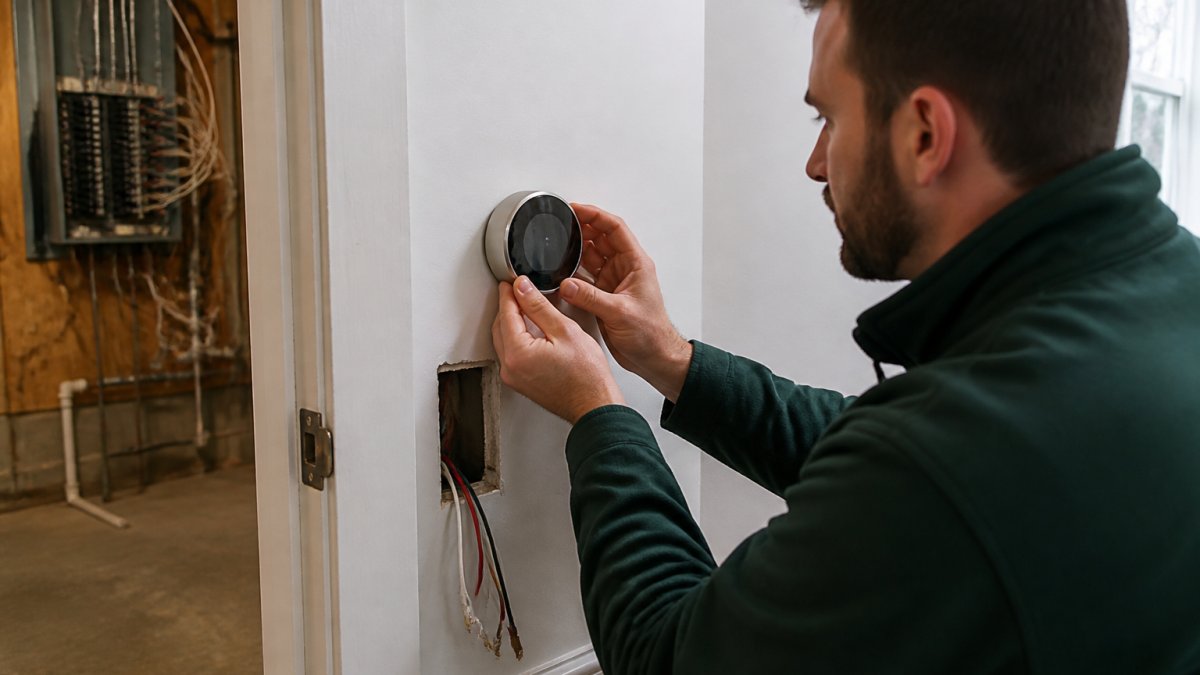
The install process is straightforward once you've confirmed low voltage and a C-wire.
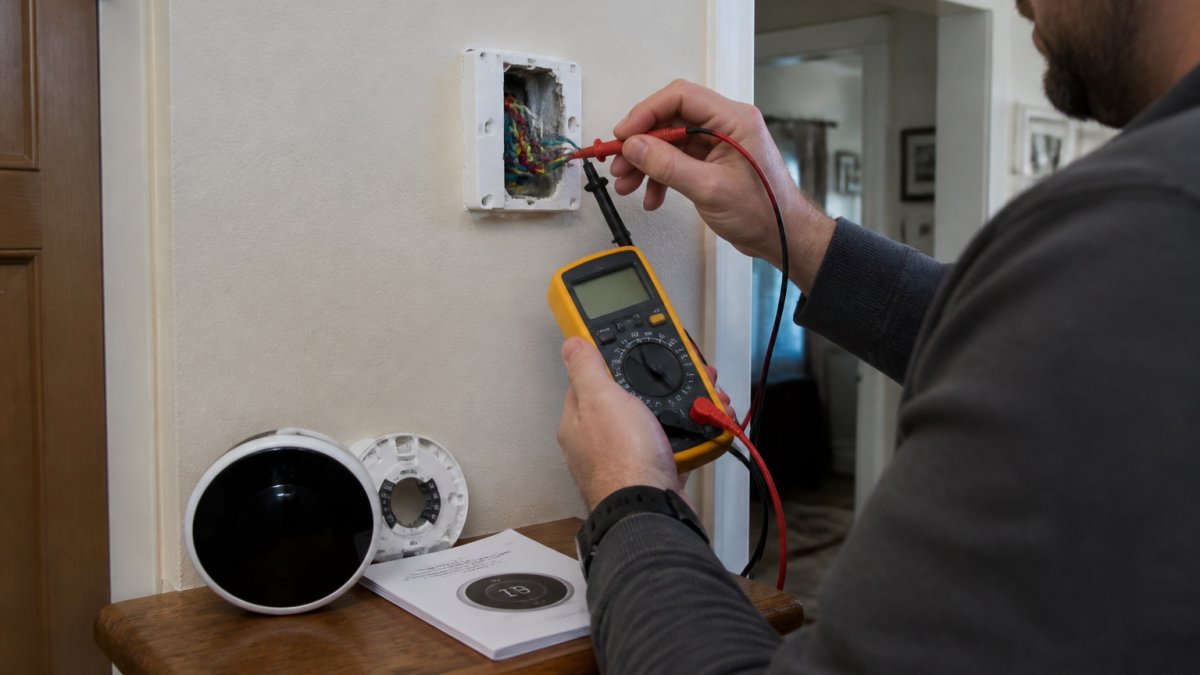
What you'll need:
- Smart thermostat and mounting plate
- Small screwdriver set
- Multimeter or voltage tester
Step 1: Cut the power. Turn off the furnace breaker.
Step 2: Label every wire. Tag each wire before disconnecting. Photos help too.
Step 4: Mount the new base plate. Use the included screws and check it's level.
Step 6: Attach the display. Snap the thermostat onto the base plate.
Step 7: Restore power and test. Turn the breaker back on.
Common Installation Challenges and How to Troubleshoot Them
The most common problem is a thermostat that won't power on. That usually means no C-wire or a tripped breaker. Check the breaker first, then confirm the C-wire connection.
Other frequent issues:
- Blank digital display: No power. Check the C-wire and the furnace transformer.
- Heat runs when set to cool: Wires swapped. Recheck your labels.
- Short cycling: Wrong thermostat type for your HVAC system.
If two troubleshooting attempts fail, stop. Repeated power cycling can damage the HVAC control board.
Electrical Rewiring Cost for Old Homes: When to Budget for an Upgrade
Pricing for electrical rewiring depends on your home's size, wiring condition, and how much access the walls allow. We don't quote flat rates over the phone, because no two old homes are the same.
What pushes a rewiring project higher:
- Knob-and-tube or aluminum wiring throughout
- Finished walls that need patching
- A fuse box that needs a panel upgrade
What keeps it lower:
- Partial rewiring of one zone
- Open basement or attic access
- Existing grounded circuits in good shape
If your thermostat wiring is the only issue, you may not need a full rewire. A single new thermostat cable run is a much smaller job.
When to Call a Licensed Electrician for Smart Thermostat Installation
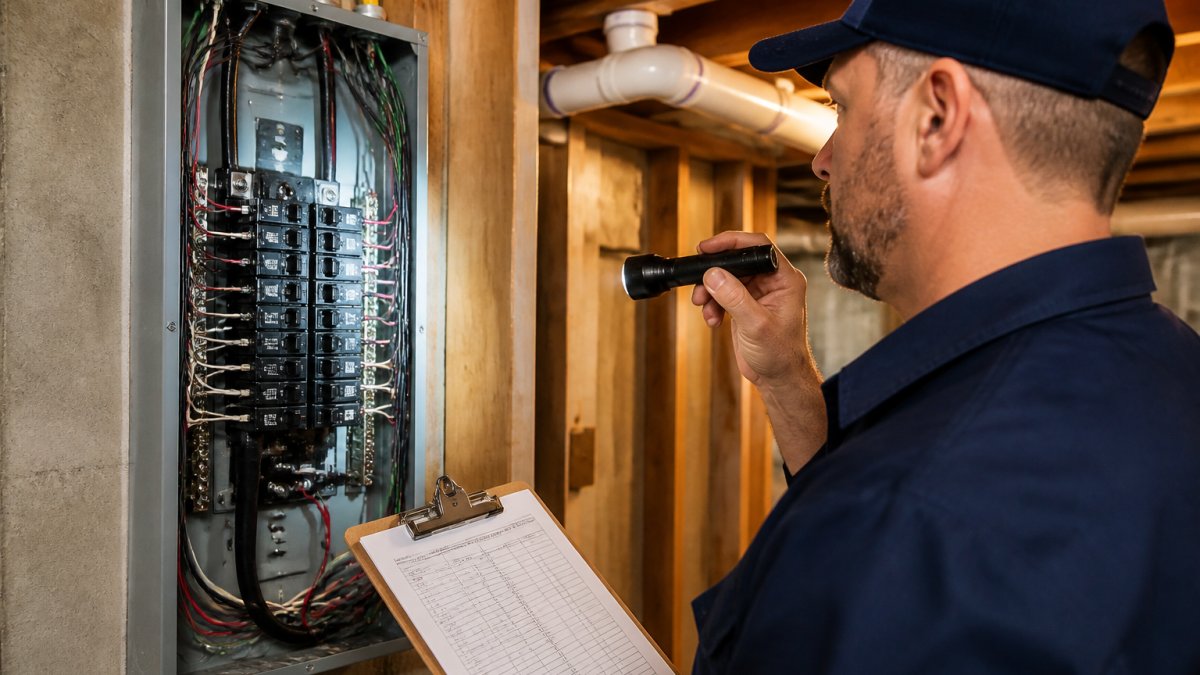
Call a licensed electrician when you see line voltage, damaged insulation, or a fuse box you don't recognize. Those are safety issues, not DIY projects.
Book a pro if any of these apply:
- Thick line-voltage wires at the thermostat
- Brittle or cloth-wrapped insulation
- No C-wire and no clear furnace access
At BEARS Electric, we handle thermostat wiring, C-wire adapters, and full panel upgrades for homeowners across Southington, Plainville, Farmington, and the surrounding towns. We've been at this since 2012, and we quote transparent pricing with no hidden fees.
NFPA 70 National Electrical Code overview
Frequently Asked Questions
Do smart thermostats require a C-wire?
Most smart thermostats need a C-wire, or common wire, to deliver steady 24VAC power. Without it, the thermostat may rely on battery power or steal small amounts of current from the heating and cooling wires, which can cause short cycling or flickering displays. Some models include a power extender kit that creates a C-wire connection at the HVAC control board, so you can still install a smart thermostat on an old electrical system without running new cable through the wall.
How do I know if my home has a C-wire?
Turn off power at the circuit breaker, remove the thermostat housing, and look at the terminal block. A C-wire is usually a blue or black wire connected to the C terminal. If you see unused wires tucked behind the wall, one may be a common wire you can connect. A multimeter or voltage tester can confirm whether the wire carries 24VAC. If no C-wire exists, a C-wire adapter installation or a power extender kit at the furnace is the next step.
What are the risks of installing smart devices on outdated wiring?
Old wiring may lack a proper ground, have brittle insulation, or use aluminum conductors that loosen at terminals. These issues can cause intermittent power, overheating at connections, or damage to the smart thermostat's internal relay. If you notice flickering lights, warm switch plates, or a burning smell, stop and have a licensed electrician inspect the circuit. In many Central Connecticut homes, a quick inspection in towns like Bristol, Southington, or New Britain is enough to confirm whether the low-voltage side is safe for a smart thermostat.
Are there smart thermostats designed for older homes without a C-wire?
Yes. Some smart thermostats work without a C-wire by using internal batteries or by drawing a small trickle of power through the existing heating and cooling wires. These models are convenient but can cause problems on older HVAC systems that lack a dedicated common terminal. If your furnace or boiler is older, a C-wire adapter or power extender kit is often the more reliable choice. A licensed electrician can verify compatibility with your specific HVAC control board before you buy.
An old electrical system doesn't have to stand between you and a smart thermostat. The real question is your wiring type, and a quick check answers it. If you'd rather not test live wires yourself, BEARS Electric offers same-day service, transparent pricing with no hidden fees, and a satisfaction guarantee on every job. Get a free quote from BEARS Electric and let our licensed team confirm your wiring and install your smart thermostat safely.