 how-to
How to Upgrade a 100 Amp Panel for EV Charger
Table of Contents
- Do You Actually Need to Upgrade Your 100 Amp Panel?
- Understanding Load Calculation for EV Charger Installation
- Alternatives to a Full Panel Upgrade
- When a Panel Upgrade Becomes Necessary
- The Panel Upgrade Process: What to Expect
- Weighing Your Options: Upgrade vs. Load Management
- Conclusion
- Frequently Asked Questions
Last Updated: September 3, 2026
Do You Actually Need to Upgrade Your 100 Amp Panel?
Whether you need to upgrade a 100 amp panel for an EV charger depends entirely on your home's current electrical load and the charger's power demands. Not every home requires a full panel upgrade. Many homeowners can install a Level 2 charger without touching their main service.
A 100-amp service was standard for homes built in the 1980s and 1990s. It handles typical household loads: heating, cooling, water heater, kitchen appliances, and general lighting. Add an EV charger that draws 30-50 amps, and suddenly you're asking your panel to do more than it was designed to do simultaneously. The question is whether your main breaker has enough capacity to supply all that power at once without tripping.
This is where load calculation comes in. Before spending money on an upgrade, you need to know if one is actually necessary. BEARS Electric has helped homeowners throughout Central Connecticut, from Bristol to Waterbury to Meriden, figure out exactly what their homes can handle. Sometimes the answer is a straightforward panel upgrade. Sometimes it's a smarter solution that costs less and takes less time.
Understanding Load Calculation for EV Charger Installation
Load calculation is the process of adding up all the electrical power your home uses simultaneously and comparing it to what your service panel can deliver.
Your home's electrical service is rated in amperage. A 100-amp service means your utility company will deliver up to 100 amps of current to your home at any given moment, roughly 24 kilowatts of continuous power (100 amps × 240 volts) (nfpa.org). If you try to draw more than that simultaneously, your main breaker trips.
The National Electrical Code (NEC) provides demand factors that account for the fact that most appliances don't run at full capacity all the time. You're not running your oven, water heater, heating system, and air conditioning simultaneously at full power. The NEC lets you apply reduction factors to calculate "demand load", the realistic peak load your home actually draws.
Step 1: Identify Your Home's Current Electrical Load
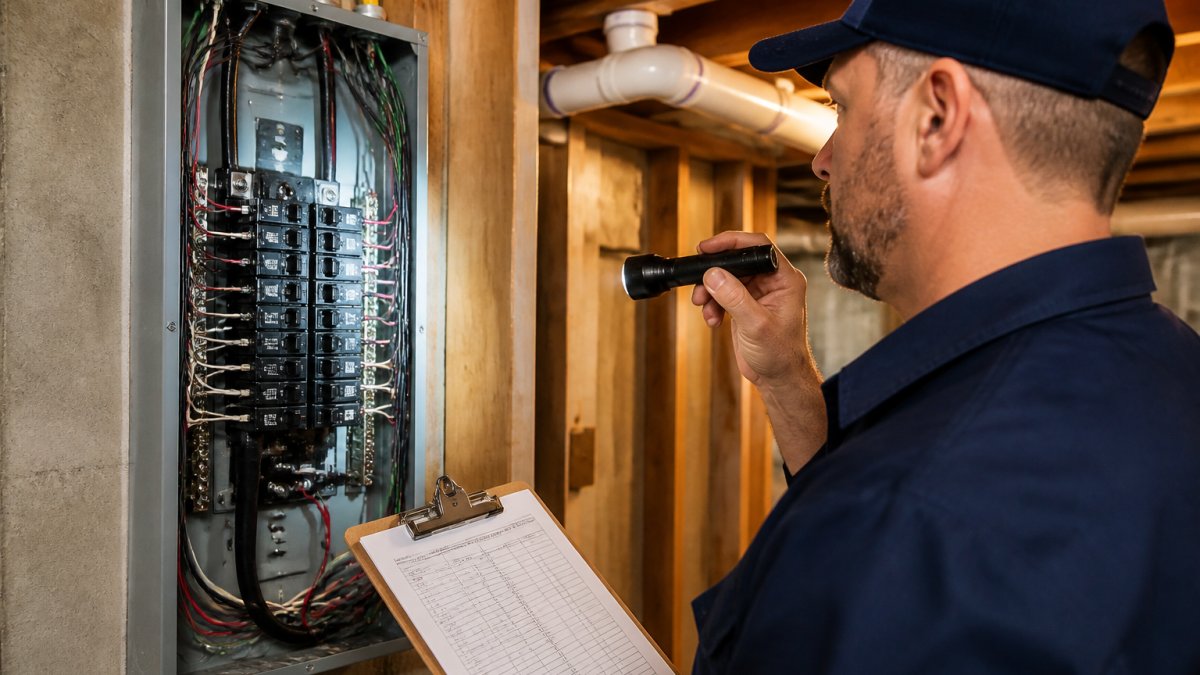
Start by listing every major appliance and circuit in your home. Go to your breaker panel and write down the amperage rating of each breaker. Your main breaker is typically 100 amps. Individual circuits might be 15, 20, 30, 40, or 50 amps depending on what they power.
For accuracy, use NEC Table 220.12, which lists demand factors by appliance type. A 5-kilowatt electric water heater at 240 volts draws about 21 amps (energy.gov). A typical central air conditioning system draws 15-20 amps. An electric range can draw 40-50 amps.
Add your heating load, air conditioning load, and water heater load. These are your big three. Add 25% of that total for general lighting and outlets. That's your approximate demand load.
Example: a home with a 5-kW water heater (21 amps), a 4-ton air conditioner (18 amps), and 8 kW of electric heating (33 amps) has a demand load of roughly 72 amps before adding general circuits. Add 25% for general use, and you're at about 90 amps of realistic simultaneous draw.
Step 2: Calculate the EV Charger's Power Requirements
An EV charger's power requirement depends on its type. A Level 1 charger (standard household outlet) draws 1.4 kilowatts and requires no panel changes. A Level 2 charger operates at 240 volts and draws between 16 and 50 amps depending on the model (fueleconomy.gov). A typical home installation uses a 30 or 40-amp circuit, which supplies roughly 7.2 or 9.6 kilowatts respectively.
For load calculation purposes, assume your EV charger will draw its nameplate amperage. A 40-amp Level 2 charger means 40 amps at 240 volts, or 9.6 kilowatts.
Step 3: Determine Your Remaining Headroom
Add your calculated demand load to your EV charger's amperage. If the total is 100 amps or less, you likely have headroom. If it exceeds 100 amps, you're over capacity.
Using the earlier example: 90 amps of home demand plus a 40-amp charger equals 130 amps. That home would need a panel upgrade to safely install a Level 2 charger at that amperage.
The NEC allows you to apply demand factors to EV charging as well. A typical residential EV charger might have a 50% demand factor for load calculation purposes, meaning a 40-amp charger counts as 20 amps toward your total load. Check with your local electrical inspector or a licensed electrician about what demand factor applies in your area.
Alternatives to a Full Panel Upgrade
A full panel upgrade is the most straightforward solution but also can be more expensive. Before going that route, explore whether load management strategies can work instead.
Smart EV Charger Splitter and Load Management
A smart EV charger splitter (also called a load management device) monitors your home's real-time electrical load and automatically reduces the charger's amperage if your total demand gets too high. It prevents the main breaker from tripping by dynamically adjusting the charger's power draw.
These devices work by communicating with your main panel and measuring the current flowing through your service. If your air conditioner kicks on and your home's demand spikes, the charger automatically reduces its amperage. When the AC shuts off, the charger ramps back up.
Smart splitters are particularly effective if your EV charging happens overnight or during off-peak hours when major appliances aren't running. Many homeowners find they can charge fully by morning without ever needing the charger's maximum amperage.
The advantage is cost and simplicity. A smart load management device requires no utility coordination. The disadvantage is that your charger's speed depends on what else is running in your home.
Circuit Sharing and Interlock Kits
An interlock kit is a mechanical device that prevents two circuits from being energized simultaneously. An interlock between your EV charger circuit and another high-amperage circuit (like a dryer or electric range) ensures that only one can be active at a time.
This works if your household habits support it. If you charge overnight and never use your dryer at night, an interlock between the charger and dryer circuits is practical. If you need both to run independently, it's not.
Interlock kits can be a cost-effective alternative compared to a panel upgrade, but they require lifestyle changes.
Delayed Charging and Demand Management
The simplest load management strategy requires no equipment at all: charge your vehicle during off-peak hours when your home's baseline load is lowest.
Most EV owners charge overnight. If you plug in after 10 p.m. and charge until 6 a.m., your heating system is likely in setback mode, your water heater has finished its cycle, and your air conditioning isn't running. Your home's demand load drops significantly. A 40-amp charger that would have pushed you over capacity during the day might fit comfortably into your available headroom at night.
Many Level 2 chargers include programmable timers. Set your charger to start at 11 p.m. and stop by 6 a.m., and you've solved the load problem without buying anything. Some utilities offer time-of-use rates that make off-peak charging cheaper anyway.
When a Panel Upgrade Becomes Necessary
A panel upgrade is necessary when your home's demand load plus the EV charger's amperage exceeds your service capacity even after applying demand factors and exploring load management options.
It's also necessary if you want the ability to charge at maximum speed regardless of what else is running in your home. A Level 2 charger running at full amperage provides the fastest charge times.
A third scenario is when you're planning other electrical upgrades simultaneously. If you're adding a heat pump, upgrading your HVAC system, or rewiring your kitchen, you might be at or near capacity already. In those cases, a panel upgrade is often a cost-effective solution because you're doing the work once instead of multiple times.
Finally, if your home has an older 100-amp service and you're planning to stay there for 10+ years, an upgrade future-proofs your home. A 200-amp service gives you flexibility for whatever comes next.
The Panel Upgrade Process: What to Expect
If you've determined that an upgrade is necessary, understanding the process removes uncertainty.
Permits and Code Compliance
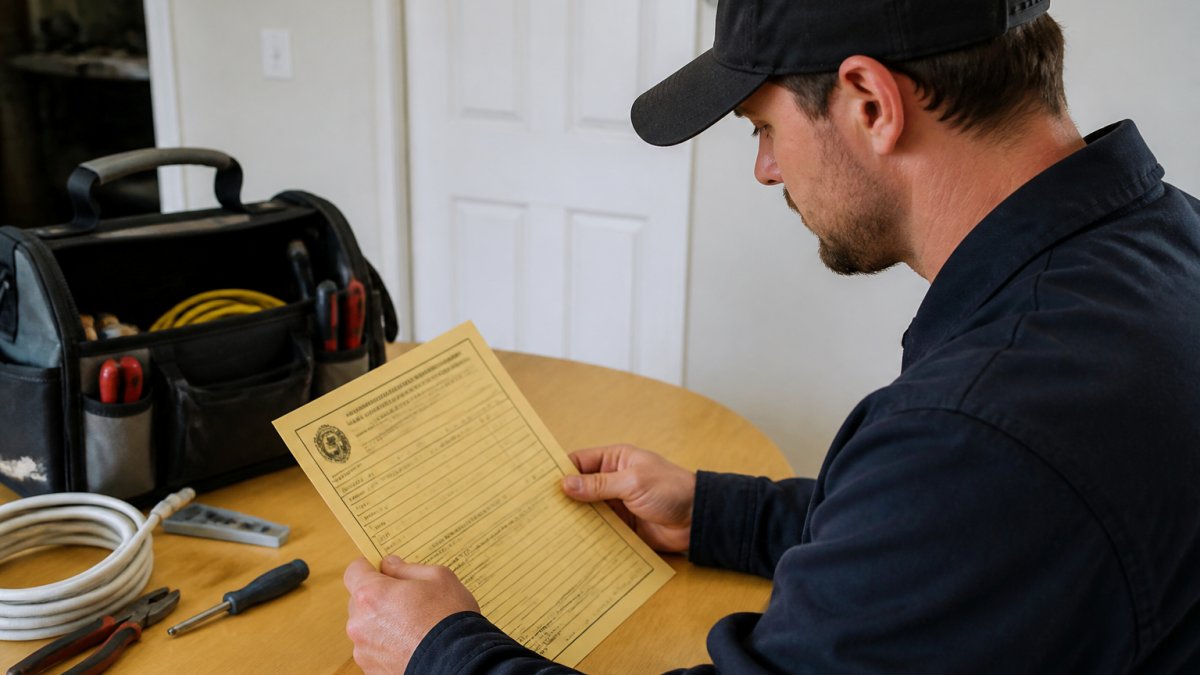
Your first step is getting a permit from your local building department. A permit is required for any electrical service upgrade. The permit process involves submitting plans that show your existing panel, the new panel specifications, the load calculation, and how the new service will be installed.
The National Electrical Code (NEC) governs residential electrical installations. Your local jurisdiction adopts the NEC and may add local amendments. Your electrician knows these requirements and will design the upgrade to comply.
The permit also triggers an inspection. A building inspector will visit your home to verify the work meets code before it's energized. This inspection protects you by ensuring the work is done safely.
Working with a Licensed Electrical Contractor
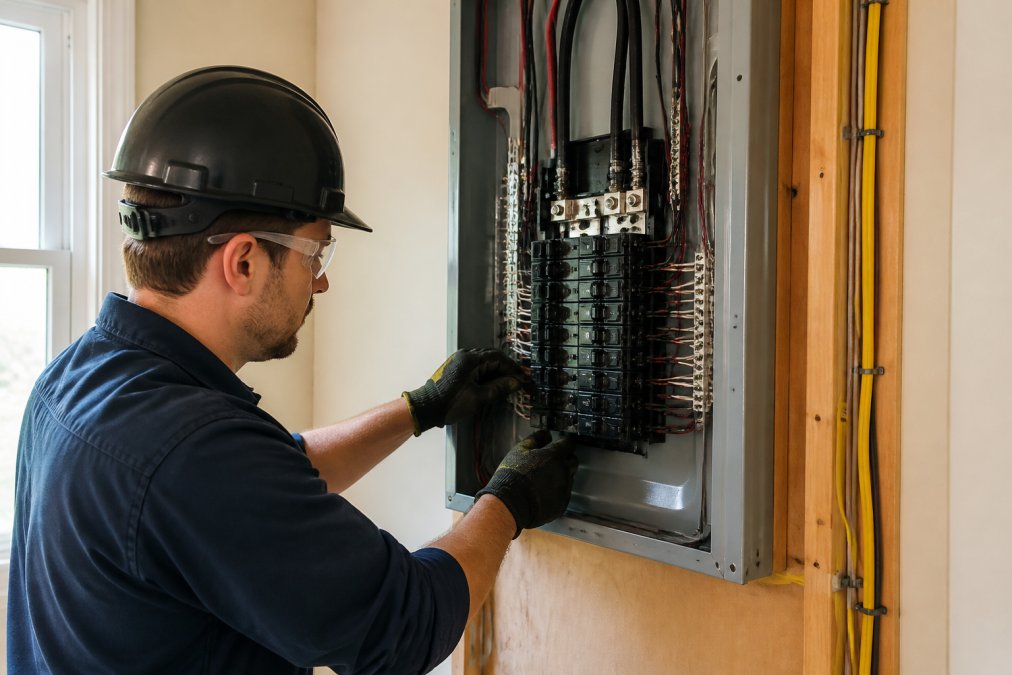
A typical panel upgrade involves: disconnecting your home from utility power, removing the old service entrance and meter, installing new conduit and wiring from the meter to the new panel, installing the new panel with main breaker and individual circuit breakers, and reconnecting all existing circuits. The utility company then reconnects your service and installs a new meter.
The work typically takes several hours for a straightforward replacement. If your home has a subpanel or complex wiring, it may take longer. Your electrician will give you a timeline during the estimate.
During the work, your home will be without power. Plan accordingly. Refrigerators, freezers, and medical equipment need backup power. Some contractors can arrange temporary power, but you should ask about this upfront.
BEARS Electric has completed panel upgrades throughout Central Connecticut, from Bristol to Waterbury to Plainville to Meriden, and can walk you through what to expect.
Weighing Your Options: Upgrade vs. Load Management
The decision between a full panel upgrade and load management comes down to three factors: cost, convenience, and your long-term plans.
Load management can be a more cost-effective option upfront. If your household usage patterns support load management and you don't mind some limitations on simultaneous charging and other appliance use, it's a practical solution.
A panel upgrade gives you unlimited flexibility. You can charge at maximum speed anytime, run any appliance simultaneously, and add future electrical loads without worrying about capacity.
Consider your timeline too. Load management solutions can be installed in a day. A panel upgrade takes longer and requires utility coordination.
Think about your long-term plans. Are you staying in this home for 10+ years? Is your household growing? Are you planning other electrical upgrades? If you're investing in your home for the long haul, a panel upgrade is often the better choice because it solves the problem permanently.
| Option | Best For | Flexibility | Installation Time |
|---|---|---|---|
| Smart Load Management | Overnight charging, cost-conscious | Limited (depends on home load) | 1-2 days |
| Interlock Kit | Predictable usage patterns | Limited (circuits can't run together) | 1 day |
| Delayed Charging | Off-peak charging habits | Limited (time-dependent) | Immediate |
| Panel Upgrade | Maximum flexibility, long-term planning | Full (charge anytime) | Several hours plus utility coordination |
Conclusion
Upgrading a 100 amp panel for an EV charger isn't always necessary, but understanding whether it is requires honest load calculation. Start by identifying your home's current demand load, add your charger's amperage, and see if you exceed 100 amps. If you do, explore load management options first. Smart chargers and delayed charging solve the problem for many homeowners without the cost of a full upgrade.
If you need maximum flexibility or plan to stay in your home long-term, a panel upgrade is the right choice. BEARS Electric specializes in panel upgrades for EV chargers throughout Central Connecticut and can handle the entire process, from load calculation and permitting to final inspection. We provide transparent pricing, same-day service when possible, and a satisfaction guarantee on every project. Get a free quote today and find out exactly what your home needs.
=== FAQ ANSWERS (audit these too, same rules) ===
[1] Q: Can I add an EV charger to a 100 amp panel without upgrading? A: It depends on your current electrical load and the charger type. A Level 2 charger requires 30-50 amps. If your panel has sufficient headroom after accounting for essential appliances like HVAC, water heater, and kitchen circuits, you may avoid a full upgrade. A load calculation determines this. If headroom is tight, alternatives like smart splitters or delayed charging may work. A licensed electrician can assess your specific situation and recommend the best path forward.
[2] Q: What is a load calculation for EV charger installation, and why does it matter? A: A load calculation determines how much electrical capacity your home currently uses and how much remains available. It accounts for your main breaker capacity, demand factor for simultaneous appliance use, and the charger's power draw. This calculation reveals whether your 100 amp service can handle EV charging safely without overloading circuits or the main breaker. Without it, you risk tripping breakers or creating fire hazards. It's the foundation for deciding whether you need a panel upgrade or can use load management alternatives.
[3] Q: What are the benefits of a smart EV charger splitter compared to a panel upgrade? A: A smart EV charger splitter uses load management to balance power between your charger and other household loads. It automatically reduces charging speed when high-demand appliances like your air conditioner or oven run, then resumes full charging when demand drops. This avoids the expense and complexity of a panel upgrade while still enabling EV charging. The tradeoff is longer charging times during peak usage. It's ideal for homes with moderate charging needs and tight electrical capacity, offering a practical middle ground between no charging capability and a full service upgrade.
[4] Q: Do I need a permit to upgrade my electrical panel for an EV charger? A: Yes. Panel upgrades require electrical permits in all jurisdictions. The permit process ensures your work meets NEC code standards and local safety requirements. A licensed electrician handles permit applications and coordinates with local inspectors. Unpermitted work can create safety hazards, void insurance coverage, and complicate future home sales. Permit costs vary by location, but they're a necessary investment in safety and legal compliance. Always verify permit requirements with your local building department before starting work.
Frequently Asked Questions
Can I add an EV charger to a 100 amp panel without upgrading?
It depends on your current electrical load and the charger type. A Level 2 charger requires 30-50 amps. If your panel has sufficient headroom after accounting for essential appliances like HVAC, water heater, and kitchen circuits, you may avoid a full upgrade. A load calculation determines this. If headroom is tight, alternatives like smart splitters or delayed charging may work. A licensed electrician can assess your specific situation and recommend the best path forward.
What is a load calculation for EV charger installation, and why does it matter?
A load calculation determines how much electrical capacity your home currently uses and how much remains available. It accounts for your main breaker capacity, demand factor for simultaneous appliance use, and the charger's power draw. This calculation reveals whether your 100 amp service can handle EV charging safely without overloading circuits or the main breaker. Without it, you risk tripping breakers or creating fire hazards. It's the foundation for deciding whether you need a panel upgrade or can use load management alternatives.
What are the benefits of a smart EV charger splitter compared to a panel upgrade?
A smart EV charger splitter uses load management to balance power between your charger and other household loads. It automatically reduces charging speed when high-demand appliances like your air conditioner or oven run, then resumes full charging when demand drops. This avoids the expense and complexity of a panel upgrade while still enabling EV charging. The tradeoff is longer charging times during peak usage. It's ideal for homes with moderate charging needs and tight electrical capacity, offering a practical middle ground between no charging capability and a full service upgrade.
Do I need a permit to upgrade my electrical panel for an EV charger?
Yes. Panel upgrades require electrical permits in all jurisdictions. The permit process ensures your work meets NEC code standards and local safety requirements. A licensed electrician handles permit applications and coordinates with local inspectors. Unpermitted work can create safety hazards, void insurance coverage, and complicate future home sales. Permit costs vary by location, but they're a necessary investment in safety and legal compliance. Always verify permit requirements with your local building department before starting work.
This article was written using GrandRanker