 blog
blog
Quality Workmanship for Electrical Panel Upgrades
Table of Contents
- What Quality Workmanship Looks Like on Electrical Panel Upgrades
- Signs of Poor Electrical Panel Installation
- How to Choose an Electrician for a Panel Upgrade
- Electrical Panel Upgrade Checklist for Homeowners
- Electrical Panel Upgrade Permit and Inspection Requirements
- Electrical Panel Upgrade Timeline: What to Expect
- Future-Proofing Your Panel for EV Charging and Solar
- Post-Installation Maintenance and Warranty Guarantees
- Frequently Asked Questions
Last Updated: October 8, 2026
What Quality Workmanship Looks Like on Electrical Panel Upgrades
Quality workmanship for electrical panel upgrades is the difference between a safe, reliable system and one that poses serious fire and safety risks. BEARS Electric provides fast, reliable, and professional electrical services to homeowners in Bristol, Connecticut, and the surrounding areas, and we know what separates professional-grade work from shortcuts.
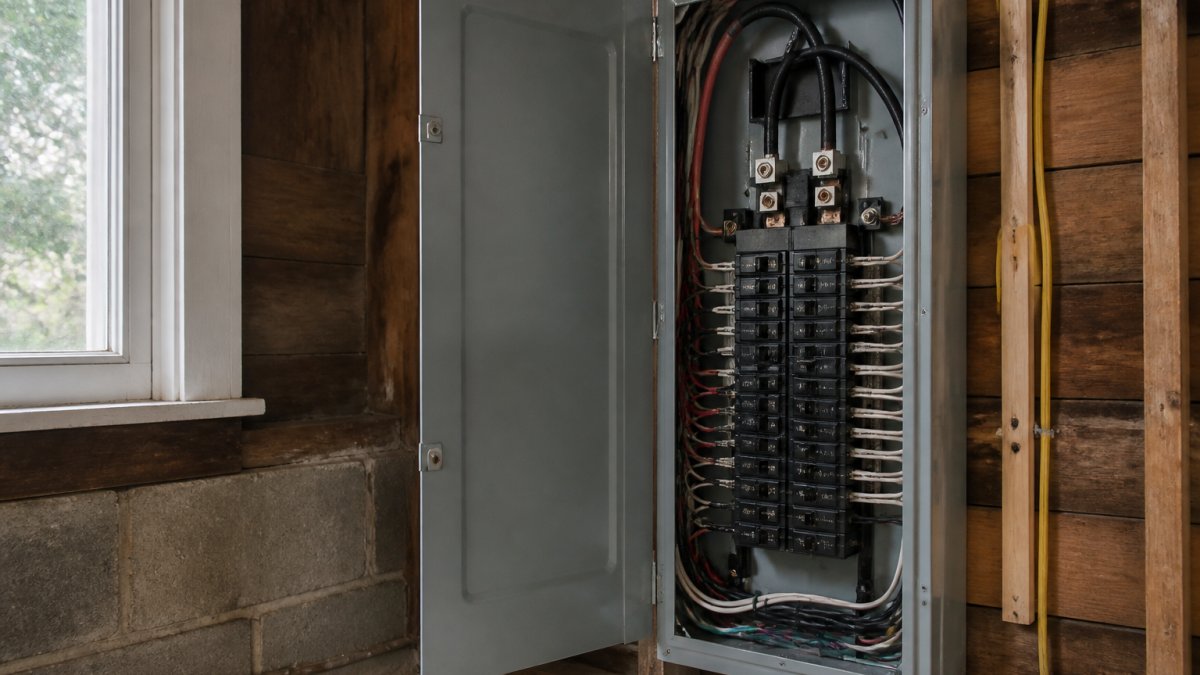
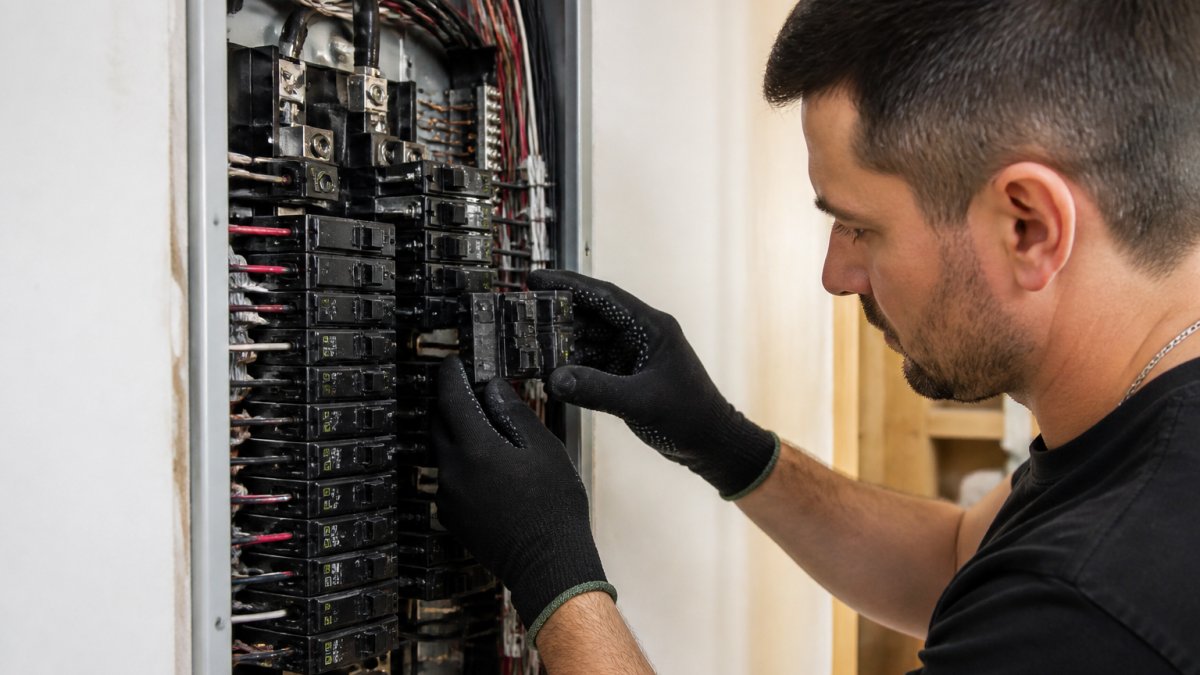
Inside a properly installed panel, three things stand out: breakers sit straight and secure, every wire is labeled clearly, and cables are organized with purpose. These aren't cosmetic, they're the foundation of safety.
Proper circuit breaker installation and labeling
Breakers must sit flush against the bus bar with consistent pressure. A loose breaker creates resistance and heat, and heat in a panel is how fires start.
Each breaker should be labeled specifically enough that someone can flip the right one in an emergency.
Correct grounding and bonding practices
Grounding and bonding protect your home from shock and lightning. The grounding electrode conductor connects the panel to earth; the bonding jumper keeps metal components at the same potential.
These connections must be tight. Corrosion, loose connections, and improper sizing are common mistakes; a qualified electrician verifies bonding jumpers meet NEC compliance and grounding resistance is within limits.
Clean, organized wiring and cable management
Wires should run in organized bundles, secured at regular intervals, never pinched, kinked, or crossing sharp edges. Proper cable management prevents insulation damage and reduces heat.
Main service entrance wiring must be sized for your home's amperage, a 100-amp service needs different wire than a 200-amp service. Undersized wire creates resistance and fire risk.
Signs of Poor Electrical Panel Installation
Poor workmanship shows itself in visible ways. If you see any of these, call a licensed electrician.
Loose or crooked breakers mean the installer didn't secure them properly.
Tangled, unmarked wiring is a red flag.
Burned marks, melted plastic, or discoloration inside the panel means excessive heat, a serious fire hazard. Call a licensed electrician immediately.
Exposed copper at connections, corroded terminals, and missing knockout covers are also warning signs, they create shock hazards and let debris into the panel.
How to Choose an Electrician for a Panel Upgrade
The electrician you hire determines whether your panel is installed safely or becomes a liability.
Verify licensing and insurance
Every electrician working on your panel should carry a current state license. In Connecticut, that means passing an exam and maintaining continuing education; verify through the Connecticut Department of Consumer Protection (Electrical License).
Insurance matters equally. Ask for proof of general liability and workers' compensation coverage, if an uninsured electrician is injured on your property, you could be liable.
A licensed electrician understands code requirements, can explain the work, and is required to pull permits and schedule inspections.
Ask about NEC compliance and inspection readiness
The National Electrical Code sets the standard for electrical installation, and your panel upgrade must meet NEC compliance. A qualified electrician can explain which code sections apply.
Before hiring anyone, ask how they ensure inspection readiness. Your local building department inspects the work, and an experienced electrician installs panels that pass the first time.
BEARS Electric explains the process upfront so you know what to expect.
Electrical Panel Upgrade Checklist for Homeowners
"Hire a licensed electrician and trust the work" is fine until you're staring at a finished panel wondering if the job was done to standard.
You don't need to open the panel or remove the dead front for most of this. Anything requiring the cover off should be done by a licensed electrician; the rest is visual, from a safe distance with the panel closed.
Before the work starts
- Permit posted or on file. Ask for the permit number before day one. In most jurisdictions the licensed electrician must pull it, not the homeowner. If they say a permit "isn't needed" for a panel swap, that's a red flag, panel replacements almost always require one.
- Written scope of work. Get in writing the new panel's amperage, the brand and series of the panel and main breaker, the number of new circuits, and whether a grounding electrode system upgrade is included. Vague scopes invite corner-cutting.
- Load calculation on paper. Ask to see the calculation used to size the service. A real one accounts for square footage, major appliances, HVAC, and planned EV or heat pump load. "200 amps is standard" is not a calculation.
During the work
- Old panel removed cleanly. The old enclosure, breakers, and any abandoned wiring should be removed, not left in a wall cavity or attic.
- New service mast and meter socket. If the service entrance is replaced, the mast should be plumb, the weatherhead above the drip loop, and the meter socket level and sealed.
- Grounding electrode conductor routing. It should run continuous from panel to grounding electrode (usually a ground rod or water main) without splices, protected where exposed.
After the work, visual inspection with the panel closed
| Inspection Point | What to Look For | Why It Matters |
|---|---|---|
| Breaker alignment | Every breaker sits straight, flush, and does not wiggle when you press it gently | A loose breaker creates resistance and heat at the bus connection |
| Breaker labeling | A typed or neatly printed directory, not pencil scribbles; each label names the room or appliance, not just "lights" | In an emergency you need to cut the right circuit on the first try |
| Panel cover | Cover sits flush, all screws present, no gaps or missing knockout fillers | Open knockouts let debris and pests in; missing screws compromise the enclosure |
| Dead front screws | All factory screws installed, no drywall screws, no missing screws | Drywall screws can pierce conductors and are not listed for panel enclosures |
| Working clearance | At least 36 inches of clear space in front of the panel, 30 inches wide, 6.5 feet high | This is the NEC working-clearance requirement; blocked panels fail inspection |
| Panel location | Not in a bathroom, not over a stairway landing, not in a clothes closet | These locations are prohibited by code for good safety reasons |
| Labeling of the main | Main breaker clearly marked and its amperage visible | You need to know the service size at a glance |
| Inspection sticker | Signed inspection tag or sticker from the local authority having jurisdiction | A passed inspection is your proof the work met code |
After the work, questions to ask the electrician before final payment
- What is the amperage of the new service, and what load calculation supports it?
- Which circuits are AFCI-protected, and which are GFCI-protected?
- Was the grounding electrode system upgraded or reused? If reused, was it tested?
Red flags that mean stop and get a second opinion
- The electrician refuses to pull a permit or asks you to pull it as the homeowner.
- The new panel is a brand or series you cannot find documentation for online.
- Breakers are a different brand than the enclosure. (Mixing unlisted breakers voids the panel's listing.)
If any of those show up, pause the job. A second opinion is far cheaper than correcting a bad install.
Electrical Panel Upgrade Permit and Inspection Requirements
Permits aren't optional paperwork. They're your protection.
A permit requires a licensed electrician to pull the work and submit it for inspection, verifying the installation meets code.
Your homeowner's insurance may require a permit for panel upgrades. Skip it and have an electrical fire, and your claim could be denied.
The inspection process is straightforward: the electrician notifies the building department, an inspector checks the panel, and either approves it or flags issues.
Electrical Panel Upgrade Timeline: What to Expect
A typical panel upgrade takes one to three days, depending on existing wiring and scope.
Day two: connect breakers, install the main lug or main breaker, and set up grounding and bonding.
Day three: final connections, testing, and inspection prep.
After the inspection passes, your new panel is live. Most homeowners experience no downtime if the work is scheduled efficiently.
Future-Proofing Your Panel for EV Charging and Solar
Modern homes need more capacity than older panels provide.
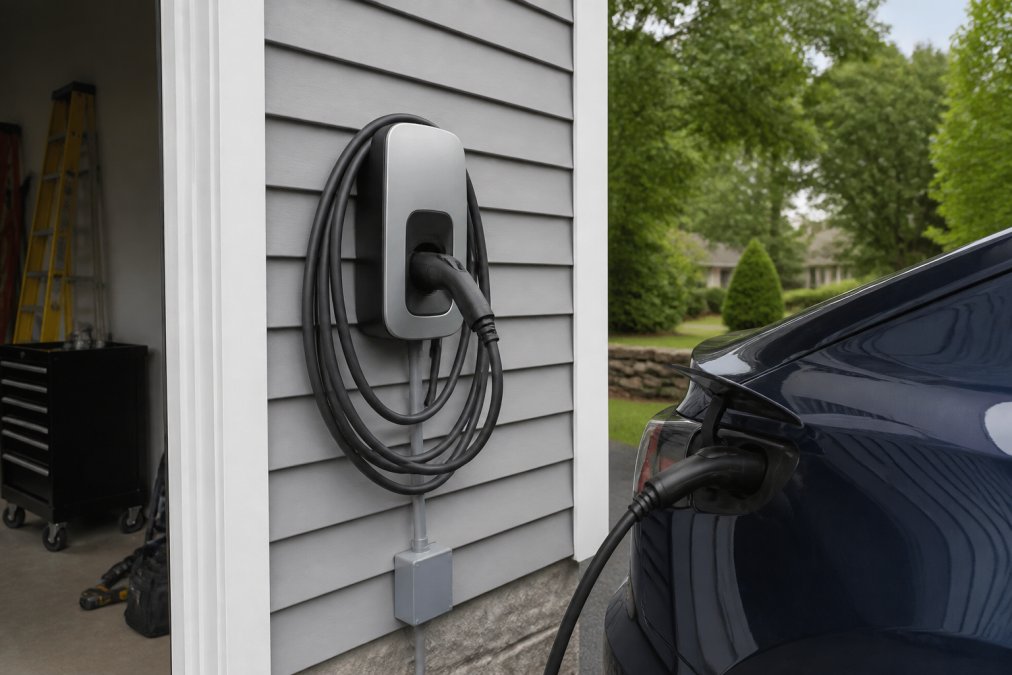
An EV charger typically needs a 40-50 amp dedicated circuit; solar needs its own breaker and interconnection equipment.
A qualified electrician performs a load calculation covering current usage plus future additions. Future-proofing now prevents expensive upgrades later.
BEARS Electric helps homeowners plan panels that support EV charging and solar from day one, explaining the requirements.
Post-Installation Maintenance and Warranty Guarantees
A panel upgrade isn't "set it and forget it." Installation begins a 30-to-40-year service life, and what happens in the first year and every year after determines whether you get that full lifespan. Here's what keeps a new panel healthy, and what a real workmanship warranty should cover.
The first 30 days after installation
- Listen for new sounds. A faint transformer hum is normal. Buzzing, crackling, or sizzling from inside the panel is not, call the electrician immediately.
- Check for warm spots. With the cover on, run your hand near (not on) the panel face after a heavy-load period. Noticeable warmth warrants a call.
- Verify every labeled circuit. Flip each breaker off one at a time and confirm the label matches what turned off. Mislabeled circuits are the most common post-install complaint and a five-minute fix if caught early.
Annual maintenance, a 15-minute routine
Once a year, with the panel cover still on:
- Visual scan through the cover slots, or with the cover removed by a licensed electrician. Look for discoloration, scorch marks, or melted insulation around breaker terminals.
- Smell test. A fishy or burnt-plastic odor near the panel signals overheating insulation.
- Clear the working space. The 36-inch clearance zone stays empty, no shelving, bins, or bikes.
- Check for moisture. Rust streaks, water stains, or corrosion usually mean a roof, siding, or conduit leak. That's an electrician call, not a handyman call.
- Exercise the main breaker once a year. Flip it off and back on during a low-load time; breakers that sit for decades can seize.
What to watch for at years 5, 10, and 20
- Year 5: Re-torque isn't typically required on a properly installed panel, but if a breaker was replaced or a circuit added, ask the electrician to verify lug torque on the affected terminations.
- Year 10: After repeated utility surges or nearby lightning strikes, have the panel inspected and consider a whole-home surge protective device (SPD) at the panel.
- Year 20: Aluminum service entrance conductors, if present, should be re-inspected for oxidation at terminations. Anti-oxidant compound and proper torque matter more on aluminum than copper.
Workmanship warranty vs. manufacturer warranty, they are not the same
Most homeowners never hear this distinction until they have a problem.
- Manufacturer warranty covers the panel enclosure, main breaker, and branch breakers against material defects, typically one year on basic breakers up to a lifetime on higher-end series. It does not cover labor to diagnose or replace a failed component, and it does not cover installation errors.
- Workmanship warranty covers the electrician's labor and installation quality, torque, terminations, grounding, labeling, and code compliance. This matters most in the first several years, because most panel failures trace back to installation, not manufacturing.
When you get quotes, ask each electrician three questions:
- How long is your workmanship warranty, and what does it cover?
- Is it transferable if I sell the home?
- What's the process if I have a problem, do you come out, or do I file a claim somewhere?
A written workmanship warranty of at least several years, transferable to the next owner, is a reasonable standard. "We stand behind our work" with nothing in writing is not a warranty.
Documentation to keep with the panel
Keep a folder (physical or digital) with:
- The permit number and signed inspection report
- Panel and breaker manufacturer model and serial numbers
- The electrician's written workmanship warranty
That folder is what a future buyer's home inspector, your insurance adjuster, and any future electrician will ask for. Homeowners who keep this documentation report smoother home sales and fewer insurance questions after a claim.
When to call, not wait
Call a licensed electrician the same day if you notice: a burning smell near the panel, visible scorch marks, a breaker that trips repeatedly after reset or won't reset at all, flickering lights across multiple rooms, or a warm panel face. None are "wait and see" symptoms, every one is a documented precursor to panel fires.
Frequently Asked Questions
What does quality workmanship on an electrical panel upgrade actually look like?
Quality workmanship means circuit breakers are installed straight and secure, all wiring is properly labeled and color-coded, grounding and bonding connections follow NEC standards, and cables are neatly organized without damage or strain. The panel enclosure is clean, free of debris, and all connections are tight. A licensed electrician will ensure the installation passes inspection and handles your home's electrical load safely.
How can I tell if an electrical panel upgrade was installed correctly?
Request a final inspection report from your local building department, this confirms NEC compliance. Visually inspect the panel for straight, secure breakers, clear labeling on each circuit, proper cable routing, and no loose connections. A workmanship guarantee in writing is another sign of professional quality.
What should I ask an electrician before hiring them for a panel upgrade?
Ask about their licensing status, how many panel upgrades they've completed, whether they handle permits and inspections, what warranty they offer on workmanship, and their timeline. Request references from recent jobs. Ask specifically about their approach to load calculations, surge protection, and future capacity if you're planning EV charging or solar. Confirm they provide transparent pricing with no hidden fees.
Does an electrical panel upgrade require a permit and inspection?
Yes, electrical panel upgrades require a permit and final inspection in all jurisdictions. The permit ensures your work meets current electrical code and protects your home's safety and insurance coverage. A licensed electrician will handle the permit process and coordinate the inspection. Skipping this step risks code violations, failed home sales, and voided insurance claims.
A panel upgrade is one of the most important electrical decisions you'll make. The difference between quality workmanship and shortcuts isn't visible once the panel is closed, but it determines whether your home stays safe for decades. BEARS Electric has completed hundreds of panel upgrades across the Central Connecticut area with proper NEC compliance, clear labeling, and professional installation standards. Get a free quote and let us show you what quality workmanship actually looks like.