 blog
blog
Alternatives to Full Drywall Removal for Rewiring
Table of Contents
- Why Full Drywall Removal Isn't Always Necessary
- Fishing Electrical Wire Through Walls Without Cutting
- Electrical Rewiring Through Attic Access
- Electrical Rewiring Through Basement or Crawl Space
- Partial House Rewiring: Targeted Circuit Replacement
- Minimal Access Holes vs. Full Drywall Removal
- Cost, Timeline, and Disruption Comparison
- Permits, Inspections, and Code Compliance
- Frequently Asked Questions
Last Updated: October 5, 2026
Why Full Drywall Removal Isn't Always Necessary
When homeowners in Bristol, Plainville, Waterbury, and surrounding areas face electrical rewiring, many assume they need to tear out walls. That's not always true.
The key is understanding what your electrical system actually needs. Some homes require complete rewiring due to age, safety hazards, or major renovations. Others need targeted fixes to specific circuits or areas.
At BEARS Electric, we've helped homeowners in New Britain, Cheshire, and across Central Connecticut evaluate their rewiring needs. Many discover they can accomplish their goals without the sledgehammer. This guide walks through the practical alternatives to full drywall removal for rewiring, when each makes sense, and what to expect in terms of cost, timeline, and disruption.
Fishing Electrical Wire Through Walls Without Cutting
How Wire Fishing Works
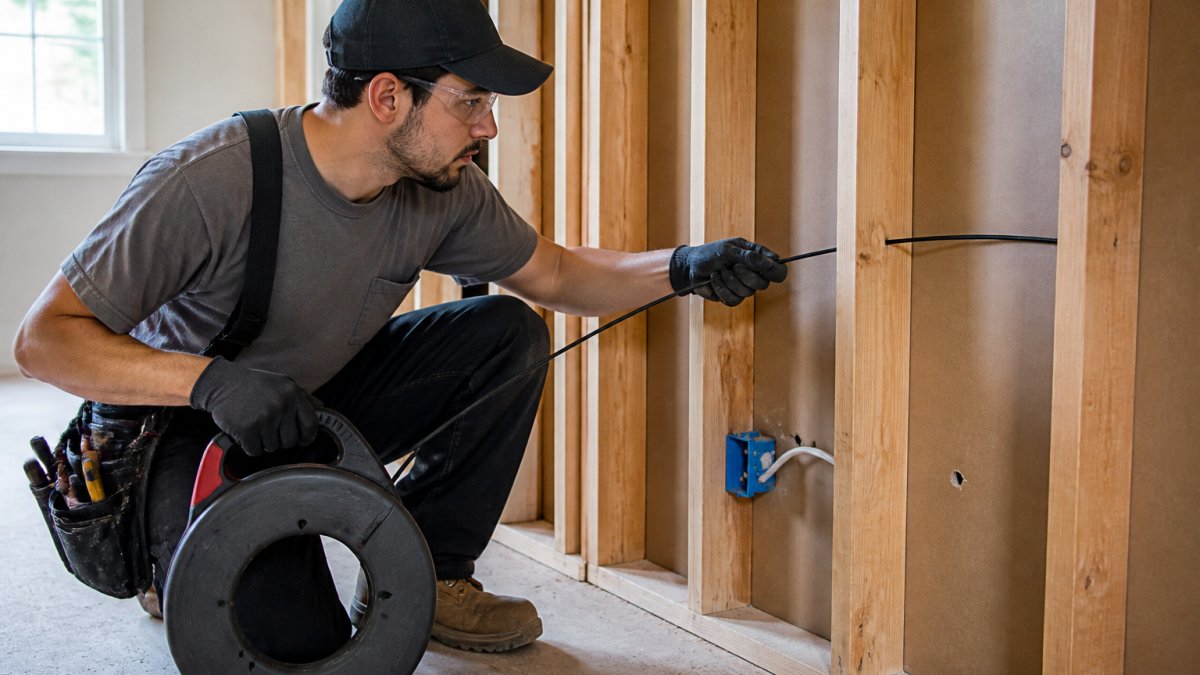
Wire fishing is the practice of routing new electrical cable through existing wall cavities without removing drywall. An electrician uses a flexible fish tape, a long, thin metal or fiberglass rod, to navigate through the space between studs, then attaches the new wire and pulls it through.
The process works best in walls where there's a clear path from one access point to another. Electricians look for natural openings: basement rim joists, attic cavities, or strategic holes at the top and bottom of walls. The wire is pulled through the cavity, avoiding insulation, plumbing, and existing wiring where possible.
When Wire Fishing Is Practical
Wire fishing works best for single runs in short distances, typically 20 to 30 feet. If you're adding a circuit to a bedroom or upgrading an outlet in one room, fishing is often feasible. It's also practical when the wall cavity is accessible from both ends or from above and below.
The technique struggles when walls contain obstacles: cross-bracing, fire blocks, insulation that's tightly packed, or existing pipes and ducts. Older homes sometimes have plaster over brick or stone, which makes fishing nearly impossible. If the path isn't clear, the electrician hits a dead end, literally, and drilling or cutting becomes necessary.
Wire fishing also assumes your electrical needs fit within existing circuits or nearby panel capacity. If you're adding significant load, you may need new circuits run from the panel, which often requires a different approach.
Electrical Rewiring Through Attic Access
Routing Wires Through Attic Spaces
Running new wire through the attic is one of the cleanest alternatives to full drywall removal for rewiring. If your home has an accessible attic, electricians can drop new circuits down interior walls, then route them horizontally across the attic space to reach other areas.
This method works especially well for second-story additions, new lighting circuits, or upgrading outlets in upper-floor rooms. The wire runs above the ceiling, then drops down through walls where new boxes are installed. Minimal cutting is required, usually just small holes where wires pass through top plates.
Code Requirements and Safety Considerations
Attic wiring must follow the National Electrical Code (NEC) standards for protection and routing. Wires in attics need proper support, spacing from insulation, and protection from physical damage. Romex (standard household wire) must be kept away from insulation; if the wire gets buried, it can overheat.
Many jurisdictions require inspection of attic wiring before it's covered. The local electrical inspector will verify that wire is properly secured, spaced correctly, and routed safely. In some cases, wires must run through conduit or be protected with additional sheathing.
Attic work also depends on your roof structure. Trusses create a maze of bracing that can block straight runs. Rafters offer more open space but may have less room to work. BEARS Electric assesses these conditions during the initial consultation to determine if attic routing is viable for your home.
Electrical Rewiring Through Basement or Crawl Space
Running Wires Below the House
For first-floor circuits, running wire through a basement or crawl space is often the most practical alternative to full drywall removal for rewiring. New circuits are routed from the panel, run along the basement rim joist or across the floor framing, then brought up through walls to service areas above.
This method is fast and gives the electrician plenty of working room. Wires can be secured to joists, run through conduit for protection, and brought up through the band board or rim joist to reach living spaces. Minimal cutting occurs in finished areas, usually just a small hole where the wire emerges into the wall.
Moisture and Protection Concerns
Basements and crawl spaces present moisture challenges. Wire in these areas must be protected from water, humidity, and potential damage. Conduit (metal or PVC pipe) shields the wire and keeps moisture away. In wet basements, electricians may use THWN wire in conduit rather than standard Romex, which absorbs moisture more easily.
Crawl spaces require careful routing to avoid contact with soil and standing water. Wires are typically secured 6 inches or more above the ground and kept away from areas prone to pooling. If your basement or crawl space floods, this method becomes risky and may not be code-compliant.
Proper grounding and bonding are also critical in below-grade spaces. Your electrician verifies that the system meets code requirements for these environments.
Partial House Rewiring: Targeted Circuit Replacement
Circuit-by-Circuit Assessment
Partial rewiring focuses on specific circuits that are unsafe, outdated, or insufficient for new loads. Rather than replacing every wire in the house, your electrician tests individual circuits, identifies which ones fail inspection or lack capacity, and replaces only those.
This approach requires a thorough electrical assessment. The electrician uses testing equipment to check for proper grounding, correct voltage, and safe load capacity. They identify circuits with aluminum wiring (a common hazard in homes built 1960-1980), outdated knob-and-tube wiring, or insufficient gauge for modern appliances.
When to Replace Selected Circuits
Partial rewiring makes sense when most of your electrical system is sound but a few circuits are problematic. Common scenarios include:
- Adding a 240-volt circuit for an EV charger or new appliance without replacing the entire panel
- Replacing circuits with aluminum wiring while keeping copper circuits intact
- Upgrading a 100-amp panel to 200 amps and rewiring only the circuits that feed the new service
- Adding dedicated circuits for kitchen appliances, bathrooms, or home office equipment
The key is documenting which circuits are being replaced and why. Your electrician provides a written scope of work listing each circuit, its current condition, the replacement plan, and the new wire gauge and routing. This documentation is essential for permit approval and inspection.
Minimal Access Holes vs. Full Drywall Removal
Strategic Cutting for Wire Runs
When wire fishing or attic routing aren't feasible, strategic cutting creates small access holes instead of removing entire wall sections.
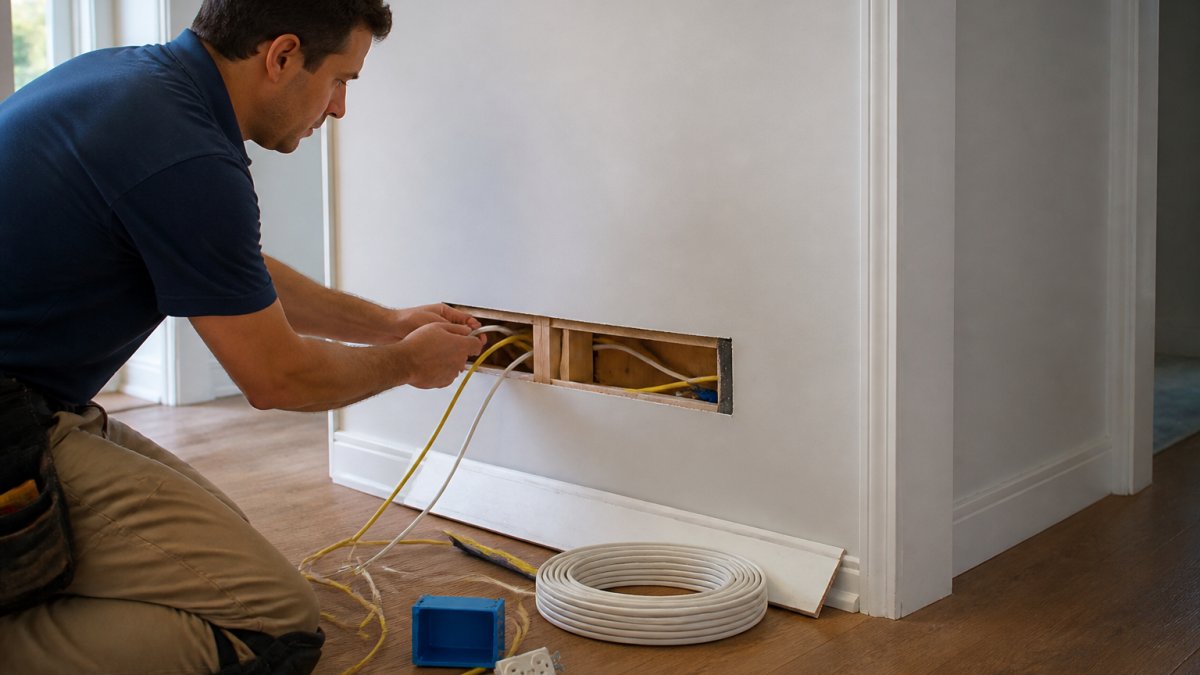
These holes are typically 2 to 4 inches in diameter, just large enough to feed wire through. The wire is then routed vertically or horizontally through the wall cavity, and the hole is patched with drywall compound and sanded smooth.
Strategic cutting is also used to access existing wire runs. If an electrician needs to upgrade a circuit that runs through a wall, they may cut a small access hole, pull out the old wire, and feed the new wire through the same path. This reuses the existing cavity and minimizes new cutting.
Restoration and Patching
Small holes are simple to patch. Drywall compound fills the gap, is sanded smooth, and is painted to match the wall. If the wall has texture, the electrician applies matching texture before painting. The result is nearly invisible, a small patch that blends into the surrounding wall.
Larger access holes (8 to 12 inches) may require a drywall patch cut to size and secured with joint compound and tape. This takes longer but is still far simpler than removing an entire wall section. The patched area is then finished to match the existing wall.
Quality patching requires attention to detail. A sloppy patch is visible and reduces the value of the work. BEARS Electric ensures that all access holes are properly patched and finished so your home looks undamaged after the project.
Cost, Timeline, and Disruption Comparison
Labor and Material Factors
The cost of rewiring depends heavily on the method chosen. Wire fishing and attic routing are labor-intensive but require minimal material and restoration. Basement or crawl space routing is fast but may require conduit and additional protection materials. Partial rewiring costs depend on the number of circuits being replaced.
Full drywall removal is the most expensive option. It requires demolition labor, disposal of debris, replacement drywall, taping, mudding, sanding, and repainting. A single wall section can easily add thousands to the project cost.
Material costs for alternatives are generally lower: fish tape, conduit, wire, and fasteners are inexpensive compared to drywall, joint compound, and paint for full removal. The trade-off is that labor time may be higher for techniques like wire fishing, which requires skill and patience.
Project Duration and Home Occupancy
Full drywall removal projects can take 2 to 4 weeks, including demolition, rewiring, drywall installation, finishing, and painting. Your home is a construction zone during this time, with dust, noise, and restricted access to affected areas.
Wire fishing and attic routing typically take 1 to 2 weeks, depending on the scope. Basement or crawl space work can be completed in days if the access is good and the runs are straightforward. Partial rewiring may take just a few days if only one or two circuits are being replaced.
Minimal access hole methods are fast, often completed in a few days to a week. Your home remains largely livable, with only small disruptions in specific areas during the work.
Permits, Inspections, and Code Compliance
Any rewiring work, full, partial, or using alternatives to full drywall removal for rewiring, requires a permit in most jurisdictions.
The electrical inspector verifies that wire is the correct gauge, properly secured, routed safely, and grounded correctly.
Documentation is key. Your electrician provides a permit application listing the scope of work, the circuits being added or replaced, and the wire routing. After inspection approval, the work can proceed.
Skipping the permit process puts your home at risk. Unpermitted work can create safety hazards, void your homeowner's insurance, and cause problems when you sell.
Rewiring your home doesn't have to mean gutting walls and living in chaos for weeks.
BEARS Electric helps homeowners across Bristol, Waterbury, Cheshire, and surrounding areas evaluate their options and choose the method that makes sense for their situation.
Frequently Asked Questions
Can you rewire a house without removing all the drywall?
Yes. Electricians can fish wires through existing walls, run wiring through attics or basements, perform partial house rewiring on specific circuits, or use minimal strategic access holes instead of full drywall removal. The best approach depends on your home's layout, age, existing wiring condition, and which circuits need updating. A licensed electrician can assess your situation and recommend the most cost-effective alternative.
What are the alternatives to removing drywall for electrical rewiring?
Main alternatives include wire fishing through walls using fish tape, routing new circuits through attic spaces, running wiring through basement or crawl space areas, performing partial house rewiring to replace only faulty circuits while retaining others, and making minimal access holes for targeted wire runs. Each method has different costs, timelines, and code requirements. An electrical assessment determines which is practical for your home.
How much does partial house rewiring cost compared to a full rewire?
Partial house rewiring can be a more cost-effective option than a full rewire because you're replacing only specific circuits that fail testing or show safety concerns, not the entire electrical system. Costs depend on the number of circuits being replaced, wire routing method, materials, and labor. Since every home is different, contact a licensed electrician for a written scope of work and detailed estimate based on your specific needs.
When is cutting access holes in drywall necessary for rewiring?
Access holes are necessary when wire fishing, attic routing, or basement routing isn't practical, for example, when walls are blocked by insulation, when wire runs are too complex, or when the wall cavity is too narrow. Strategic holes are cut at connection points, then patched and finished. This approach is far less disruptive than full drywall removal and typically requires only minor restoration work.