 blog
blog
7 Signs of Faulty Wiring in Walls: What to Watch For
Table of Contents
- 1. Flickering or Dimming Lights
- 2. Warm or Hot Outlets and Switch Plates
- 3. Burning Smells or Unusual Odors
- 4. Buzzing, Crackling, or Unusual Electrical Sounds
- 5. Sparking Outlets or Switches
- 6. Frequently Tripped Breakers or Blown Fuses
- 7. Scorch Marks, Discoloration, or Visible Outlet Damage
- How Electricians Check for Faulty Wiring
- Frequently Asked Questions
Last Updated: October 9, 2026
1. Flickering or Dimming Lights
Flickering or dimming lights are one of the most common warning signs of faulty wiring in walls. When your lights flicker without reason, it's not just annoying, it signals that something is wrong with your electrical system.
This happens when loose connections or damaged wiring inside your walls can't deliver steady power to your fixtures. The inconsistent current causes the light to brighten and dim unpredictably. Sometimes the problem is obvious. Other times, the faulty wiring in walls stays hidden until it gets worse.
Pay attention to whether the flickering happens:
- In one room only or throughout your home
- When you turn on other appliances
- At specific times of day
- Constantly or randomly
If flickering happens when you use the microwave or air conditioner, you might have an overloaded circuit instead of faulty wiring. But if it happens without any pattern, the problem is likely inside your walls.
Flickering lights can also indicate loose connections at the breaker panel or at the outlet itself. However, if tightening the outlet doesn't help, the issue is probably deeper, in the wiring that runs behind your walls.
2. Warm or Hot Outlets and Switch Plates
Outlets and switch plates should never feel warm to the touch. If they do, faulty wiring in walls is likely the cause.
Warm outlets indicate that electrical resistance is building up inside the outlet or in the wiring connected to it. This resistance generates heat. Over time, that heat can melt the insulation around the wires, damage the outlet itself, and create a serious shock hazard.
Check your outlets regularly by placing your hand near them (not touching if they're very hot):
- Feel around outlet plates and switch covers
- Notice if warmth is constant or only when devices are plugged in
- Check if the outlet smells like burnt plastic
- Look for any discoloration around the outlet
Hot outlets are a red flag that shouldn't be ignored. The problem usually stems from loose connections inside the wall or damaged wiring that creates excessive heat. A licensed electrician can use specialized tools to identify exactly where the problem is and fix it safely.
Never use an outlet that feels hot. Unplug any devices immediately and call a professional. This is one of the clearest signs that your electrical system needs attention.
3. Burning Smells or Unusual Odors
A burning smell coming from your walls or outlets is an emergency signal. It means faulty wiring in walls is overheating and potentially burning the insulation around the wires.
The smell is often described as acrid, sharp, or like burnt plastic. You might notice it near outlets, switch plates, or in a specific room. Sometimes the smell is faint. Sometimes it's strong enough to fill a room.
If you smell burning:
- Turn off power to that area at the breaker panel if it's safe to do so
- Do not try to find the source yourself
- Evacuate if the smell is strong or accompanied by smoke
- Call a licensed electrician or the fire department immediately
Do not assume the smell will go away on its own. It won't. The burning smell indicates that the insulation on your wires is degrading. This creates a direct path for electrical arcing and fire.
Burning odors can also come from appliances, but if the smell originates from your walls or outlets, faulty wiring is almost certainly the problem. The longer you wait, the worse the damage becomes.
4. Buzzing, Crackling, or Unusual Electrical Sounds
Your electrical system should be silent. If you hear buzzing, crackling, or humming sounds coming from your walls or outlets, faulty wiring in walls is usually responsible.
These sounds indicate electrical arcing, a dangerous condition where electricity jumps across gaps in loose connections or damaged wiring. Arcing creates heat, sparks, and the distinctive buzzing or crackling noise.
Listen for these sounds:
- A steady buzzing or humming from outlets or the breaker panel
- Crackling sounds inside walls
- Popping noises when you turn on lights or appliances
- Sounds that get louder or more frequent over time
Electrical arcing is extremely dangerous. It can ignite insulation, wood framing, and other materials inside your walls. The fire can spread before you even know it's there.
If you hear these sounds, do not ignore them. Do not try to locate the source yourself. Call a licensed electrician to inspect your wiring and identify the problem. They have the tools to detect arcing and loose connections that you cannot see.
The longer faulty wiring in walls goes unrepaired, the louder and more frequent these sounds become. This is a clear progression toward a serious electrical failure.
5. Sparking Outlets or Switches
Sparking at an outlet or switch is a visible sign of electrical danger. It means faulty wiring in walls or a loose connection is creating an arc of electricity.
If you see sparks:
- Do not touch the outlet or switch
- Do not plug anything into a sparking outlet
- Turn off power to that outlet at the breaker panel
- Call a licensed electrician immediately
Sparks indicate that electricity is jumping across a gap it shouldn't. This happens when connections are loose, wiring is damaged, or insulation has worn away. Each spark releases energy as heat, which can ignite nearby materials.
Sparking is one of the most visible warning signs of faulty wiring in walls. Even a single spark is enough reason to get professional help. Never assume a one-time spark is harmless.
Some people see a small spark when they plug something in and think it's normal. It's not. A healthy outlet should never spark. That spark means the connection is compromised.
6. Frequently Tripped Breakers or Blown Fuses
A breaker that trips occasionally is normal, it's doing its job by cutting power when there's an overload. But if a breaker trips frequently, or if you blow fuses repeatedly, faulty wiring in walls may be the cause.
Your breaker panel protects your home by stopping power when something goes wrong. Frequent trips can mean:
- An overloaded circuit (too many devices drawing power)
- A short circuit caused by damaged or loose wiring
- Faulty wiring in walls that's creating resistance and heat
To understand what's happening:
- Note which breaker trips and when
- Unplug devices from that circuit and see if the breaker holds
- If the breaker trips even with nothing plugged in, faulty wiring is the problem
- If it trips only when certain appliances run, you might have an overload instead
Overloaded circuits are a separate issue from faulty wiring. An overload happens when you're using too much power at once. Faulty wiring happens when the wires themselves are damaged or loose.
If you have an older home with fuses instead of breakers, and you're blowing fuses frequently, the same logic applies. The fuse is protecting your home by breaking the circuit. But repeated failures mean something is wrong.
Never ignore frequent breaker trips. They're a sign that your electrical system is stressed. A licensed electrician can test your wiring and identify whether the problem is overload, faulty wiring in walls, or something else.
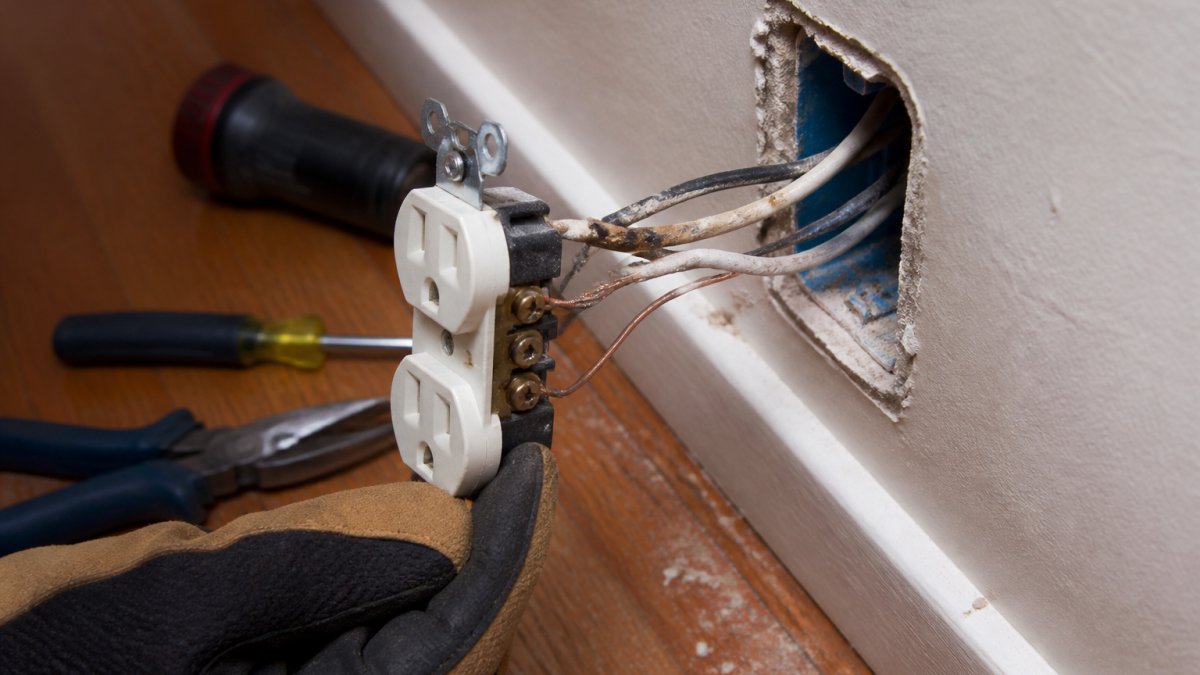
7. Scorch Marks, Discoloration, or Visible Outlet Damage
Scorch marks, dark discoloration, or visible damage around outlets and switch plates are physical evidence of faulty wiring in walls or serious electrical problems.
Look for:
- Black or brown marks around outlets or switches
- Discolored outlet plates or wall surface
- Melted or warped plastic on outlet covers
- Cracks or damage to the outlet itself
- A charred appearance anywhere on your electrical fixtures
These marks indicate that heat has been building up. The discoloration comes from electrical arcing, overheating connections, or wire insulation breaking down. This is not a cosmetic problem, it's proof that your electrical system is in danger.
If you see scorch marks, do not use that outlet. Do not try to clean it or fix it yourself. Turn off power to that circuit and call a licensed electrician.
Scorch marks are one of the clearest visual signs of faulty wiring in walls. They show that the problem has been developing for a while. The longer the problem exists, the more damage accumulates.
Some homeowners try to cover scorch marks with new outlet plates. This is dangerous. It hides the problem without fixing it. The underlying faulty wiring in walls is still there, still overheating, and still creating a fire risk.
How Electricians Check for Faulty Wiring
When you call a licensed electrician, they use specific tools and methods to identify faulty wiring in walls and other electrical problems.
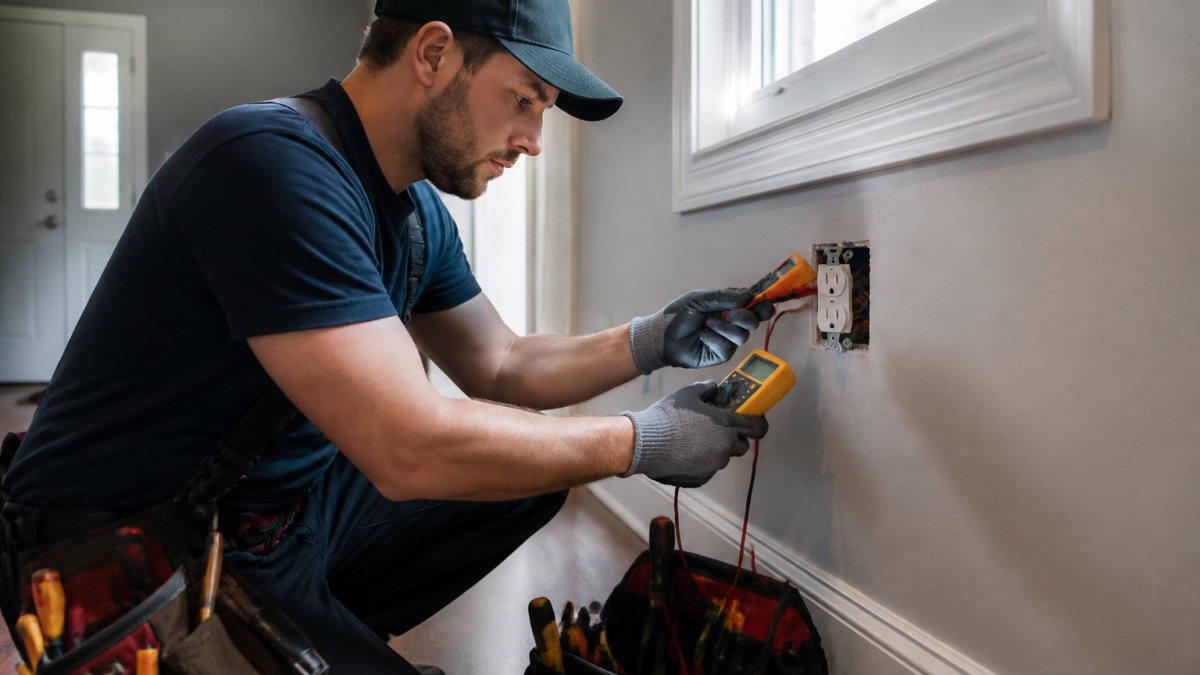
Electricians start by asking detailed questions about the symptoms you've noticed. When did the flickering start? Which outlets feel warm? Have you heard any sounds?
Next, they perform a visual inspection of your outlets, switches, and breaker panel.
They use a multimeter to test voltage and continuity at outlets and switches.
For suspected arcing or hidden wiring problems, electricians use an arc fault detector.
They test your breaker panel to ensure breakers are functioning correctly. A breaker that won't hold or trips too easily signals a problem that needs attention.
Based on these tests, the electrician will identify whether you have:
- Loose connections that can be tightened
- Damaged wiring that needs replacement
- Faulty wiring in walls requiring rewiring of affected circuits
- An outdated electrical system that needs upgrading
A professional inspection gives you a clear picture of what's wrong and what needs to be done.
| Warning Sign | What It Means | Action to Take |
|---|---|---|
| Flickering lights | Loose connections or damaged wiring | Call an electrician |
| Warm outlets | Heat buildup from resistance | Stop using outlet, call electrician |
| Burning smell | Insulation overheating | Evacuate if strong, call electrician immediately |
| Buzzing or crackling | Electrical arcing | Call electrician right away |
| Sparking outlets | Active electrical arc | Do not use, call electrician immediately |
| Frequent breaker trips | Overload or short circuit | Test circuit, call electrician if persistent |
| Scorch marks | Heat damage from electrical problems | Do not use, call electrician immediately |
Faulty wiring in walls is a serious problem that gets worse over time.
Don't wait for a problem to get worse. If you've noticed any of these warning signs, get a professional inspection. The National Electrical Code establishes safety standards for residential wiring, and our team ensures your home meets those standards.
Get a free quote from BEARS Electric and find out exactly what's happening with your wiring.
Frequently Asked Questions
How do electricians check for faulty wiring?
Licensed electricians use specialized tools like multimeters, clamp meters, and thermal imaging cameras to detect faulty wiring. They test voltage levels, check for ground faults, and inspect connections for loose terminals or corrosion. A comprehensive electrical inspection also includes examining the circuit breaker panel, tracing wiring paths, and performing load tests to identify overloaded circuits or damaged insulation. Professional inspection reveals problems hidden behind walls that homeowners cannot detect visually.
What are examples of faulty electrical wiring?
Common examples include outdated knob-and-tube wiring found in older homes, aluminum wiring prone to corrosion, damaged insulation exposing bare copper conductors, loose connections at outlets or switches, undersized wiring carrying too much current, and wiring damaged by pests, water, or heat. Backstabbed connections (wires pushed into the back of outlets rather than properly secured) also create fire hazards. Each type poses different risks, from shock hazards to arcing and fire.
How often should house wiring be replaced?
Modern electrical wiring typically lasts 50-70 years if properly installed and maintained. However, older homes with outdated wiring systems like knob-and-tube or ungrounded wiring should be replaced sooner. If your home is over 40 years old, has experienced water damage, shows signs of deterioration, or you're planning significant electrical upgrades like EV charger installation, a professional inspection will determine whether replacement is necessary. Preventive rewiring can prevent fire hazards and support modern power demands.
What should I do if I suspect faulty wiring behind a wall?
Stop using affected outlets or switches immediately and contact a licensed electrician for inspection. Do not attempt to diagnose or repair hidden wiring yourself, as faulty wiring poses serious fire and shock risks. An electrician will use thermal imaging and testing equipment to locate the problem, determine the extent of damage, and recommend safe solutions. In the meantime, avoid overloading circuits with extension cords, and keep flammable items away from affected walls.