 how-to
Burning Smell From Electrical Outlet: Causes & Fixes
Table of Contents
- Why a Burning Smell From an Electrical Outlet Is a Red Flag
- Common Causes of a Burning Smell From an Electrical Outlet
- Signs of Faulty Electrical Wiring You Should Never Ignore
- What to Do Right Now: Immediate Safety Steps
- When to Call an Emergency Electrician
- Preventing Outlet Fires: Maintenance and Smart Upgrades
- Frequently Asked Questions
Last Updated: October 3, 2026
Why a Burning Smell From an Electrical Outlet Is a Red Flag
A burning smell outlet is never normal. It means heat is building up where it should not be, breaking down plastic, insulation, or wire.
That smell is your warning system, it shows up before smoke, flames, and real damage.
Treat it like a fire alarm, not a nuisance. Below: what causes it, how to spot faulty wiring, and the exact steps to take now.
Common Causes of a Burning Smell From an Electrical Outlet
Most burning smells at outlets come from one of four sources: loose connections, overloaded circuits, damaged insulation, or failing devices. Each creates heat, and heat produces that plastic or fishy odor.
Loose Wiring and Failing Connections
Loose wiring is the most common cause we find. When a wire pulls away from a terminal screw or backstab connection, current jumps a tiny gap, creating heat and arcing.
Over time, that heat chars the outlet and wire insulation. Tightening the screw is not a fix, the wire is often already pitted, so the whole connection needs replacing.
Overloaded Circuits and Outlets
An overloaded circuit happens when you draw more amperage than the wire can carry. Space heaters, hair dryers, and window air conditioners are the usual suspects.
Push past your wire gauge's limit and it heats up like a toaster element. Power strips make this worse by letting you plug too many high-draw devices into one receptacle.
Damaged Insulation and Arcing
Damaged insulation lets live wires touch where they should not. Rodents, heat, and age break it down.
When bare wires touch, you get a short circuit or sustained arcing hot enough to ignite nearby material, the cause most likely to start an electrical fire behind the wall.
Failing Appliances and Devices
Sometimes the outlet is fine and the device is the problem. A failing appliance can pull too much current or short internally.
Unplug the device and see if the smell follows it to another outlet. If it does, the appliance is the culprit; if it stays, the problem is the wiring.
| Cause | Warning Sign | What It Means |
|---|---|---|
| Loose wiring | Warm cover plate, faint buzz | Connection needs replacing |
| Overloaded circuit | Breaker trips, warm cord | Too much load on one circuit |
| Damaged insulation | Fishy or burning plastic odor | Possible arcing behind wall |
| Failing appliance | Smell follows the device | Replace or repair the device |
Signs of Faulty Electrical Wiring You Should Never Ignore
The signs of faulty electrical wiring usually show up before a full failure. Catching them early is how you avoid a fire:
- A burning or fishy smell near any outlet
- Discolored or warm cover plates
- A breaker that trips again and again
Any one of these means you should stop using that outlet. Two or more means you should call an electrician today. The U.S. Fire Administration electrical fire safety guidance notes that electrical failures remain a leading cause of home fires, which is why these early signs matter.
What to Do Right Now: Immediate Safety Steps
If you smell burning at an outlet, act fast. The goal is to cut power at the source and get people clear. Follow these steps in order:
- Do not touch the outlet or anything plugged into it. A hot receptacle can shock you even with the device off, because the live conductor is still energized at the box.
- Move everyone, including pets, away from the area. Smoke and gases from overheated PVC insulation are irritants, get kids and pets to another room or outside.
- Switch off the breaker for that circuit at your electrical panel. If you do not know which breaker controls the outlet, turn off the main breaker instead, cutting the main is always safer than guessing.
- Only after the breaker is off and the outlet is cool to the back of your hand, unplug the device. If it is still warm, leave it, the heat is coming from the wiring, not the plug.
- Check for smoke, sparks, or flames. If you see any of the three, leave immediately and call 911 from outside. Do not grab belongings.
- Keep the breaker off until a licensed electrician inspects the circuit. Do not flip it back on to "test" it. Re-energizing a faulted circuit is how small arcs become fires.
- Call a licensed electrician to find the cause. A smell that returns after the breaker is reset means the fault is still present.
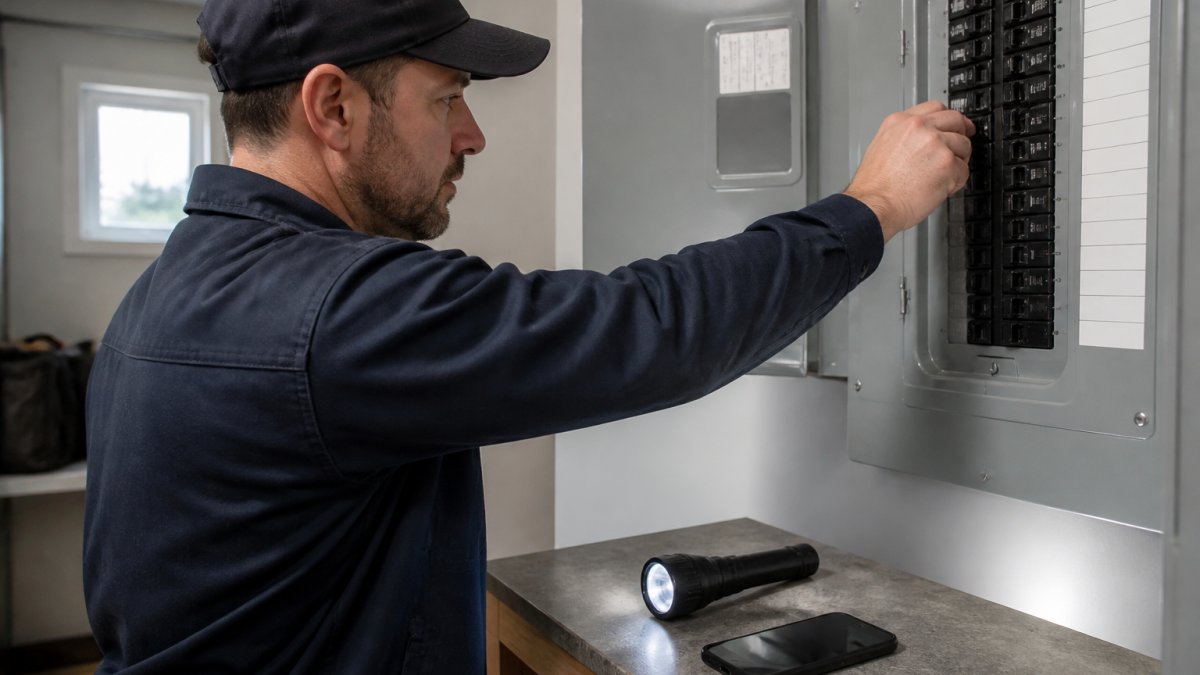
How to Read Your Panel Before You Touch It
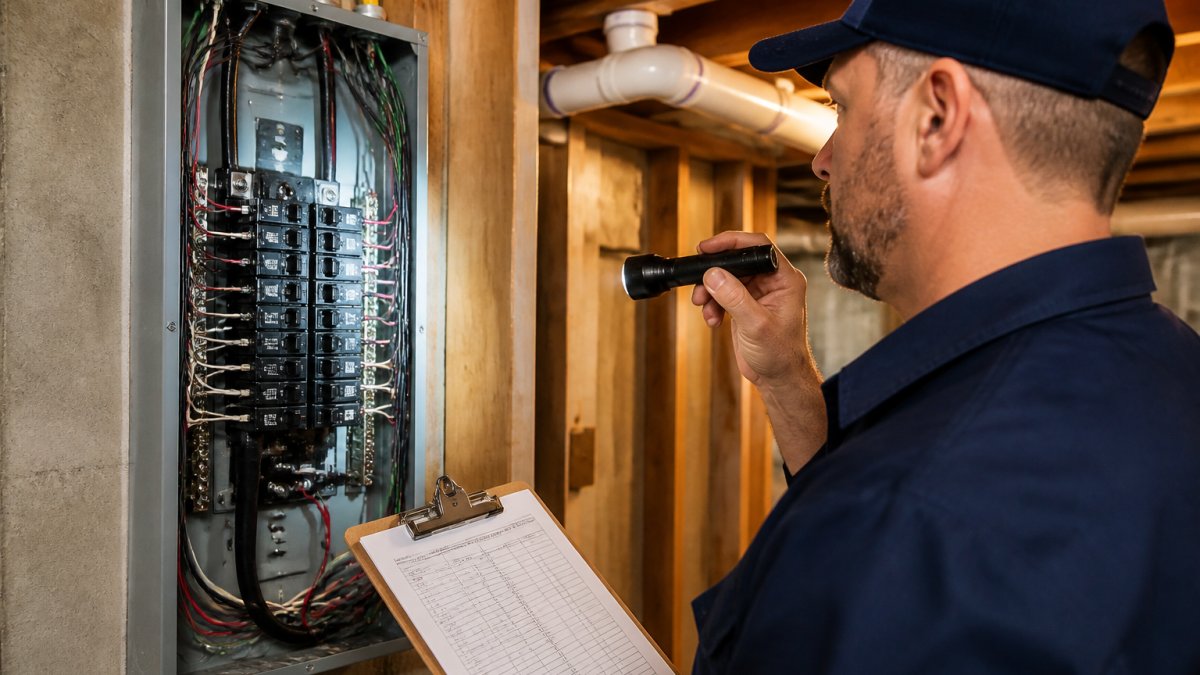
Before you flip anything, know what you are looking at. A standard residential panel has a main breaker at the top (usually 100, 150, or 200 amps) and labeled branch breakers below, but in older homes, labels are often missing, faded, or wrong.
If the panel is unlabeled, do not flip breakers one at a time to find the right one. Turn off the main, then have the panel labeled during the repair visit, a mislabeled panel is its own emergency hazard.
If You Rent
Notify your landlord in writing the same day, text or email creates a timestamp. Landlords are generally responsible for the wiring and outlet; you are responsible for reporting the hazard. Keep the breaker off until their electrician arrives, and do not let anyone talk you into using that outlet "just until the repair."
Documenting the Incident for Insurance or a Landlord
Most homeowners policies and landlord-tenant disputes turn on documentation, not memory. Before the electrician arrives, capture:
- A wide photo of the outlet and the wall around it
- A close-up of any discoloration, charring, or melted plastic
- A photo of the breaker in the off position with the panel label visible
If the repair becomes a claim, this file is what an adjuster asks for first, and if you rent, it protects you from being blamed for a pre-existing wiring problem.
When to Call an Emergency Electrician
Call an emergency electrician the moment you see smoke, flames, or charring, or if the smell returns after you cut power. These point to an active fire hazard, not a small repair.
Here is when it cannot wait:
- You see smoke or sparks at the outlet
- There are scorched marks or melted plastic
- The breaker will not reset or keeps tripping
For a smell with no smoke and a cool outlet, schedule a same-day visit instead of an emergency call. Either way, do not use that circuit until it is checked.
Preventing Outlet Fires: Maintenance and Smart Upgrades
Prevention comes down to three things: reducing load, catching degradation early, and upgrading the parts that fail silently.
A Visual Checklist You Can Run This Weekend
Walk your home with a flashlight and check each receptacle for:
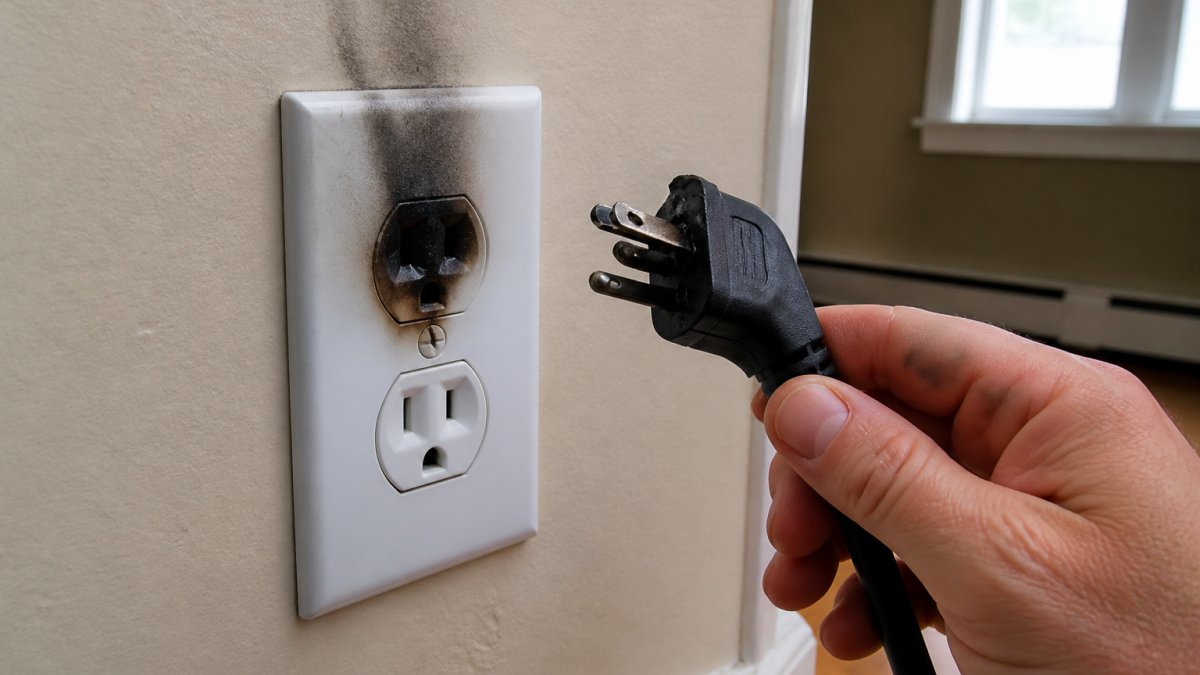
- Brown or black discoloration around the slots or on the cover plate, heat has already been there
- Melting, warping, or a soft feel to the plastic face, the outlet is past its service life
- Charring or soot on the wall above or below the plate, arcing has occurred behind the drywall
Any single item means that outlet should be taken out of service until an electrician looks at it. Two or more means the circuit itself needs inspection, not just the receptacle.
Distinguishing the Smell: Electrical vs. Mold vs. Overheating Plastic
Not every odd smell is an electrical fire. Knowing the difference prevents false alarms and missed warnings:
| Smell | Likely Source | What to Do |
|---|---|---|
| Acrid, sharp, like burning plastic or rubber | Overheating insulation or a failing device | Cut power to the circuit and call an electrician |
| Fishy, ammonia-like | Overheating plastic or a failing breaker | Treat as electrical until proven otherwise |
| Musty, earthy, wet-cardboard | Mold or moisture, often in a damp wall or basement | Address moisture; not an electrical emergency |
| Metallic, hot-dust odor the first time you run a heater | Dust burning off a heating element | Normal for a few minutes; if it persists, unplug and inspect |
If you cannot tell which one you are smelling, treat it as electrical. A false alarm costs an electrician visit; a missed warning costs a fire.
Using AFCI and GFCI as Early-Warning Systems
AFCI breakers detect the arcing that starts fires. GFCI outlets protect against shocks in kitchens, baths, garages, and wet locations. Both are worth adding during any panel upgrade and are required by current code in most of those locations.
These devices also function as sensors. An AFCI that trips repeatedly on the same circuit is telling you something is arcing, often a loose connection or damaged cord. Do not just reset it.
Smart Plugs and Monitoring as a Second Layer
Smart plugs and smart breakers that report power draw can catch a problem before it becomes a smell. A device that suddenly draws more current, or a circuit running warmer than baseline, shows degradation in progress. This is not a replacement for AFCI/GFCI protection, but a useful second layer for high-draw circuits like a home office, workshop, or EV charger.
Habits That Actually Reduce Risk
- Spread high-draw appliances across different circuits, a space heater and hair dryer on the same 15-amp circuit is a recipe for heat
- Skip daisy-chained power strips; a strip plugged into a strip is a code violation and a fire risk
- Replace loose, discolored, or warm outlets right away
The NFPA electrical safety information explains how these devices cut fire and shock risk.
If you are planning a renovation or adding an EV charger, that is the right time to look at your panel. A 100-amp panel may not carry a new high-draw load. We handle panel upgrades and rewiring across Bristol, Southington, Plainville, Farmington, New Britain, Waterbury, Meriden, Torrington, and the towns around them, so the whole project stays with one team.
Frequently Asked Questions
Is a burning smell from an electrical outlet an emergency?
Yes. A burning smell from an electrical outlet can indicate active arcing, melting insulation, or an overloaded circuit that may ignite nearby materials. Turn off power to the circuit at the breaker if it is safe to reach, unplug anything connected, and leave the outlet alone. Call an emergency electrician immediately. Do not use the outlet again until a licensed professional has inspected the wiring, the receptacle, and the circuit breaker.
What should I do if my outlet smells like burning plastic?
A plastic smell often points to melting insulation or a failing receptacle. First, stop using the outlet and unplug all devices. If you can safely access the electrical panel, switch off the breaker that controls that circuit. Do not spray air freshener or try to mask the smell, and do not open the outlet yourself. Contact a licensed electrician for troubleshooting. In the meantime, keep the area clear and watch for smoke, sparks, or heat at the wall plate.
Can a loose wire cause a burning smell in an outlet?
Yes. A loose wiring connection increases resistance at the terminal, which generates heat. Over time, that heat can scorch the receptacle, melt insulation, and produce a burning smell. Loose connections are one of the most common causes of outlet overheating. An electrician will check the wire gauge, tighten or replace connections, and verify the circuit. If you notice scorched marks or charring, treat it as a fire hazard and call for help.
How can I tell if an outlet is a fire hazard?
Warning signs include a burning smell, discolored or scorched wall plates, outlets that feel hot to the touch, buzzing or crackling sounds, and frequent tripping of the circuit breaker or AFCI/GFCI devices. Any of these mean the outlet may be a fire hazard. Stop using it and have a licensed electrician inspect the receptacle, wiring connections, and electrical load. Early detection prevents thermal damage and reduces the risk of an electrical fire.
A burning smell from an outlet is a warning you cannot afford to ignore. If you have seen the signs of faulty wiring, or you are not sure whether to call an emergency electrician, BEARS Electric can help. We offer transparent pricing with no hidden fees, a satisfaction guarantee, and same-day service when you need it. Get a free quote and let our team make your home safe again.