 how-to
Why LED Lights Flicker When HVAC Turns On
Table of Contents
- Why LED Lights Flicker When Your HVAC Starts
- Understanding Voltage Drop and Startup Surge
- Signs of an Overloaded Electrical Circuit
- How to Diagnose the Source of the Flicker
- HVAC Soft Start Kit Benefits
- When to Call an Electrician for Flickering Lights
- Is Flickering an Electrical Hazard?
- Frequently Asked Questions
Last Updated: October 1, 2026
Why LED Lights Flicker When Your HVAC Starts
When your air conditioning kicks on, LED lights flicker HVAC systems because of how those two devices interact electrically. It's annoying, and it raises questions about whether something's wrong with your electrical system. The good news: this is a common issue with a clear explanation. At BEARS Electric, we've diagnosed this problem countless times across the Central Connecticut area, from Bristol to Waterbury and everywhere in between.
LED lights flicker HVAC systems because of how those two devices interact electrically. Your HVAC compressor draws a massive amount of power when it starts up. That sudden demand creates a voltage drop throughout your home's electrical system. LED bulbs are sensitive to these power fluctuations in ways older incandescent bulbs never were.
Understanding Voltage Drop and Startup Surge
Your home's electrical panel supplies power at a consistent voltage, normally 120 volts in the circuits powering your lights. But when your HVAC compressor motor starts, it doesn't draw power smoothly. It demands a huge surge of current in the first fraction of a second. This is called inrush current, and it's the root cause of the problem.
Your HVAC compressor motor requires far more power to start than to keep running. During those first milliseconds, it pulls enormous current from your panel, causing a temporary voltage drop, what electricians call voltage sag or voltage drop.
How inrush current creates voltage sag
Your LED lights detect this voltage drop immediately. Incandescent bulbs just dim slightly and you don't notice. But LEDs use electronic drivers designed to work within a narrow voltage range.
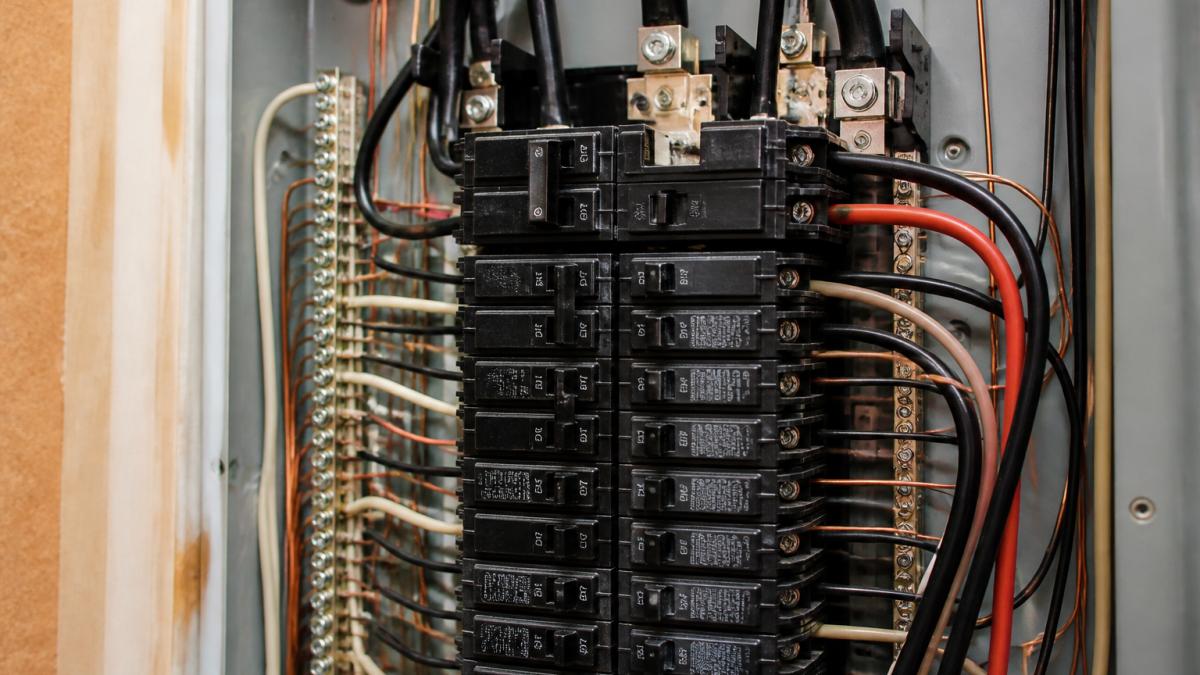
Why LED drivers are sensitive to power fluctuations
Every LED bulb contains an electronic driver that converts wall voltage into the exact power the LED needs. Incandescent filaments tolerated voltage swings; LED drivers do not.
LED drivers are engineered to work at specific voltage levels (typically 110-130 volts).
Budget LED bulbs have cheap drivers that react quickly to voltage changes; higher-quality LEDs have better filtering circuits that smooth out minor dips.
Signs of an Overloaded Electrical Circuit
Watch for these warning signs that suggest a real problem:
- Lights flicker throughout your home when the HVAC starts, not just in one room
- The flicker is severe or lasts more than a second or two
- Other appliances dim noticeably when the HVAC runs
- You notice burning smells near your electrical panel or outlets
- Lights flicker even when the HVAC isn't running
- You hear buzzing sounds from outlets or the panel
If you see any of these, your system may be genuinely overloaded, your electrical service isn't large enough for combined HVAC and appliance demand. Older homes with 100-amp service panels often struggle with modern air conditioning.
Overloading creates sustained voltage problems and fire hazards. Call an electrician to evaluate your panel and service entrance.
How to Diagnose the Source of the Flicker
Before calling an electrician, you can do some basic troubleshooting to understand what's happening in your home. However, there's a clear line between safe DIY diagnosis and work that requires a licensed professional. Know where that line is before you start.
Safe DIY diagnostic steps
Step 1: Observe the pattern. Does the flicker happen in all rooms or just some?
Step 2: Check your LED bulbs. Try replacing a flickering bulb with a higher-quality LED.
Step 3: Note the HVAC behavior. Does it flicker every cycle or only on first startup?
Step 4: Use a basic voltage tester (optional). A non-contact voltage tester lets you verify outlets are live and properly wired.
Where to stop: The safety boundary for DIYers
Do NOT attempt any of the following:
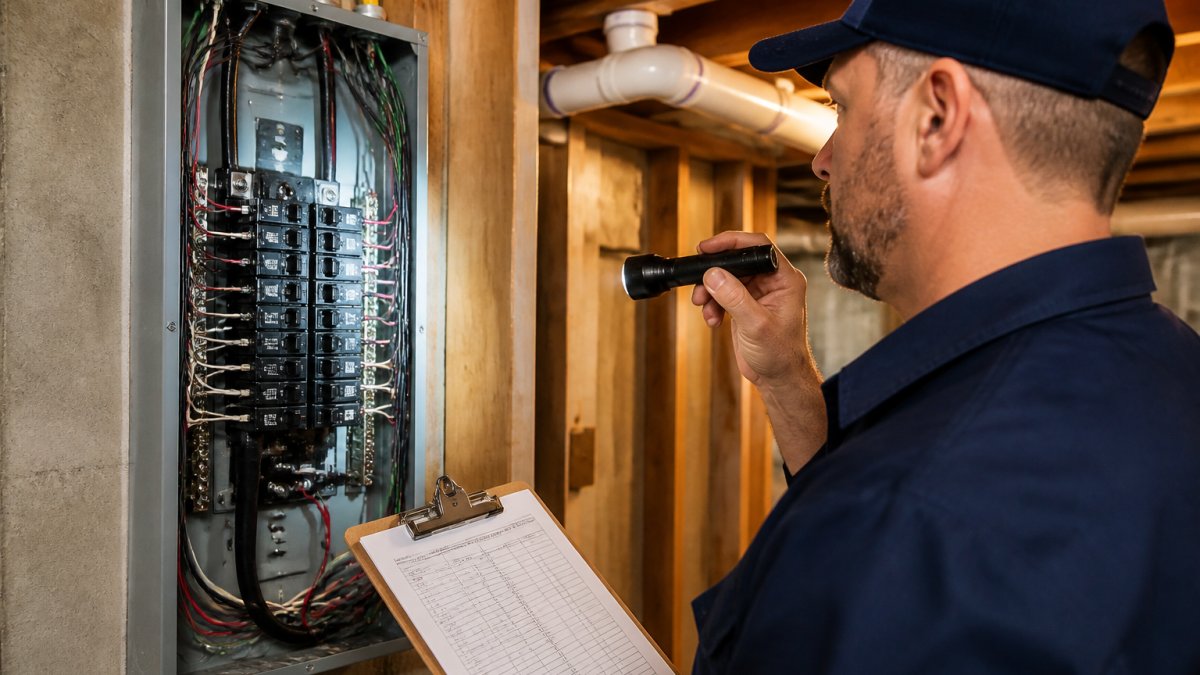
- Opening your electrical panel. Even if the main breaker is off, the utility lines feeding your panel are always live. Opening the panel risks electrocution and is illegal without a license in most jurisdictions.
- Touching or inspecting wiring inside walls or conduit. You cannot see whether wiring is damaged, overheated, or improperly grounded without specialized equipment.
- Testing connections at the service entrance or meter. These connections carry the full utility voltage and can deliver fatal shocks.
- Inspecting the neutral connection at the panel. This is where loose-neutral problems occur, and it's inside the panel.
- Installing any device between your panel and your HVAC. Soft start kits, capacitors, and other electrical devices must be installed by a licensed HVAC or electrical technician.
- Assuming flickering is "just cosmetic" if it's severe or worsening. Flickering that gets worse over time, affects multiple appliances, or is accompanied by burning smells or buzzing is a warning sign. Stop troubleshooting and call a professional.
Checking for loose neutral connections (what to observe, not what to fix)
A loose neutral connection in your panel or service entrance can amplify voltage sag dramatically. The neutral wire carries return current to the utility transformer; if loose, voltage regulation fails.
Signs of a possible loose neutral (observe only; do not attempt to fix):
- Flickering gets worse over time
- Outlets read significantly different voltages (e.g., 125V vs. 115V)
- Burning smell near the panel or meter
- Buzzing or humming from the panel
- Lights flicker even when HVAC isn't running
If you observe any of these, call a licensed electrician immediately. A loose neutral is a serious fire hazard.
Identifying smart home dimmer interference
If you have smart home devices, dimmers, or variable-speed motor controls, they can interact with HVAC startup surges in unexpected ways. Modern dimmers use semiconductor switches that react to voltage changes.
Check whether:
- You have smart dimmers or smart bulbs in the flickering fixtures
- The flicker happens only in rooms with smart lighting
- Removing the smart bulbs or dimmers stops the flicker (test by replacing them with standard LED bulbs temporarily)
Smart home lighting is excellent technology, but compatibility with HVAC systems varies. Some dimmer models handle voltage sags better than others. If you suspect dimmer interference, contact the manufacturer for firmware updates or compatibility recommendations.
When to call a professional
Stop troubleshooting and contact a licensed electrician if:
- The flicker is severe or lasts longer than one second
- Lights flicker even when the HVAC isn't running
- Voltage readings fall below 110 volts during normal operation
- You smell burning or see scorch marks near outlets, the panel, or meter
- The problem is getting worse
- You're planning to add high-power appliances (like an EV charger)
- Your home has 100-amp or smaller service with modern air conditioning
- You observe signs of a loose neutral connection
A professional can measure voltage, identify overload problems, and recommend solutions including service panel upgrades, soft start kits, or grounding improvements. In the Central Connecticut area, from Plainville to Waterbury to Hamden, licensed electricians typically diagnose the issue within one service visit.
HVAC Soft Start Kit Benefits
One of the most effective solutions is installing a soft start kit on your HVAC compressor. This electronic device gradually increases voltage to the motor as it starts, ramping up over a few seconds instead of drawing maximum current instantly.
The benefits of a soft start kit include:
- Reduces inrush current by 60-75%, which dramatically decreases voltage sag
- Extends the life of your HVAC compressor by reducing mechanical stress
- Lowers the startup demand on your electrical system
- Eliminates or significantly reduces LED flicker during HVAC cycles
- Quieter HVAC startup with less mechanical shock
A soft start kit is a permanent solution that addresses the root cause rather than just treating symptoms. It's particularly valuable if you have an older HVAC system with a large compressor or if your home's electrical service is limited.
Installation requires a qualified HVAC technician.
When to Call an Electrician for Flickering Lights
Some LED flicker is normal and harmless. But certain situations require professional evaluation. Call an electrician if:
- The flicker is severe or lasts longer than a second
- Lights flicker even when the HVAC isn't running
- You notice voltage problems affecting other appliances
- You smell burning or see scorch marks near outlets or the panel
- The problem is getting worse over time
- You're planning to add more high-power appliances (like an EV charger)
- Your home has a 100-amp or smaller electrical service with modern air conditioning
A professional electrician can measure voltage at different points in your home, identify whether you have a true overload problem, and recommend solutions.
At BEARS Electric, we've helped homeowners throughout the Central Connecticut area diagnose and fix these issues. Our team can test your system, identify the root cause, and explain your options with transparent pricing and no hidden fees.
Is Flickering an Electrical Hazard?
Minor LED flicker when your HVAC starts is usually not a safety hazard. It's annoying, but it doesn't mean your home is in danger.
However, flickering can signal an underlying problem that IS dangerous:
- Loose neutral connections create sustained voltage problems and fire risk
- Overloaded circuits can overheat wiring and damage appliances
- Poor grounding increases the risk of electrical shock
- Loose connections at outlets or the panel can arc and start fires
The key distinction: brief, predictable flicker tied to HVAC startup is usually harmless.
If you're unsure, have a professional evaluate your home.
Flickering LED lights when your HVAC turns on is frustrating, but it's also fixable.
Frequently Asked Questions
Why do my LED lights flicker when my air conditioner turns on?
When your HVAC compressor motor starts, it draws a massive inrush current that causes a temporary voltage drop throughout your home's electrical system. LED drivers are highly sensitive to these voltage fluctuations, so they flicker or dim briefly. This is especially noticeable if your home has older wiring, a loose neutral connection, or an undersized service entrance that can't handle the sudden electrical load.
Is it dangerous if my lights flicker when the HVAC kicks on?
Occasional flickering is usually not dangerous, but it can signal an underlying electrical problem. Frequent or severe flickering may indicate loose connections, wiring integrity issues, or an overloaded circuit that poses a fire risk. If flickering is accompanied by burning smells, warm outlets, or breaker trips, stop using that circuit and contact a licensed electrician immediately.
What are the signs of an overloaded electrical circuit?
An overloaded circuit shows multiple warning signs: lights dimming or flickering when large appliances turn on, outlets feeling warm to the touch, a burning smell near outlets or the electrical panel, and circuit breakers tripping frequently. These symptoms mean your branch circuits are drawing more amperage than they're designed to handle. Load balancing or panel upgrades may be necessary to distribute power safely.
When should I call an electrician for flickering lights related to HVAC startup?
Call an electrician if flickering is severe, happens every time the HVAC runs, or occurs alongside other electrical problems like dimming in multiple rooms or breaker trips. A professional can test your voltage fluctuation levels, check for loose neutral connections, inspect your electrical panel and service entrance, and recommend solutions like a soft start kit or wiring upgrades to restore stability.